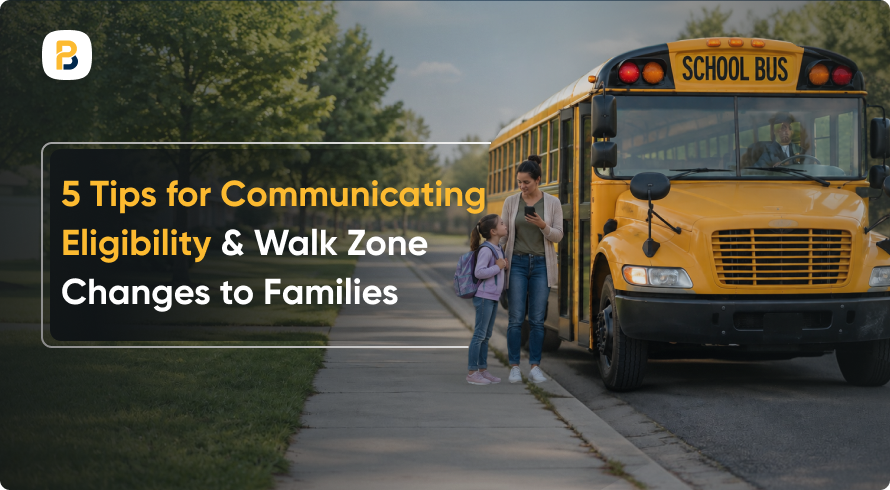
When a family learns about an eligibility change after buses are already running, calls start coming into the school transportation office and students begin arriving late at school. Even a route plan built months before the first day can start shifting as a result. Families who hear about a change before it takes effect have time to plan around it, whether that means arranging a ride or learning a new walking route.
The five tips below walk through what families need to know about eligibility and walk zone changes and when that message should go out. They also cover giving families a place where they can look up answers themselves, matching each message with the change that actually happened, and preparing office staff for the questions that follow.
1. Write a Policy Summary Families Can Read

Eligibility thresholds come from state law, district policy, or both, and the mix varies by state. A family reading about a walk zone change needs that full picture in plain language, written once and shared everywhere, before they see anything about their own child.
- Distance and Grade Bands: State the distance that qualifies a student at each grade level, and say whether it is measured along walking routes or in a straight line.
- Exceptions Worth Naming: Name the situations that change an outcome, such as a hazardous walking route finding or school transportation written into an IEP. Under McKinney-Vento, students experiencing homelessness keep school transportation to their school of origin when that is in their best interest.
- One Record Behind Every Answer: When eligibility rules, addresses, and stop assignments sit in one student transportation platform, office staff answer from the same record the routes were built from.
2. Share the Change While Schools Are in Session
Timing decides how much work a policy change creates. When the board approves an eligibility or walk zone change during the school year, families who hear about it while schools are in session have time to ask questions, arrange a ride, or request a hazard review before the first day of school.
- Notice While Staff Are on Site: Share the approved change while principals and front office staff are at school and can answer questions in person.
- Second Message Before Routes Publish: Highlight the change when routes are published, since a family that read the first notice may not connect it to the stop list they see later.
- Confirmation with the Stop Assignment: Families whose eligibility changed need a message naming the outcome for their own student, not a general reminder that the policy was updated.
When a change is approved after classes end, the same sequence still applies, with the first notice going out as soon as the decision is final.
3. Show Families Where to Find Their Answers
A walk zone change leaves families with two practical questions: does our address still qualify, and where is the stop now? A boundary map on the district site can answer the first, and a parent portal answers the second for students who already have an assignment.
- Route and Stop View for Parents: A student transportation information portal lets families view routes, stops, and schedules for their own students, with role-based visibility controlling what each person sees.
- School Office Access Too: Give secretaries and registrars the same route and stop view families have, so a parent at the front desk hears what the portal would show.
- Written Answers Beside the Map: Post the policy summary and the review or appeal process next to the boundary map, so families find the rule and the way to question it in one place.
4. Match Each Message to What Changed

A single walk zone review can take bus service away from some students and add it for others, and every affected family hears about the change at once. Messages written for each outcome spare parents from working out which part of a general notice applies to them.
- Separate Notices for Losing and Gaining Service: Write one message for families losing eligibility and another for families gaining it, each naming the effective date and what the family needs to do next.
- Policy Notices Apart From Daily Alerts: Keep eligibility notices separate from parent app alerts about bus location and arrival timing, since mixing the two makes both easy to miss.
- Reuse the Message at Registration: Build the eligibility explanation into registration so a family moving in during the year receives the same explanation everyone else received with the first notice.
5. Prepare the Office for the Questions That Follow
Early notice cuts down the calls that come after a policy change, but it doesn’t end them. Office staff still need a consistent answer for each question that comes in, along with a clear path for the requests they can’t resolve at the desk.
- One Answer Sheet for Everyone: Write out responses to the questions staff hear most, including students who live just inside a boundary and families asking how to request a hazard review.
- Log What Families Ask: Record the reason behind each call so the routing team can see which boundaries generate the most questions, alongside the other ways to reduce incoming phone calls the office already uses.
- Send Exceptions to One Person: Decide who reviews hazard requests and accommodation questions, so each family gets one answer instead of different answers from different desks.
The Bottom Line
Eligibility and walk zone decisions are policy work, but families experience them as a change to their morning. When the notice names the rule, the date it takes effect, and where to check, a parent can plan around the change.
School transportation teams that write the policy summary once, publish it where families already look, and keep office staff working from the same record can spend the days after a change on the routes themselves.
Frequently Asked Questions
Q1. What should an eligibility change notice include?
The rule that changed, the date it takes effect, and what it means for the specific student, along with where to find the boundary map and how to request a review. Naming the outcome for each student answers the question families would otherwise call to ask.
Q2. What is a hazardous walking route exception?
It is a district or state-level determination that a student living inside the walk zone still receives school transportation because the walking route presents a specific danger, such as a crossing without a signal or a road with no shoulder. The criteria and review process vary, so publish yours next to the distance rule.
Q3. Can a family ask for an eligibility decision to be reviewed?
Review and appeal options are set by district policy, so publish who reviews a request, what information helps, and how long a decision usually takes. Families who know the timeline are less likely to call back while a request is pending.
Q4. Who should check eligibility notices before they go out?
Coordinate with the district's homeless liaison, since students experiencing homelessness can keep school transportation to their school of origin even when an address change would otherwise end it. A review before notices go out keeps those families from being told they lost service.