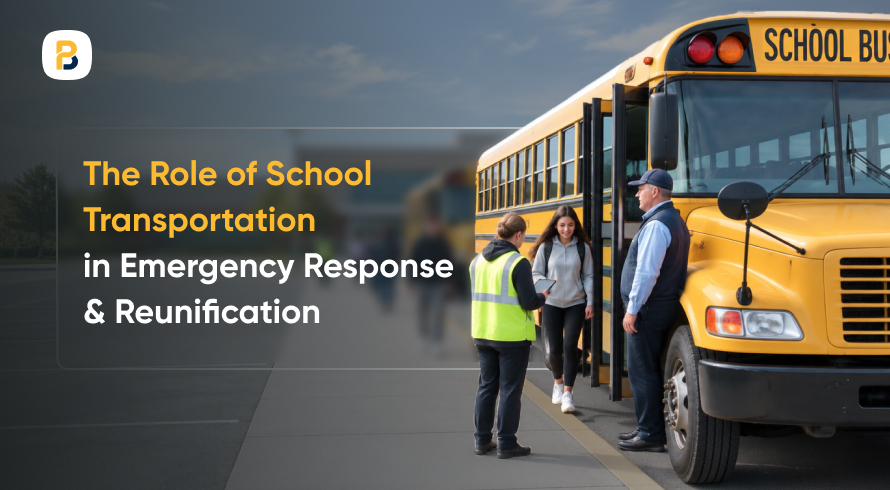
When a school has to evacuate or students need to move to another site, buses and their drivers become part of the district’s emergency response. If the plan leaves them out, students wait while staff search for vehicles and drivers who are already on runs or off shift.
Routing and dispatch staff know the details an emergency depends on, down to which students ride each bus run. The five areas below follow emergency response and reunification as an incident unfolds, from the written plan to the review afterward.
1. Put Bus Coverage Into the Emergency Plan
An evacuation or student relocation depends on buses and drivers, and their availability changes through the day. The parts of the district’s emergency operations plan that rely on vehicles should be written with input from the people who manage the fleet, so each part matches what it can actually provide.
The National Incident Management System, maintained by the Federal Emergency Management Agency, uses the Incident Command System (ICS) to give each responder a defined role. A district plan built on ICS should name where the school transportation department reports during an incident and who speaks for it.
- Coverage by Time of Day: A mid-morning evacuation draws on parked school buses and drivers between shifts, while an incident near dismissal competes with afternoon runs. Spell out who covers each window, including licensed mechanics or office staff.
- Named Contacts for Each School: Give every principal one contact for buses and drivers, plus a backup, with phone numbers that work outside office hours.
- Authority to Send Buses: State in the plan who approves sending buses to a campus during the day, so dispatch has one person to call.
2. Account for Every School Bus on the Road
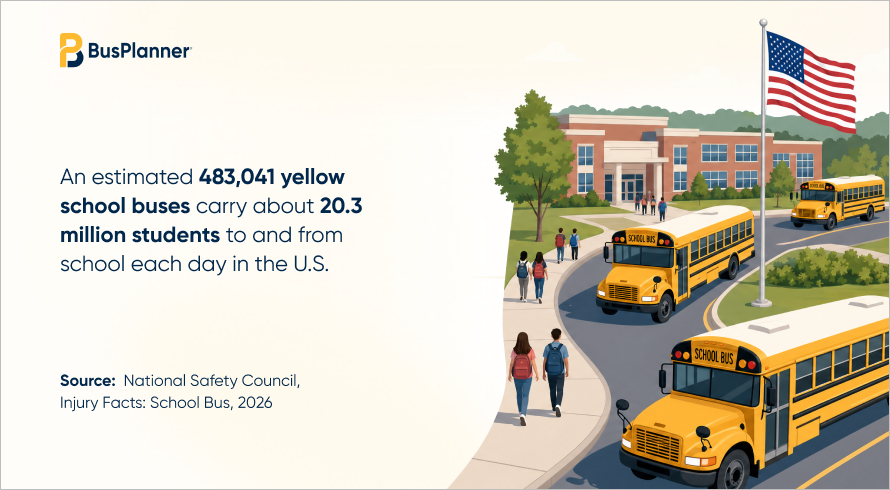
During a lockdown or evacuation, dispatch has to confirm where each school bus is and who is aboard. A lagging map icon, or a spare bus that never synced to its route, leaves a gap in that count, so dispatch confirms locations by radio as well as on the map.
- Radio Roll Call by Bus Number: Dispatch calls each school bus driver on the road, including late afternoon runs still carrying students, and logs a location and student count for every bus. The log, checked against real-time GPS tracking, shows any bus the map places somewhere else.
- Spare and Substitute Buses: Keep a daily list of which spare is covering which route. A substitution that hasn’t reached the GPS system can put the wrong route number on the map.
- Field Trips and Activity Runs: For trips booked through field trips software for school buses or a paper log, dispatch needs the destination and driver of every bus out that day.
3. Hold or Redirect School Bus Runs Safely
Bus runs keep moving when a campus goes into lockdown or shelter-in-place, and a driver who pulls into the bus loop can put students in the middle of an active response. Before any incident, agree with principals on where incoming buses wait and who tells drivers when to move.
- Safe Spots to Hold Near Each School: Pick a place for each campus where buses can park off the main road, such as a district office lot, and confirm permission with whoever controls the property.
- Plain-Language Radio Messages: Use scripted instructions like “hold at your location” in place of codes, so a substitute driver understands them on the first call.
- Students Already Aboard: A driver holding with students needs to know whether to keep them on the bus, take them home, or bring them to a reunification site. The incident lead makes that call, and dispatch relays it to the driver.
4. Build School Buses Into Reunification Plans
Students leaving an evacuated building for a reunification site may need several buses and drivers on short notice. Working with campus and district staff ahead of time keeps the reunification annex matched to the vehicles and drivers actually on hand.
- Rosters for Each Bus: Staff at the evacuated school record which students board each bus, and the list travels with the driver so the reunification site can account for every student.
- Clear Roles at the Site: Drivers deliver students and stay with their buses, so designated school or district staff can focus on supervising students and releasing them to parents.
- Lift-Equipped Buses and Trained Drivers: Students who use wheelchairs need a lift-equipped bus and a driver trained to secure the chair, the same planning behind special needs transportation on daily routes. Name those vehicles and drivers in the plan.
- Spare Buses Ready to Go: Dispatch needs a current list of spare buses that are fueled and inspected, drawn from school bus fleet management software or the shop’s daily sheet.
5. Include Buses in Drills & Reviews
Drills that end at the building door leave the vehicle side of the plan untested. A district exercise that includes school buses shows whether dispatch reaches every driver by radio, whether the holding spots work, and how long the drive to the reunification site takes.
- Tabletop Exercises with Principals: Walk through a scenario with school leaders and the dispatch lead, using real bus numbers and real times of day, and note every step that relies on one person’s memory.
- After-Action Notes: Once a drill or real incident ends, record which radio instructions caused confusion and how long it took to reach each driver.
- Revised Plan Sent to Everyone: Each update goes to principals, the district safety lead, and every dispatcher, so the version used in an emergency matches the one people practiced.
Bring the Fleet Into Every Emergency Plan
School buses carry students every day on routes that routing staff know in detail. An emergency plan written with that knowledge before an incident gives principals and responders named contacts, holding spots, and bus rosters they can use when students have to move.
Start with one school and one scenario, such as an evacuation in the middle of the morning. Work through it with the people who would be on the radio that day, and use the gaps that surface to decide where the plan needs attention next.
Frequently Asked Questions
Q1. What is the Incident Command System?
The Incident Command System (ICS) is a standard way to organize an incident response, with one incident commander and defined roles that report through a single chain. The Federal Emergency Management Agency (FEMA) offers free introductory ICS courses online, which give dispatchers and department staff a shared vocabulary with first responders.
Q2. What is a reunification site?
A reunification site is a pre-selected location, such as another school or a community building, where students are brought after an evacuation and released to parents or approved adults. Plans typically name a primary and a backup site so buses still have a destination if one location can't be used.
Q3. Who releases students to parents during reunification?
Designated school or district staff release students by following the district's reunification procedure, which commonly includes checking the adult's identification against the student's approved contacts. Drivers stay with their vehicles during this step.
Q4. How often should school bus drivers practice emergency procedures?
Requirements vary by state, and some states set a minimum number of school bus evacuation drills each year. The state agency that oversees pupil transportation or the district safety lead confirms what applies locally, and a district-wide exercise adds practice with holding and reunification steps.