Each driver a district hires comes with licensing, training, and onboarding costs, and all of that investment leaves when the driver does. Retention gives school transportation teams a way to protect that investment while recruiting continues.
In our recent webinar, Keep the Drivers You Hire, we looked at what makes that possible. Gus Munoz, Senior Account Executive at BusPlanner, hosted the discussion with two guests:
- Josh Rice: Regional Manager, BusPlanner, with more than 25 years in school transportation
- Jason Nelson: Transportation Program Manager, Arizona School Risk Retention Trust, with 12 years on the school district side
Four areas stood out: the cost of turnover, recruiting, onboarding, and day-to-day support for drivers.
1. Count the Full Cost of Turnover
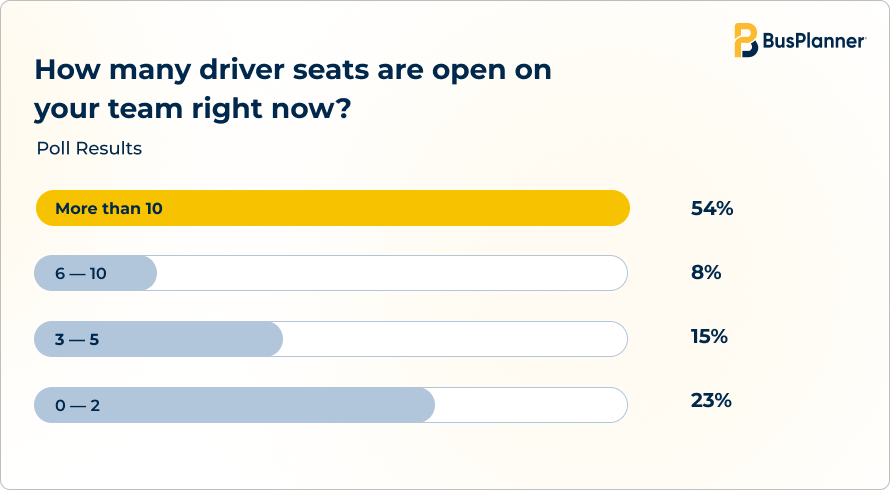
An open driver seat still has to be covered, whether by a substitute, a driver working extra hours, or a staff member pulled from another role, and each option carries its own cost, and many teams are covering several seats at once. A live poll during the webinar backed this up, with more than 10 seats as the most common answer.
Costs for a new driver build up before the first route. In one Texas district’s example, bringing on a single driver came to $6,575, and that total leaves out softer costs such as leadership time and recruiting effort. Gus Munoz breaks down where the number comes from in this clip:
The investment is also exposed after licensing. As Jason Nelson pointed out, nothing in Arizona binds a new license holder to stay, so a district can fund the training and lose the driver a couple of months later. Applicants who pay some of the fees themselves may also find the upfront cost a barrier to taking the job.
2. Recruit Widely & Set Honest Expectations
Applicants come from more backgrounds than a single job posting reaches. College students, stay-at-home parents, retirees, and veterans each look for something different from the role, so outreach works best when it matches the community. A mix of channels helps:
- School Channels: School websites and newsletters reach parents who may want a schedule that matches their children’s.
- Online Outreach: Facebook, Indeed, and short videos of current drivers describing the job.
- Existing Staff: Instructional assistants and teachers who could cover one short route.
- Retired Drivers: A part-time status, possibly through a pool shared across neighboring districts.
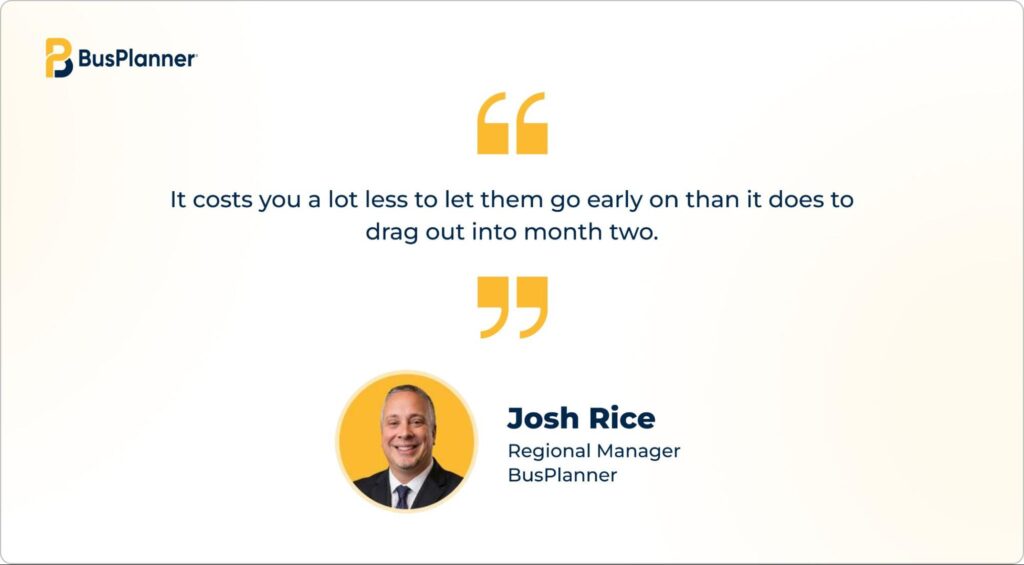
What candidates hear about the job matters as much as where the posting appears. Ride-and-drive events in a closed lot and interview scenarios, such as a fight on a high school route, show candidates what student management involves, and plain talk about part-time hours and benefit costs belongs in the same conversation. Josh Rice sums up the logic:
A short welcome video can carry the pitch as well. Jason Nelson’s former district showed applicants one of about two and a half minutes covering the district, benefits, and retirement, which helped it stand apart from neighboring employers.
3. Review Each Step From Application to First Route
Applicants who wait weeks for a start date have time to take another job. Jason Nelson’s former district once saw four to five weeks pass between interview and onboarding, which is why Gus Munoz recommends writing down every step from application to the first day behind the wheel, with honest timings, and noting which steps sit outside the department’s control.
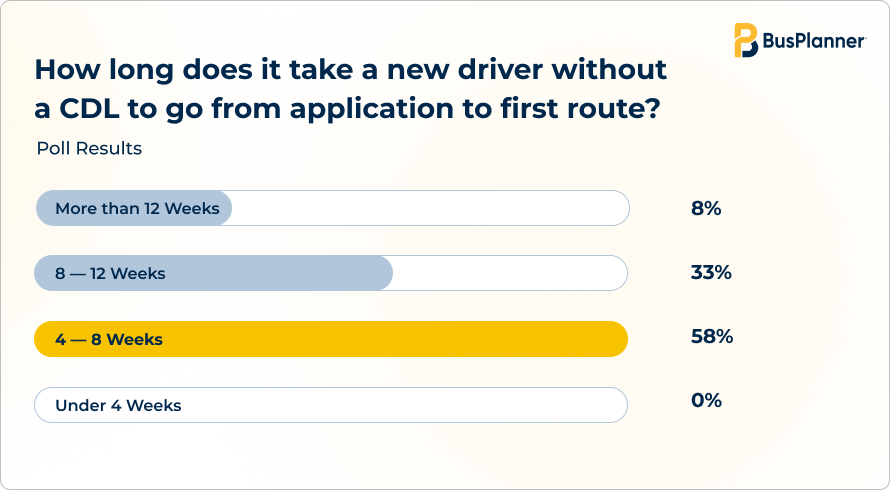
The time it takes to get a new driver without a commercial driver’s license (CDL) to a first route varies widely, and a second poll backed this up: attendees most often said four to eight weeks and some said eight to twelve.
Jason Nelson described several ways to keep the timeline moving:
- Same-Day Contact: Calling an applicant the day an application arrives.
- Permit Before Start Date: Asking applicants without a CDL to arrive with a permit, with a checklist to follow.
- Paid Permit Classes: One Arizona district hired applicants into a temporary role for about two weeks to study for the permit, away from students.
- Protected Training Time: Pulling instructors off routes so training that once took nine weeks, a quarter of a school year, fit into about two.
4. Support New Drivers Through the First 90 Days
New drivers find out whether the job suits them during the first 90 days. In the districts Josh Rice led, mentor drivers who usually earned 25 or 50 cents more per hour gave new drivers a peer to ask about the time-off sheet or seating charts before going to a supervisor, and ride-alongs let new drivers watch student behavior while an experienced driver handled the route.
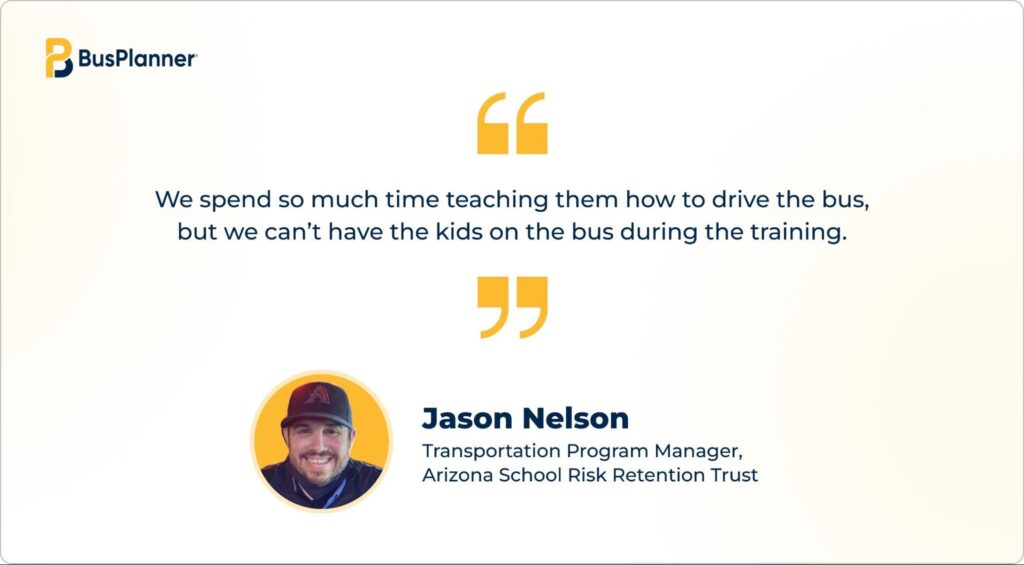
Training also leaves a gap, since students cannot be on the bus while new drivers learn. Professional development after licensing can focus on student management to fill it.
Route assignment matters as well. One district kept placing new drivers in substitute roles and saw continuous turnover, and paying experienced drivers about a dollar more per hour to take those roles let new drivers start on regular routes. Josh Rice explains the change in this clip:
Check-ins add another layer of support. They can begin on a driver’s second day and cover uniforms, time-off requests, benefits, and paychecks, and 30, 60, and 90 days work better as a framework than a fixed schedule.
Backup & Appreciation Keep Drivers on the Team
Pay, reliable hours, backup, stability, and appreciation are the main reasons drivers stay, and hours can carry as much weight as the hourly rate. A district paying about $3 less per hour but guaranteeing an eight-hour day can pay a driver more over a year, and cover positions running 200 to 215 days move part-time roles closer to full time. Recognition does not have to depend on budget either, and Jason Nelson likes to ask supervisor candidates what they would do to improve morale with none:
- Referral Follow-Up: Drivers feel supported when a referral comes back with its outcome, such as a principal’s contact with a family.
- Recognition: Monthly perfect attendance and Employee of the Month, with a reserved parking space as the reward.
- Meal Budgets: Asking leadership what turnover costs makes the case for feeding staff.
- Room to Move Up: An evaluation ranking built on training, attendance, and accident-free records, which earned newer drivers better placement for the field trip pool and summer work.
Key Takeaways
School transportation teams do not need to change everything at once. Each panelist closed with one move to start with:
- Map the Hiring Steps: Write down every step from application to the first day behind the wheel, with honest timings, and raise the steps outside the department’s control with the right team
- Review How the Job Is Marketed: Meet with human resources and communications colleagues about how the position is advertised, with Drive the Bus events and now-hiring banners as low-cost examples.
- Balance Route Workloads: Look at routes that carry very different student counts, such as 70 students on every run beside 15, and use route planning software as one place for routing staff to start that review.
Choosing one of these moves and tracking what changes is enough to guide the next step.
Watch the Full Webinar
Hear more from Gus Munoz, Josh Rice, and Jason Nelson in the full Keep the Drivers You Hire webinar.