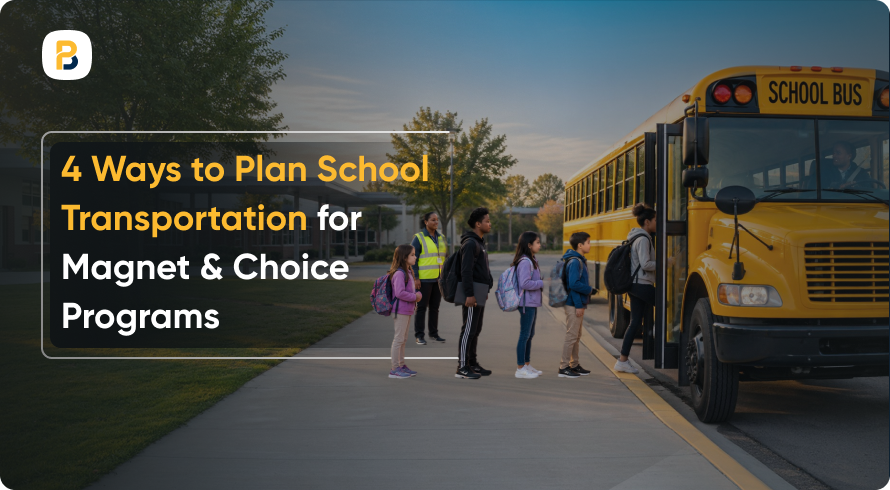
Students who attend magnet and choice programs often live well beyond a single attendance zone. School bus routes built around neighborhood schools rarely line up with where those riders live, and serving them adds runs, drivers, and ride time to the system.
Planning bus service for these riders depends on timing as much as on route design. Application counts, acceptance lists, and waitlist offers come from the district’s choice or enrollment office, and routers need them well before the first day of school.
The four practices below start with pricing the service, then cover rosters and stop planning, and finish with the changes that follow once classes begin.
1. Estimate School Bus Costs Before a Program Opens
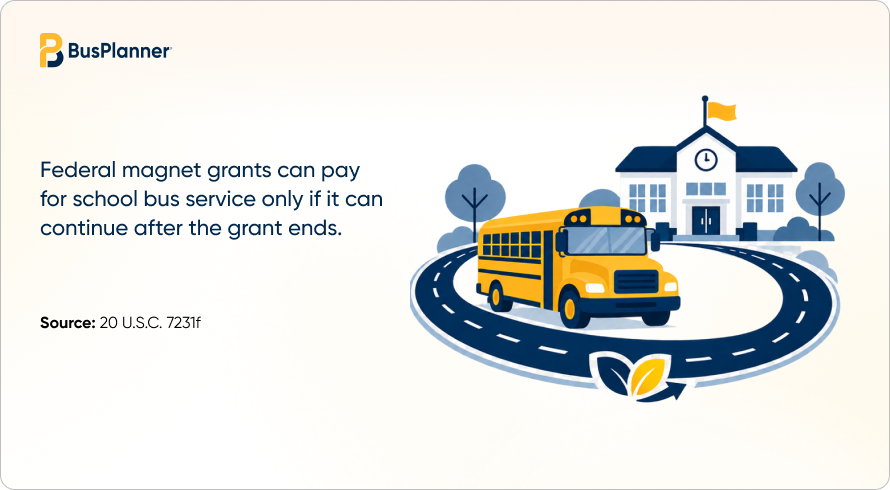
Because grant money runs out, the cost estimate for bus service needs a plan for what pays for it afterward. That estimate belongs in the proposal the board reviews before a program opens or expands, and it starts from projected riders and the runs they would need.
- Projected Riders by Area: Ask the choice or enrollment office for expected applicants by attendance zone or by the school they attend now, because where students live sets how many runs the program needs.
- Added Runs and Bell Times: Check whether program riders fit on existing runs or need their own. A new run also has to fit around the trips each bus already makes for other bell times, and one that fits nowhere generally means another bus and driver.
- Cost per Route: Tools such as student transportation financial planning software track cost per route and analyze routing scenario options, giving the board a figure for each service model it is weighing.
2. Get Program Rosters Before Routing Begins
Stop assignments for program riders depend on a list that only the choice or enrollment office can supply: the accepted students who are eligible to ride. A fixed delivery schedule for each version of that list gives routers time to build runs before families start asking where their stop will be.
- Agree on Roster Dates: Set a date with the choice or enrollment office for the first list of accepted students, plus a date for each update after waitlist offers go out. Routers then plan their workload around known deliveries.
- Fields the Routing Team Needs: Ask for each student’s home address, grade, and program school, along with whether the student qualifies for a ride under district policy. Eligibility rules for choice students vary by state and district, and the approved policy decides who appears on the list.
- Riders with Special Education Plans: Flag students whose Individualized Education Program (IEP) calls for specialized school bus service. Decisions the IEP team makes about the vehicle, stop location, and any aide shape those runs, which may sit outside the program’s general stop plan.
3. Choose Between Hub Stops & Home Stops
Neighborhood school bus routes can stop near every home because all their riders live inside one attendance zone, while magnet students may come from anywhere in the district. The stop model the district picks for each program sets how many runs it needs and how long the longest rides last.
- Shared Pickup Points at Nearby Schools: Instead of stopping near every home, the bus picks students up at a few central spots, such as a neighborhood school, and then drives straight to the magnet school. Fewer stops mean shorter trips, though families have to bring their children to the pickup point.
- Stops Near Home: Younger riders and students whose IEP calls for pickup at home may need a stop close to where they live. Each added stop spread across the district puts more miles and minutes on the run.
- Ride Length and Arrival Times: Check proposed runs against any maximum ride time in state rules or district policy, and confirm each run reaches the magnet campus before its bell. Late arrivals cost students class time, one of the ways student transportation affects academic performance.
- Two Plans Compared: Routers lay out both versions in the district’s school bus routing software and compare the number of runs and the longest ride in each before the district picks a model.
4. Keep Drivers & Families Current on Roster Changes
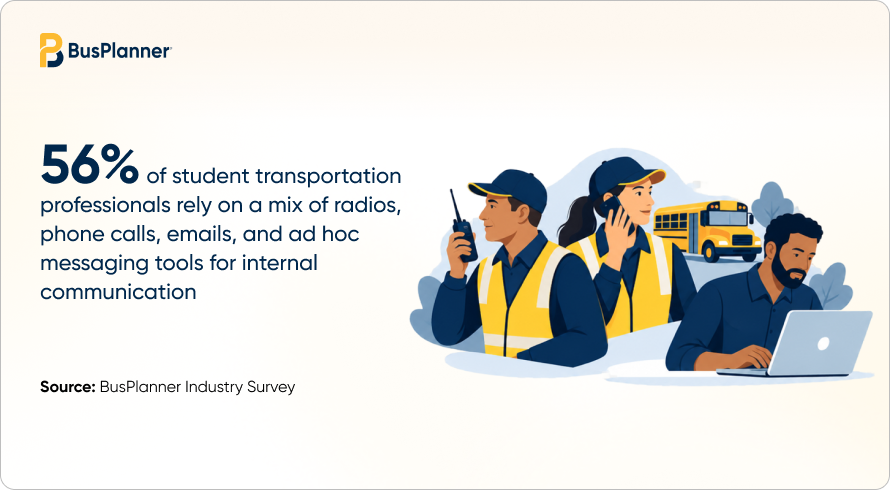
When a stop change reaches the driver by radio and the dispatcher by email, the two can end up holding different versions of the same run. Magnet rosters raise the odds, since programs that fill seats from a waitlist keep changing stop lists well after the first day of school.
- Update the Route Record First: Enter each roster change in the routing system before anyone radios the driver. The route sheet, dispatch, and the school office then all read from the same stop list.
- Give Staff the Same View: A student transportation information portal gives drivers and dispatchers visibility into student routes and stops, with route manifests that staff download for each run.
- Tell Families About the New Stop: Send the stop location, pickup time, and start date for any new or changed assignment. Copy the school office so staff there have the same details when a parent calls.
- Remove Withdrawn Riders: Once the enrollment office confirms a withdrawal, take the student off the run so the driver isn’t waiting at a stop for someone who no longer rides.
Bring Route Costs Into the Decision Early
Opening or expanding a specialized program is an academic decision made by the board and the schools involved. School transportation supports it by showing what each service model costs and how long students would ride, and those figures belong in front of decision-makers before anything is final.
Once classes start, the job becomes keeping one stop list current as rosters change. Routers, drivers, dispatch, and families stay on the same plan when every change begins in the routing system and reaches each group through a shared view.
Frequently Asked Questions
Q1. Can federal magnet school grants pay for school bus service?
Sometimes. Federal magnet grants may cover school bus service if it stays sustainable after the grant ends, and the statute sets cost conditions. The district's grants manager can confirm what applies.
Q2. What is a hub stop for magnet school students?
A hub stop is a shared pickup point, often at an existing school, where program riders board an express run to the magnet campus. Before naming a hub, check with the site's principal that the location has space for parent drop-off and a safe loading area.
Q3. How often should magnet program rosters go to the routing team?
Set the schedule with the choice or enrollment office around the admission timeline. Plan for a first list after acceptances and an update after each round of waitlist offers. Once school starts, ask for updates whenever a student is accepted or withdraws so routers work from the current list.
Q4. Who decides whether choice program students get bus service?
The school board sets that policy within whatever state law requires, and state requirements for choice students differ from one state to the next. School transportation applies the approved policy when building routes and supplies the cost and ride time figures the board considers.