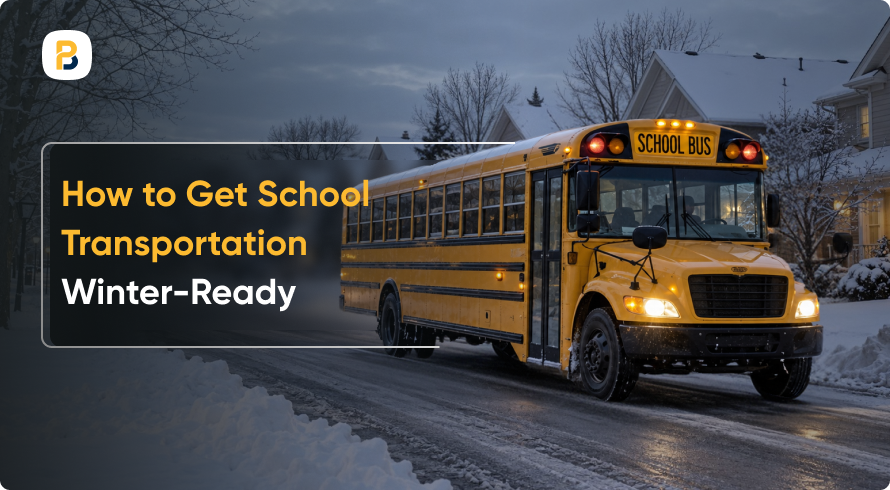
A single morning of freezing rain can change every decision the school transportation office makes before 5 a.m., from which roads a school bus can run to which drivers are reachable.
Winter also looks different depending on where a district sits. Some teams plan around heavy snow and plow schedules, while others deal mainly with ice, freezing rain, or dense morning fog. Winter-ready school transportation means preparing for the conditions your own routes get.
The five areas below cover the decisions, routes, buses, drivers, and family updates worth settling before the first bad morning.
1. Confirm Your Role in Weather Decisions
The call to delay or close school belongs to the superintendent or whoever the district designates, and the school transportation office supplies much of what that decision rests on. Sorting out who reports what, and by when, keeps the early morning conversation focused on road conditions instead of process.
- Road Checks and Who Makes Them: Decide which staff drive the problem roads before dawn, which part of the district each one covers, and what time they report back.
- Forecast Language Everyone Shares: National Weather Service winter weather alerts separate a watch from a warning or an advisory, so staff and school administrators describe the same forecast the same way.
- One Place for Storm Morning Updates: Name where driver availability and run coverage are logged on a weather day, whether that is a radio log, a shared board, or school bus dispatch software.
2. Review School Bus Routes for Winter Conditions
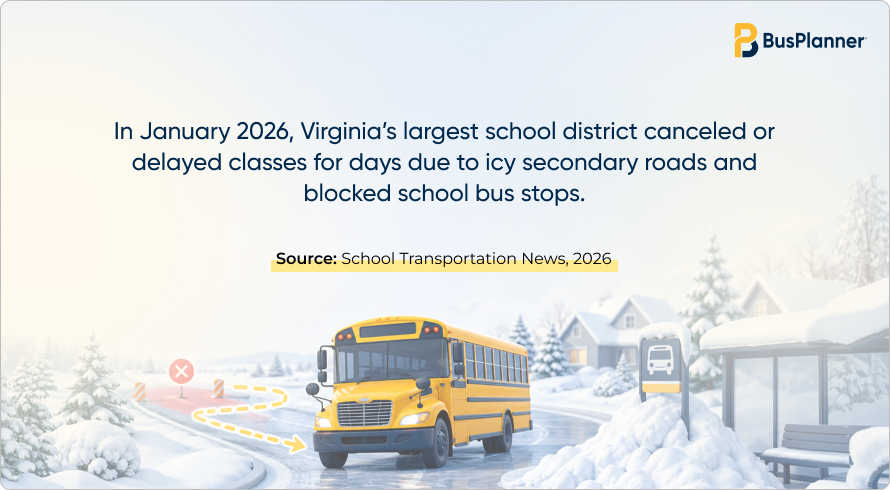
Pavement conditions decide which roads a full-size school bus can still handle, and drivers usually know the trouble spots by name: the long grade on a county road, the tight turnaround with no room to back up, the gravel stretch plows reach last. Collecting those locations before winter gives routing staff a working list.
- Grades and Turnarounds: Mark the hills, narrow turnarounds, and unpaved sections on each route, then decide which ones a bus should avoid once the surface is covered.
- Stops That Need an Alternate: Where a bus cannot safely reach a stop in snow, agree on an alternate pickup point in advance and record it with the stop. Families need to know that location before the day it is used.
- Keep the Winter Plan in the System: Store alternates, hazard notes, and the reason behind each one in school bus routing software so the work carries into the following year.
3. Prepare School Buses for Cold Mornings
Cold weather finds the weak battery and the heater that never quite warmed the back rows. Shop work scheduled before temperatures drop keeps those problems off the dispatch board on a morning when every bus is needed.
- Batteries and Starting Systems: Load-test batteries, check connections, and confirm block heaters and plug-ins work at every lot where buses sit overnight.
- Defrosters, Heaters, and Wipers: Run each unit before the weather turns rather than finding the failure during a pre-trip inspection in the dark. Replace wiper blades and use washer fluid rated for your lowest temperatures.
- Winter Items on the Inspection Sheet: Add the cold-weather checks drivers should perform to the pre-trip form, and keep school bus maintenance records current so repeat issues on the same bus are easy to see.
4. Equip School Bus Drivers for Winter Runs
On winter mornings when school stays open, drivers still face smaller decisions on the route that the district’s call to run buses doesn’t settle, such as whether to skip a turnaround, hold at a stop, or contact dispatch before continuing. Settling those expectations in advance, and repeating them to substitute drivers, gives everyone the same answer when conditions change partway through a run.
- Walk Through Winter Procedures with Every Driver: Cover slow-down expectations, what to do when a road looks unsafe, and when a driver should call dispatch rather than decide alone.
- Support Sub Drivers on Unfamiliar Routes: A driver covering a route for the first time in snow needs a route sheet that names the hazards and any alternate stop locations in use.
- Set a Stuck Bus Procedure: Spell out who the driver calls first, how students are accounted for while the bus waits, and who passes the information to the school.
5. Plan How Winter Updates Reach Families & Schools
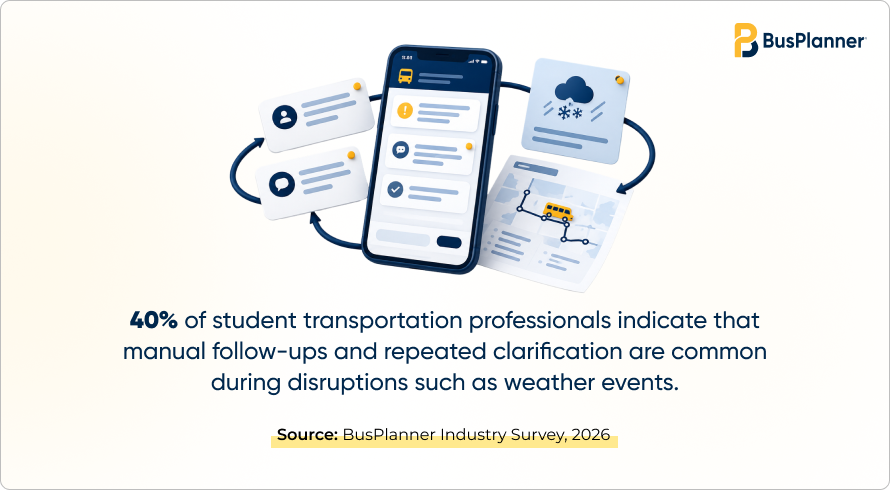
Storm mornings bring a heavy run of parent questions, and most of them land within the same hour. Agreeing ahead of time on who sends the delay notice, and where families can look it up, keeps staff from answering the same question one call at a time.
- Write the Delay Message Before Winter: Draft wording for a delayed start, a late route, and a cancelled run so the message only needs a route number, the delay length, and a time added on the day.
- Give Families One Place to Look: A student transportation information portal keeps the route, stop, and schedule details families ask about available for their assigned students.
- Tell School Offices First: Front desk staff field the same questions, so send them the route details and expected timing before families start calling.
Winter Readiness Starts Before the First Storm
Most of what makes a storm morning manageable happens weeks earlier, in the shop, on the route review, and in the conversations about who decides what. None of it is complicated, though it is easy to leave alone until a forecast forces the issue.
Districts get different winters, so the plan that fits northern Minnesota is not the plan a district in Georgia needs. Build the version that matches your roads, your fleet, and the conditions your school bus drivers actually face, then keep it written down where the team can find it again.
Frequently Asked Questions
Q1. Who decides whether to delay or cancel school during winter weather?
In most districts the superintendent or a designated administrator makes the call, following district policy. The school transportation office contributes road condition reports, bus start times, and lot conditions, which is why agreeing on reporting times before winter matters.
Q2. How often should winter route alternates be reviewed?
Review them at least once before winter begins and again whenever a stop, route, or road changes during the year. Drivers who ran the route last winter are usually the fastest source of what needs updating.
Q3. What should a school bus driver check before a cold-weather run?
Beyond the standard pre-trip inspection, drivers should confirm the defroster and heater are working and check wiper blades and washer fluid. Adding these items to the pre-trip form keeps the checks consistent across the fleet.
Q4. What belongs in a weather delay notice to families?
Name the schools or routes affected, the new pickup time, and whether afternoon service is also changing. Sending the same details to school offices at the same time keeps staff giving families one answer.