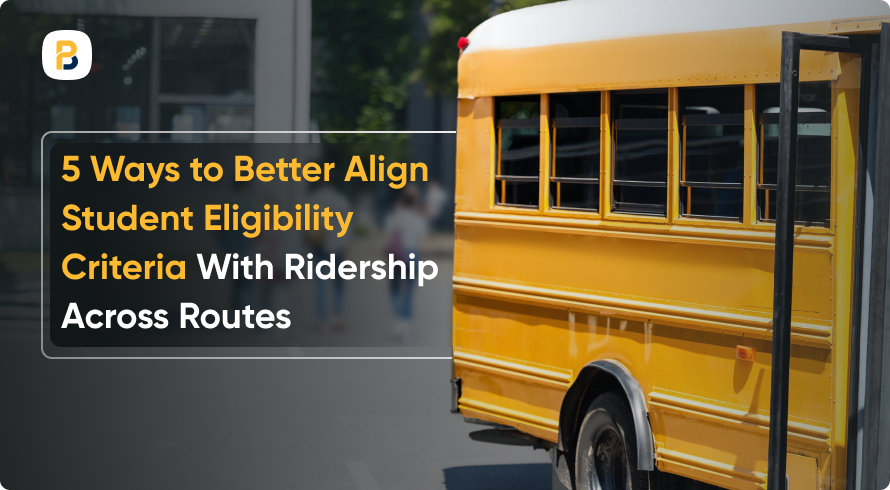
For transportation teams, determining which students are eligible to ride the bus can be an operational challenge that costs districts thousands of dollars, particularly when eligibility decisions fall out of step with available capacity across routes as enrollment, ridership, and student needs change.
Keeping eligibility and capacity aligned requires accurate student data and regular review of how riders are distributed across routes. The strategies discussed below allow transportation teams to spot any issues early and make more informed decisions as conditions change throughout the school year.
1. Audit Eligibility Data Before Touching a Single Route

Accurate eligibility data means student records that reflect each rider’s current address, grade level, program assignment, and transportation needs. With that information verified, transportation teams have a stronger starting point for capacity planning. Because these details can change, reviewing them before routes are finalized helps ensure plans reflect the students currently eligible for service.
- Verify Addresses at the Source: Cross-reference current enrollment records with transportation data to identify address changes that could affect eligibility, stop assignments, or route placement. Keeping this information current also supports more accurate data-driven route planning.
- Flag Special Program Riders Early: Students attending magnet programs, specialized academies, or other schools outside their neighborhood assignment may be subject to different transportation eligibility rules, depending on district policy. Identifying these riders early helps teams account for them when building routes.
- Reconcile Eligibility Thresholds by Grade Band: If eligibility rules differ between elementary, middle, and high school students, review each group against the appropriate criteria rather than applying the same threshold across the district. This helps keep student assignments aligned with district eligibility policies.
2. Use Load Balancing Logic to Distribute Riders Across Routes
Assigned riders do not always reflect who actually uses transportation each day. Looking at actual ridership alongside available capacity gives teams a clearer picture of how space is being used across routes and where adjustments may make sense.
- Set Capacity Thresholds Before Building Routes: Rather than treating maximum seating capacity as a target, establish a practical operating range that leaves some flexibility for enrollment and ridership changes.
- Run Scenario Comparisons Before Finalizing: School bus routing software can help teams compare different route configurations before they are finalized. Looking at scenarios side by side can show how changes to one route affect ridership and available capacity across neighboring routes.
- Account for AM and PM Differences: Morning and afternoon ridership patterns on the same route may not be identical. Students who ride in the morning do not always ride home, and after-school activities can change demand on certain days. Looking at actual ridership patterns in both directions gives teams a more accurate picture than relying on assigned riders alone.
3. Treat Capacity as a Dynamic Variable, Not a Fixed Number
The number of students a bus can accommodate on a particular run may differ from its posted seating capacity. Vehicle configuration, student age, wheelchair securement positions, and other accommodations can all affect the usable capacity available for that run.
- Track Vehicle Configuration Alongside Route Assignments: A bus configured for wheelchair securement may have a different usable capacity than its standard seating configuration. Keeping this information with route assignments gives teams a more accurate figure to plan around.
- Build Accommodation Needs into Capacity Planning Early: A student’s IEP may identify specialized equipment, or other transportation supports that need to be considered when assigning a vehicle or route. Factoring these requirements into capacity planning from the beginning helps teams match available vehicles with student needs.
- Review Capacity When Schedules Change: Bell time and schedule changes can affect how buses and runs are assigned throughout the day. Reviewing capacity at the same time helps keep vehicle and route assignments aligned with the new schedule.
4. Coordinate Eligibility Changes With Zoning & Boundary Updates
School boundary changes can have a direct impact on transportation planning. When attendance zones shift, groups of students may gain or lose eligibility, while routes built around previous boundaries may need to adjust to where eligible riders are now located. Keeping eligibility planning connected to zoning work gives teams an opportunity to account for those changes before new boundaries take effect.
- Assess Transportation Impact: Involving transportation teams earlier in boundary planning gives them an opportunity to identify routes that may gain or lose eligible riders. A redistricting module for school buses can help teams assess how proposed boundary changes may affect transportation demand and route capacity.
- Update Eligibility After Approval: Once new boundaries are confirmed, update the corresponding eligibility information in your routing system so student and route assignments reflect the new attendance zones.
- Notify Families Ahead of the School Year: Families whose transportation eligibility changes because of new boundaries need clear information about what is changing and when. Providing that information early gives families time to understand their new transportation arrangements.
5. Communicate Capacity Decisions Clearly to Families

Eligibility and capacity decisions can involve operational factors that families may not see from the outside. Clear communication gives families context around those decisions and helps them understand what is changing, why it is changing, and what they need to know next.
- Explain the Why Behind Eligibility Determinations: Give families a clear explanation of the eligibility rule that applies to their child. Keeping the language simple and specific makes transportation policies easier to understand.
- Provide a Clear Process for Questions: If the district allows eligibility exceptions or additional review, make the process easy for families to understand and follow. A defined process also helps transportation teams handle these requests consistently.
- Use Proactive Notifications When Capacity Changes Mid-Year: Enrollment shifts, staffing changes, and route adjustments can affect seat availability after the school year begins. When transportation information changes, update families before the change takes effect and make current eligibility, route, and stop information accessible through existing student transportation information portal.
The Bottom Line
Balancing student eligibility and bus capacity across routes is not something transportation teams address only at the start of the year. It requires accurate data, thoughtful planning, coordination with zoning and enrollment teams, and clear communication with families.
Treating eligibility and capacity as connected parts of the same planning process can help teams identify mismatches earlier, respond to changes in ridership and enrollment, and make better-informed decisions throughout the school year.
Frequently Asked Questions
Q1. What does balancing student eligibility and bus capacity across routes actually mean for transportation teams?
It means making sure students who qualify for transportation are assigned to routes with appropriate available capacity. This involves looking at eligibility, actual ridership, vehicle capacity, and route assignments together rather than treating each as a separate part of the planning process.
Q2. How do school boundary changes affect bus capacity planning?
When attendance zones change, groups of students may gain or lose transportation eligibility, which can also change ridership across affected routes. Including transportation teams in boundary planning gives them time to assess how proposed changes could affect route assignments and available capacity.
Q3. Why do some routes have more available capacity than others?
Capacity can vary across routes because of differences in actual ridership, enrollment, student eligibility, route design, and vehicle configuration. Comparing actual ridership with assigned riders and reviewing neighboring routes together can help teams understand where capacity is available and where adjustments may be useful.
Q4. How should districts communicate eligibility and capacity decisions to families?
Give families a clear explanation of the eligibility rule or transportation change that applies to their child, along with when the change takes effect and what they need to do next. Districts should also provide a clear way to ask questions or request additional review when appropriate. Keeping this information consistent across transportation staff, schools, and family-facing channels can make the process easier to understand.
Q5. What role does vehicle configuration play in school bus capacity planning?
Vehicle configuration can affect how many students a bus can accommodate on a particular run. Wheelchair securement positions, specialized seating, student age, and other accommodation requirements can all affect usable capacity. Including these factors during initial capacity planning helps teams match vehicles and routes to student needs.