When a bus runs late and parents call, transportation teams are often asked a simple question they cannot quickly answer: Where was the bus, and what happened? Without reliable timestamps and location records, delays become complaints, explanations grow inconsistent, and trust erodes.
In this article, we explore how to utilize data to reduce risk and improve accountability in student transportation.
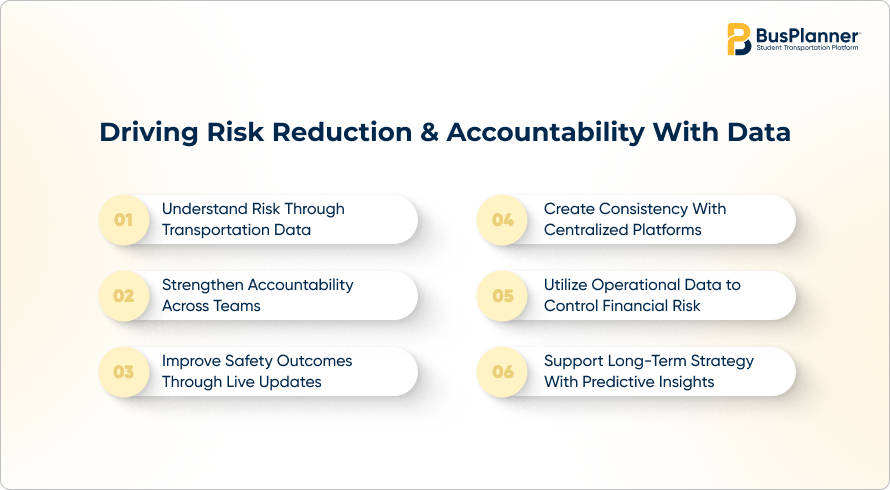
1. Understand Risk Through Transportation Data
Identify how operational data reveals hidden vulnerabilities before they escalate into safety or service issues. A clear understanding of daily performance supports proactive risk reduction.
- Route Performance Visibility: Review on-time performance, route duration trends, stop-level delays, and operational safety risks to find patterns that increase exposure to complaints, missed instructional time, or unsafe driving conditions.
- Driver Behavior Awareness: Monitors speeding, harsh braking, and extended idling to reduce incidents and support consistent driver coaching.
- Vehicle Condition Insight: Tracks maintenance schedules, inspection results, and breakdown history to reduce roadside incidents and service disruptions.
2. Strengthen Accountability Across Teams
Establish consistent data practices to create shared responsibility across planning, dispatch, and operations. Use reliable records to support fair evaluations and defensible decisions.
- Documented Decision History: Captures routing changes, assignments, and schedule adjustments so leadership can explain why decisions were made.
- Role-Based Performance Metrics: Measures planners, dispatchers, and supervisors' performance using indicators aligned with their daily responsibilities.
- Audit-Ready Records: Maintains accurate trip logs, service reports, and activity histories that support reviews and compliance checks.
3. Improve Safety Outcomes With Real-Time Insights
Rely on real-time operational data to respond quickly to issues affecting students, drivers, and parents. Build confidence with accurate, timely information.
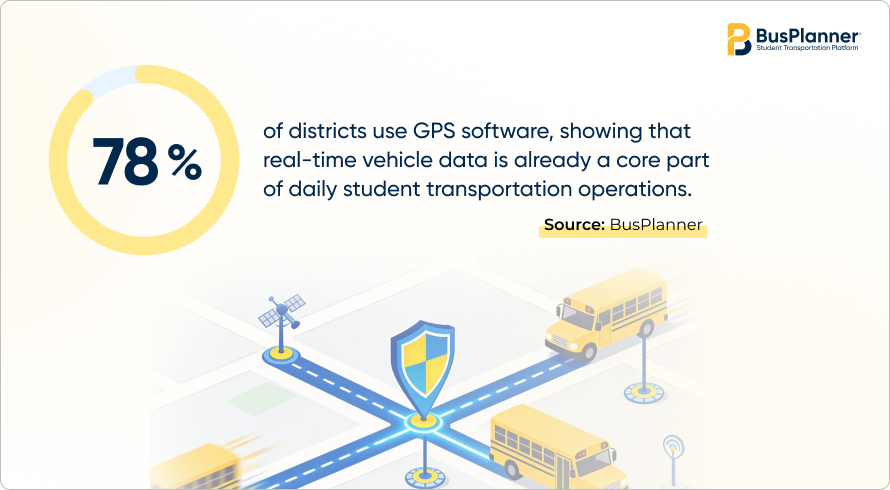
- Live Location Awareness: Uses school bus GPS software to confirm bus locations during delays, weather events, or unexpected route changes.
- Incident Review Support: Leverages timestamped location and activity data to clearly reconstruct events and support accurate investigations.
- Reliable Communication Updates: Share accurate arrival information based on actual conditions, not estimates.
4. Create Consistency With Centralized Platforms
Consolidate transportation data to eliminate conflicting reports and manual errors. Rely on a single source of truth to simplify oversight.
- Unified Transportation Operations: Centralizes routing, vehicle activity, driver assignments, maintenance records, and trip data through an all-in-one student transportation platform, providing clear, system-wide visibility.
- Reduced Manual Errors: Minimizes reliance on spreadsheets and disconnected tools that often cause data gaps, duplicate entries, and reporting inconsistencies.
- Cross-Department Transparency: Allows transportation, finance, safety, and administration teams to reference the same accurate, up-to-date operational data.
5. Utilize Operational Data to Control Financial Risk
Connect operational data to budget planning using student transportation financial planning software to support responsible financial decisions. Reduce uncertainty by understanding true service costs before they impact the transportation budget.
- Route Cost Analysis: Applies route data from school bus routing software to evaluate mileage, drive time, and fuel usage, revealing the true cost of each route.
- Staffing Forecast Accuracy: References ridership, bell schedules, and driver availability data to plan coverage more accurately and manage overtime exposure.
- Trip Cost Visibility: Evaluates activity data in field-trip software for school buses to ensure trip costs remain aligned with approved budgets.
6. Support Long-Term Strategy With Predictive Insights
Apply historical trends to guide future planning and resource decisions. Prepare for change by using evidence instead of assumptions.
- Enrollment Impact Modeling: Anticipates how enrollment shifts or boundary adjustments affect routing and fleet needs.
- Fleet Replacement Planning: Assesses mileage and maintenance data from school bus fleet management software to support long-range capital planning.
- Service Scenario Testing: Model operational changes to understand how decisions affect safety, reliability, and accountability.
Key Takeaway: Turning Data Into Safer, More Accountable Operations
When transportation data is consistent, timely, and easy to interpret, districts gain clarity at every level of their operation. Leaders can anticipate challenges, justify decisions confidently, and keep safety, service quality, and fiscal responsibility aligned without relying on guesswork or reactive fixes.
Learn how a student transportation platform brings visibility and accountability to everyday transportation decisions.
FAQs
Q1. How does data improve transparency with parents and administrators?
Accurate data lets districts explain delays, route changes, or service decisions with facts. Sharing information builds trust and reduces misunderstandings during disruptions.
Q2. How does data help reduce risk in K12 student transportation?
Data helps identify patterns that may lead to safety or service issues before they escalate. By reviewing route performance, driver behavior, and vehicle condition data, transportation teams can proactively address risks.
Q3. How does data support better routing decisions?
Reliable data from school bus routing software helps balance ride times, miles driven, and student loads. Reviewing historical route performance lets districts adjust routes for efficiency, safety, and consistency.