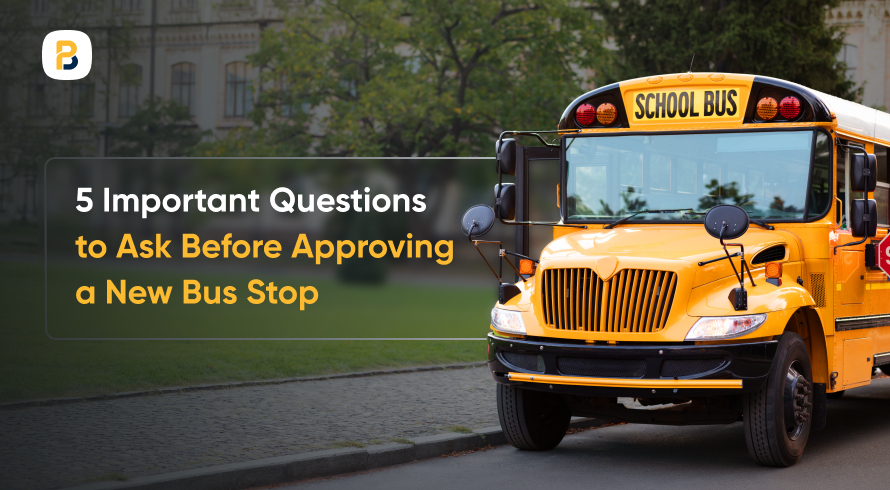
A single stop request looks simple on paper. One family, one corner, one ask. But every new bus stop added without a structured review process can shift ride times, alter driver workloads, introduce pedestrian hazards, and create a precedent that opens the door to dozens of similar requests. Getting bus stop approval criteria for school districts right is one of the most underrated planning decisions transportation teams make all year.
According to NHTSA, children are most vulnerable not while riding the bus, but while waiting at stops, boarding, or walking between home and the stop. That single insight reframes every stop request as a safety decision first and a logistics decision second. The five questions below give transportation teams a consistent framework for evaluating new stop requests with confidence.
1. Is the Pedestrian Path to This Stop Safe?
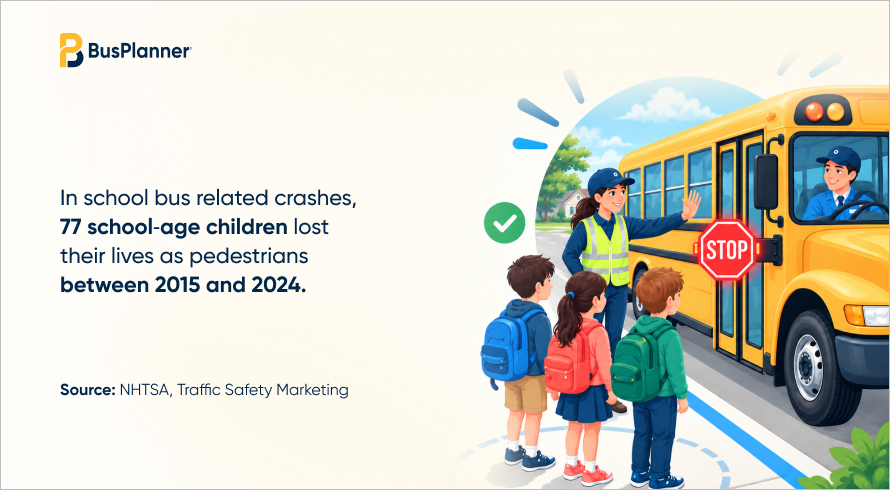
A stop review should include more than the location where students board the bus. Transportation teams also need to consider how students will reach the stop, where they may need to cross a roadway, and what motorists and the bus driver can see as they approach the location.
- Check Sight Distance and Crossings: Review curves, hills, intersections, traffic conditions, and other features that may limit visibility. If students need to cross the road, include that crossing in the review rather than evaluating the loading point on its own.
- Review the Walking Path: Look at the path students will use between home and the proposed stop, including sidewalks or shoulders, driveways, roadway conditions, and places where students can wait away from traffic.
- Consider Changing Conditions: Think about how darkness, weather, or other seasonal conditions could affect visibility and access during the school year.
The same considerations also matter when transportation teams review student transportation safety across existing stops and routes.
2. Does This Stop Meet Your District Policy & State Requirements?
Before approving a new stop, check the policies and requirements that apply to the request. Transportation eligibility, walking distances, stop placement, roadway crossings, and exceptions for hazardous conditions can vary by state and district, so the same request may be handled differently from one operation to another.
- Check Transportation Eligibility: Confirm whether the student qualifies for transportation under the rules that apply in your district. If distance from school is part of the eligibility criteria, verify the student’s address and applicable threshold before considering a new stop.
- Review Local Stop Criteria: Check the district’s requirements for walking distance to an assigned stop, stop spacing, roadway crossings, and other location-specific criteria. This keeps the proposed stop aligned with the same standards used elsewhere in the transportation network.
- Document Any Exceptions: If district policy allows exceptions for hazardous conditions or other circumstances, record why the request qualifies and who approved it. That gives the transportation team a clear record if a similar request comes in later.
3. What Is the Ripple Effect on the Existing Route?
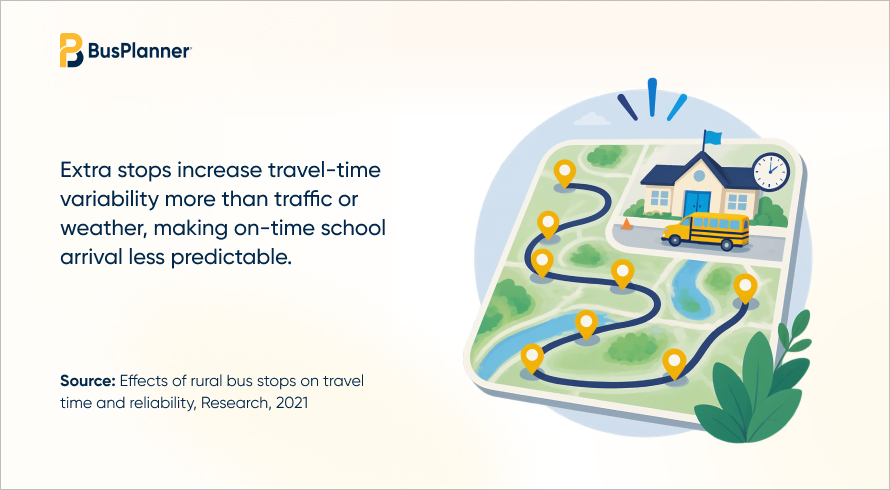
A proposed stop should be reviewed in the context of the full run. Depending on its location, adding it may change the stop sequence, require a different approach to part of the route, or affect whether the bus still reaches school within its planned bell-time window.
- Check the Impact on Current Riders: Compare the run before and after the proposed stop is added. Look at changes to ride times, particularly for students already spending the longest time on the bus, as well as any additional turns or roadway segments needed to serve the location.
- Recheck Bell Times and Tiers: Make sure the revised run still reaches school within its scheduled arrival window. If the bus serves another school afterward, check whether the change leaves enough time to complete the first run and begin the next tier as planned.
- Compare the Requested Stop With Alternatives: The family’s requested location may not be the only workable option. School bus routing software can help transportation teams compare the proposed stop with nearby locations or adjustments to the surrounding route before the change is finalized.
4. Can You Reliably Serve & Communicate This Stop?
A stop may look workable on a map but still create problems when a bus serves it every morning and afternoon. Before approving the location, transportation teams should consider how the bus will approach and leave the stop, whether any special maneuver is required, and how the change reaches the people who need it.
- Check the Bus Approach: Review the direction of travel, available sight distance, traffic conditions, and the space the bus needs to stop safely. Pay particular attention to locations that require a turnaround or backing maneuver.
- Update the Driver’s Route Information: Once the stop is approved, make sure the new location, stop sequence, and any relevant route hazards are reflected in the driver’s current route information. That matters for the regular driver and for substitutes who may not already know the roadway or stop.
- Update Family-Facing Systems: If families receive stop information or bus locations digitally, confirm that the new stop appears correctly before service begins. Keeping school bus GPS software aligned with current route and stop data helps ensure families and transportation staff are working from the same information.
5. Is This Stop Justified by Current & Future Ridership?
Before creating a new stop, check who is expected to use it and what existing stops already serve the area. Student assignments and actual ridership are not always the same, so reviewing both gives transportation teams a better picture of whether a new stop is needed.
- Check the Students the Stop Would Serve: Identify the eligible riders near the proposed location and compare their walking paths with nearby existing stops. If an existing stop can serve those students within district policy, evaluate that option before adding another location.
- Look Beyond the Current Request: Review known enrollment changes, new housing, or other changes in the area that could affect the number of students using the stop. That context helps teams decide whether the request addresses a short-term need or fits the area’s expected transportation demand.
- Review Stops That Are No Longer Being Used: Ridership changes over time, so stop review should not end once a location is added. Use current ridership data to identify stops with little or no recorded use and determine whether they still need to remain on the route. Periodic review can also support efforts to reduce student ride times by keeping stop patterns aligned with current ridership.
Key Takeaways
Each new stop affects more than the student who requested it, because its location becomes part of the walking path, stop sequence, and daily run. School transportation teams need to consider how the change fits with the rest of the route.
A documented review process gives teams a consistent way to evaluate requests against safety, district policy, route impact, daily service, and ridership. It also creates a record of why a stop was approved, adjusted, or declined when similar requests come up later.
Frequently Asked Questions
Q1. What criteria should a school district use when evaluating a new bus stop request?
Review the student's walking path, district and state requirements, the effect on the existing run, daily bus access, and expected ridership. Using the same documented criteria for each request helps transportation teams make consistent decisions.
Q2. How can adding a new bus stop affect an existing route?
A new stop may change the stop sequence, extend ride times, or affect whether a run still fits within its bell-time window. If the bus operates multiple tiers, teams should also check whether the change affects the next scheduled run.
Q3. What should transportation teams check for pedestrian safety at a proposed bus stop?
Review sight distance, roadway crossings, traffic conditions, the student's walking path, and the waiting area. Teams should also consider whether darkness, weather, or seasonal vegetation could change visibility or access during the school year.
Q4. How should districts handle parent requests for new bus stops?
Use the district's established stop-review process rather than evaluating requests differently from case to case. Check transportation eligibility, local stop criteria, safety conditions, and route impact, and document any exception and its approval.
Q5. Should ridership be considered before adding a new bus stop?
Yes. Review which eligible students are expected to use the proposed stop and whether nearby existing stops can serve them within district policy. Known enrollment or housing changes can also help teams understand how demand in the area may change.