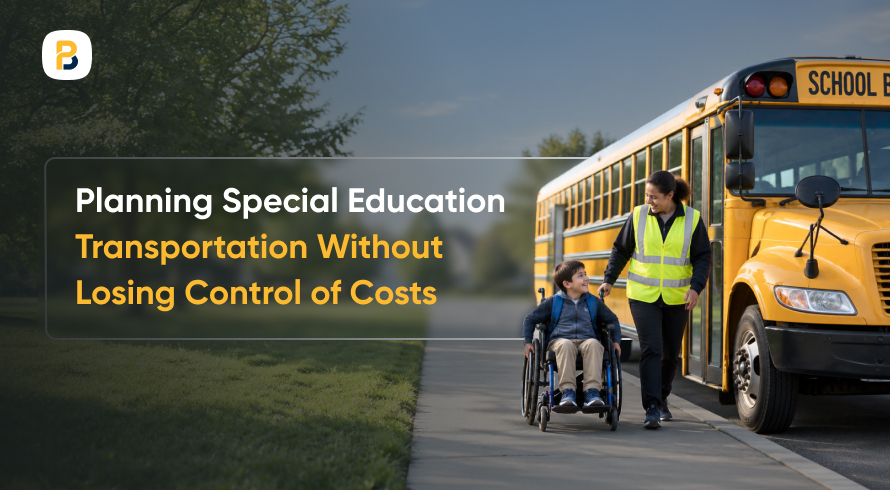
Special education transportation is planned for each student, and every service written into an Individualized Education Program (IEP) carries a cost the school transportation office has to cover. Small rider counts, specialized vehicles, aides on board, and long daily distances all push the per-student figure well above a neighborhood route.
Keeping those costs in view does not require cutting service. The work is understanding what each IEP requirement involves before a run is built, then keeping the record current as student needs shift during the school year.
The five areas below follow a special education run from the service listed in an IEP through to the out-of-district placements a district pays for.
1. Start With the Transportation Service in Each IEP
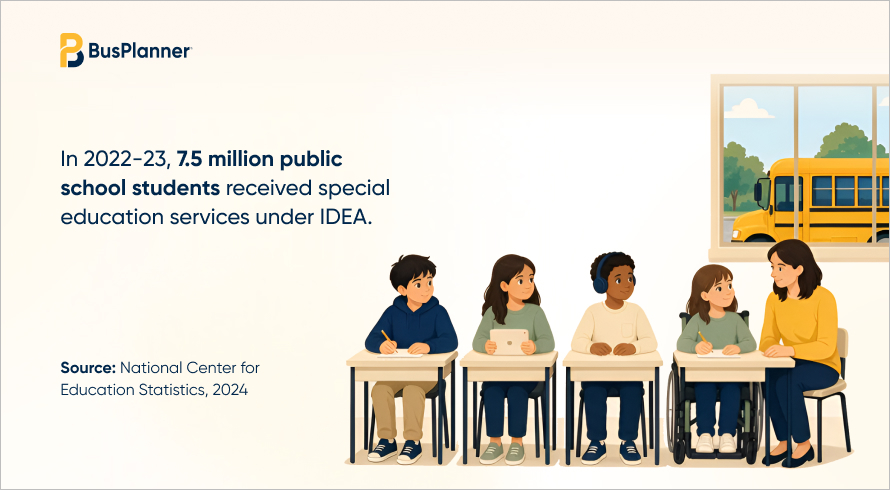
An IEP includes transportation as a related service only when a student needs it to access special education, and the wording of that service sets what the school transportation office has to deliver. Routing staff need those details before a run is built, not during the first week of school.
- Service Details, Not Just Eligibility: Read what the IEP actually specifies: curb-to-curb pickup, an aide on board, a lift-equipped vehicle, or a limit on ride time. IDEA requires each IEP to state the special education and related services the district will provide, so that statement is the routing team’s starting point.
- Intake From Special Education Staff: Ask the special education office to send the school transportation team the service start date, the home address, and the equipment required when an IEP team adds or changes transportation.
- IEP Language in the Student Record: Keep the required service recorded with the student, so any router or dispatcher looking at that assignment sees the same requirement rather than relying on one person’s memory.
2. Group Students by Need & Travel Time
Vehicle and staffing costs follow how students are grouped. Two students living near each other with similar equipment needs and compatible bell times can often share a run, while a student who requires a wheelchair position or a dedicated aide changes what that vehicle can carry.
- Match Equipment to the Run: Confirm wheelchair positions, securement points, and any required child restraint before assigning a student, since a vehicle that fits on paper may not fit once equipment is counted.
- Check Maximum Ride Times: Ride time limits come from IEP language, district policy, or state rules, and the mix varies, so check which applies before extending a run to pick up one more student.
- Bell Times Across Program Sites: Specialized programs frequently start and end at different times than the home school, which affects how many runs one vehicle can cover. Reviewing those windows in school bus routing software shows where a bus has room for another assignment.
3. Track Costs Across Special Education Transportation Runs
A total line in the budget does not show which runs drive the spending. A run with a few riders, an aide on board, and a long daily distance sits in a different range than a neighborhood route, and separating those figures gives the school transportation director something concrete to bring to the business office.
- Cost per Route; Not per Department: Record driver hours, aide hours, mileage, and vehicle assignment against each run. Teams tracking cost per route in student transportation financial planning software can compare planned and actual operational costs run by run.
- Planned Compared With Actual: Scheduled run times rarely survive contact with traffic, door-to-door loading, and student behavior on board. Comparing the plan against what the run takes shows where the budget figure was set too low.
- Contracted Trips in the Same Record: Taxi, van, and reimbursement arrangements belong in the same cost picture as district-operated runs, since they often cover the same students.
Understanding what cost per student really means makes those comparisons easier to explain at a board meeting.
4. Keep School Bus Driver & Aide Assignments Steady
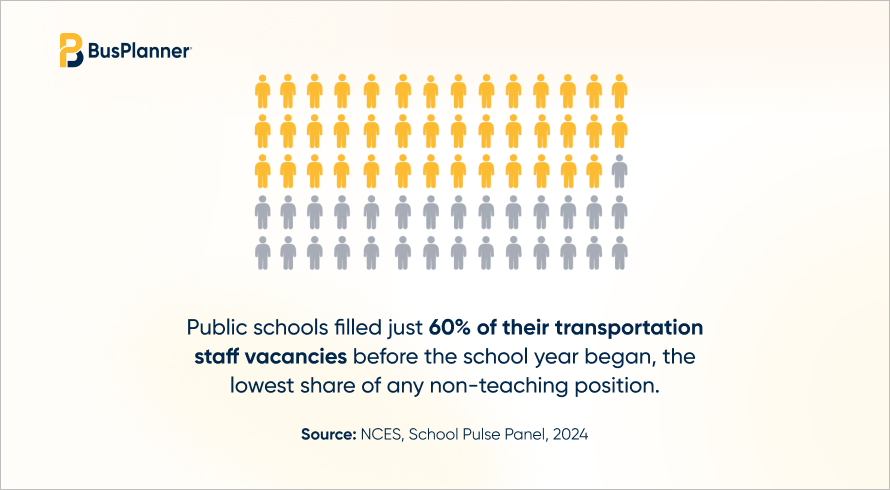
When a regular school bus driver or aide leaves a special education run, the replacement needs to know each student’s routine and equipment before the first trip. A student who depends on a predictable morning notices the change immediately, and the staff on board are the ones who know what that student needs.
- Written Run Notes for Substitutes: Record what the regular school bus driver knows: which door the family uses, how the harness is secured, and which students need extra loading time.
- Training Before the First Run: Confirm that anyone assigned to a special education run has completed securement and evacuation training for that vehicle type, along with any student-specific instruction the special education team provides.
- Consistent Hours for Aide Positions: Aide schedules built around split shifts can be hard to fill, so look at whether midday work or program trips can be combined into steadier hours.
5. Review Out-of-District Placements & Contracts
Placements at programs outside district boundaries often produce the highest per-student cost on the books, since one student may ride alone for an hour each way. The placement itself is a special education decision, and the school transportation office works with that team to arrange how the trip is covered.
- Shared Rides With Neighboring Districts: When students from several districts attend the same regional program, ask whether a shared vehicle is permitted under district policy and any applicable agreement.
- Contract Terms & Rates: Review daily rates, waiting time charges, and cancellation terms before renewal, and check them against what the trips actually cost over the past year.
- Compare Options Before Renewal: Running a trip with district staff and a spare vehicle is sometimes cheaper than a contracted van, and sometimes not. Estimating the cost of each option before the contract is signed gives the business office a figure to work from.
Protect Service While Keeping Costs in View
Service written into an IEP is not negotiable, so cost control in special education transportation comes from the decisions around it: how students are grouped, which vehicle is assigned, how long each run takes, and which trips go to a contractor. Those decisions are easier to defend when the numbers behind them sit in one place.
Routing staff, special education staff, and the business office each hold part of that picture. Bringing the three together on a regular schedule, rather than when a placement appears mid-year, keeps the budget conversation grounded in what the runs actually require.
Frequently Asked Questions
Q1. Who decides whether a student needs transportation as a related service?
The IEP team makes that determination, and the parents are part of that team. School transportation staff are often asked for input on what a particular service would involve operationally, such as vehicle type, equipment, or expected ride length.
Q2. How often should a district review special education run costs?
Review cost per route whenever a run changes significantly, such as a new placement, a student move, or an added aide position. Many teams also set a scheduled review before budget season, so the figures are current when the request goes forward.
Q3. What should a substitute school bus driver receive before taking a special education run?
A substitute needs the run sheet with stop sequence and times, notes on each student's loading and securement needs, and the contact for the dispatcher handling that run. Confirming required training for the vehicle type comes before the assignment, not on the morning of the run.
Q4. What does cost per route mean for a special education run?
Cost per route brings together the driver and aide hours, mileage, and vehicle costs attached to a single run over a given period. Dividing that by the number of students assigned shows what the district spends to serve each rider on that run.