For decades, student transportation communication followed a familiar pattern: a paper schedule mailed home in August, a phone tree activated on snow days, and a dispatch line that rang off the hook whenever a bus ran late. Today, real-time transportation data is replacing that reactive cycle with something far more powerful, proactive, accurate, and always-on communication between districts, schools, and parents.
The shift couldn’t come at a more critical time. Across North America, school transportation departments are managing rising ridership demands with constrained budgets and persistent driver shortages. According to recent national survey data, approximately 80% of school administrators report bus driver shortages as a problem in their districts, with nearly half calling it a major problem. The downstream effect on families is significant: close to half of parents say their children have been late to school at least a few times in the past year due to transportation issues.
Against this backdrop, real-time data isn’t a luxury feature. It’s the connective tissue that binds transportation departments, schools, and families together.
The Old Model Was Built on Guesswork
Think about the experience most parents still have with school transportation. A bus is scheduled to arrive at 7:15AM. At 7:25, the parent starts wondering. By 7:35, they’re calling the transportation office. Multiply that by hundreds of families, and you begin to see the problem that transportation teams face every morning.
That flood of phone calls doesn’t just frustrate parents. It buries transportation staff under a wave of inquiries at the exact moment they need to be solving operational problems, adjusting routes, and communicating with drivers. It is extremely difficult for transportation staff to do deep work, change routes, or dispatch effectively when they are fielding a constant stream of phone calls every morning. By helping parents find their information independently, hours are given back to transportation teams so they can focus on doing their jobs.
Real-time data breaks this cycle. When parents can see for themselves where the bus is and when it will arrive, the need for those calls disappears.
What Real-Time Data Actually Delivers
When we talk about “real-time transportation data,” we’re referring to a connected system where GPS-equipped vehicles continuously relay their position, and that data is translated into actionable information for everyone who needs it: transportation staff, school administrators, and parents.
In practice, that means several things working together:
1. Live Vehicle Tracking
Parents and school staff can see the bus’s actual location on a map, just like tracking a rideshare vehicle. No more guessing if the bus is five minutes away or fifteen.
2. Automated Delay and Change Alerts
If a route is delayed, canceled, or rerouted due to weather, road conditions, or a vehicle swap, parents receive a notification automatically, without anyone at the district needing to pick up the phone.
3. Geo-Fenced Arrival Notifications
Parents get an alert when the bus is approaching their stop, reducing time spent waiting outside, especially valuable for younger students in poor weather or low-light conditions.
4. Boarding and Drop-Off Confirmation
Systems that track student ridership can notify parents when their child boards or exits the bus, providing an added layer of accountability and peace of mind.
Each of these capabilities addresses a specific communication gap that has historically caused friction between families and schools.
The Ripple Effect: Access to Data Improves Communication, Solving Bigger Problems
The benefits of real-time transportation communication reach well beyond convenience. When districts invest in this capability, several interconnected improvements tend to follow.
Reduced Call Volume and Freed-Up Staff
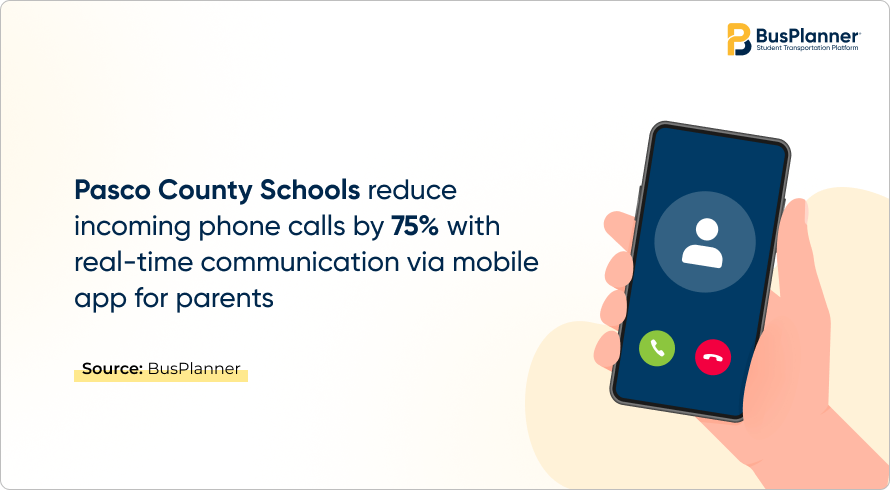
This is often the first and most measurable impact. When parents have direct access to accurate, live information about their child’s bus, the morning and afternoon call surges drop dramatically. That means dispatchers can focus on dispatching, route planners can focus on planning, and supervisors can spend their time on operational improvements rather than fielding repetitive “where’s my bus?” inquiries.
Stronger Trust Between Families and Districts
Trust in school transportation is built on transparency. When a parent can open an app and see exactly where the bus is, that transparency is built into every interaction. Research into districts that have implemented real-time parent-tracking apps has shown that this kind of visibility can meaningfully increase bus ridership, as families who previously drove their children to school because of unpredictable bus timing feel confident enough to return to school bus service.
Fewer Missed Stops and Fewer Students Left Behind
When parents know the bus is three minutes away, students are ready at the stop on time. Fewer missed pickups mean fewer mid-route delays, fewer parent calls asking for a second pass, and fewer students arriving at school late. It’s a positive feedback loop: better data leads to better behavior on both sides, which leads to smoother operations overall.
Improved Support for Students With Special Needs
For families of students with special transportation requirements, real-time visibility is especially meaningful. Knowing precisely when a vehicle will arrive, being notified when their child boards, and having a direct line to accurate trip information eliminates much of the anxiety that can surround special-needs transportation. One story highlighted in industry reporting described a parent of a special-needs student who was able to see exactly when her child was picked up and dropped off each day, calling the visibility a source of genuine peace of mind and consistency.
Better Emergency Communication
When unexpected events occur, whether that’s a vehicle breakdown, a weather emergency, or a traffic incident, real-time systems allow districts to push accurate information to parents immediately. This replaces the old model of delayed phone trees and secondhand information with instant, direct communication that helps parents make informed decisions quickly.
In today’s digital-first world, parents expect the same level of communication from schools as they get from a delivery app. They want to know: Where’s the bus? Was my child picked up? Why is there a delay?
The Emerging Standard in K–12 Transportation
The communication standard has changed. Parents today are accustomed to real-time visibility in every other part of their lives. They can track a package, a food delivery, and a rideshare car with a tap. When their child’s school bus is the one thing they can’t track, it stands out, and not in a good way.
This isn’t about chasing consumer technology trends for their own sake. It’s about recognizing that clear, timely, accurate communication is the foundation of trust between a school district and the families it serves.
When transportation data flows in real time, everyone, from the dispatcher to the driver to the parent standing at the bus stop, is operating from the same shared understanding. That alignment is what turns a transportation department from a source of daily stress into a reliable, trusted part of the school community.
The districts that get this right don’t just improve their operations. They fundamentally change the relationship their families have with school transportation. And in an era of driver shortages, budget pressures, and growing ridership demands, that relationship matters more than ever.
FAQs
Q1. What is real-time transportation data in K-12?
It refers to a connected system where GPS-equipped school buses continuously relay their position, and that data is translated into actionable information for transportation staff, school administrators, and parents, including live vehicle tracking, automated delay alerts, arrival notifications, and boarding confirmations.
Q2. How does real-time bus tracking reduce call volume for transportation departments?
When parents can see for themselves where the bus is and when it will arrive, the need to call the transportation office drops significantly. This frees dispatchers, route planners, and supervisors to focus on operations and problem-solving rather than fielding repetitive "where's my bus?" inquiries.