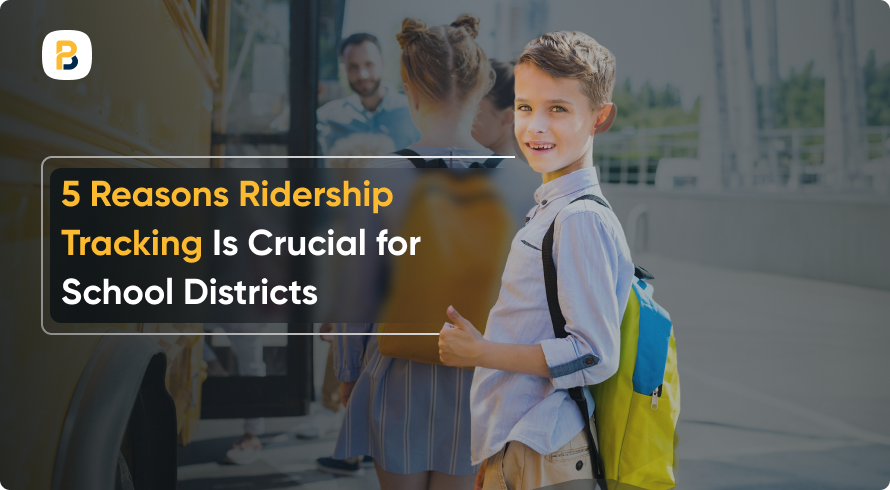
Only 41% of transportation departments currently use student ridership tracking, yet it ranks as the single most desired technology investment for 2026, according to a survey of transportation fleet leaders published by School Transportation News. That gap between adoption and demand tells you something important: districts that are not yet tracking ridership are not behind the trend. They are behind the data their peers are already acting on.
Student ridership tracking for K-12 school districts is no longer a nice-to-have feature tucked inside a GPS system. It is a foundational data layer that touches safety, budgeting, parent trust, and route efficiency all at once. Here are six reasons transportation teams across the United States are treating it as a core operational priority.
1. Student Safety and Real-Time Accountability
Knowing which students are on a bus at any given moment is the most direct form of student safety your team can provide. Manual headcounts and paper rosters leave too much room for error, and a single missed boarding or wrongful drop-off can trigger a cascade of emergency calls across dispatch, schools, and families. Real-time ridership data replaces that reactive scramble with a proactive record.
- Immediate Boarding Verification: When a student scans or taps on and off a bus, that event is logged instantly. If a child does not appear on the afternoon run, your team knows before the bus pulls away from the curb rather than after a parent calls in a panic.
- Wrongful Drop-Off Prevention: Ridership tracking ties a student identity to a specific stop, which means drivers have a verifiable record rather than relying on memory alone. This is especially valuable for younger riders or students with special needs.
- Incident Response Speed: In the event of an emergency, a real-time ridership log tells first responders exactly who was on board. That information can be the difference between minutes and hours in a crisis.
Learn more about how real-time data supports daily operations in our post on improving communication in student transportation.
2. Smarter Route Optimization Using Real Data
Route planning built on assumptions is route planning waiting to fail. When districts do not know how many students actually ride each run, they end up running buses at 30% capacity on some routes while overcrowding others. Actual ridership data turns that guesswork into precision.
- Capacity-Based Consolidation: If ridership data consistently shows low utilization on two adjacent routes, a transportation team can consolidate them with confidence rather than relying on enrollment projections that rarely match reality.
- Seasonal and Schedule Adjustments: Ridership patterns shift around holidays, testing windows, and early release days. Tracking actual boarding data across the calendar gives teams a defensible basis for adjusting run counts and bus assignments.
- Cost Reduction Without Cutting Service: Removing a route that data shows is underused is a very different conversation than removing one based on gut feel. Ridership records give budget conversations the specificity they need.
See how route planning tools can turn ridership insights into measurable efficiency gains.
3. Reducing the Parent Communication Burden

Parent communication is one of the most consistently reported pain points in student transportation. The volume of incoming calls does not come from parents who are uninformed. It comes from parents who are uncertain. Ridership tracking closes that uncertainty gap faster than any other single tool.
- Automated Boarding Alerts: When a parent receives a notification that their child boarded or exited the bus, they do not need to call the transportation office to confirm. That one data point eliminates a significant portion of daily inbound call volume.
- Reducing Repeat Contacts During Disruptions: According to the BusPlanner Industry Report, 40% of teams say manual follow-ups and repeated clarification are common during disruptions. A timestamped ridership log gives families and staff a shared source of truth that cuts those follow-up cycles short.
- Supporting Parent App Adoption: A parent app that shows bus location is useful. A parent app that also confirms their child is actually on that bus is indispensable. Ridership data is what makes the difference between those two experiences.
4. Budget Justification & State Reporting
Transportation budgets are under pressure in nearly every district across the United States. State funding formulas for student transportation often require verified ridership counts, and inaccurate data can translate directly into lost reimbursements. Ridership tracking is not just an operational tool. It is a financial one.
- Audit-Ready Reporting: Manual ridership logs compiled at the end of each month are prone to gaps and errors. Automatically generated ridership reports are time-stamped, complete, and ready for submission without additional staff time.
- Demonstrating Service Utilization: When district leadership or school boards ask whether a route is worth its cost, ridership data provides a clear answer. Utilization rates across all runs give administrators the documentation to defend or restructure the transportation budget with confidence.
- Connecting Data to Funding Decisions: Several states tie transportation reimbursement to verified student counts. Districts that cannot produce accurate ridership records may be leaving significant funding on the table each school year.
5. Supporting Drivers in High-Pressure Situations
Drivers are managing student behavior, navigation, schedule adherence, and safety protocols simultaneously. Adding a manual student count to that workload increases distraction at exactly the wrong moments. Digital ridership tracking removes that burden without removing the accountability.
- Hands-Free Verification: Scan-based or tap-based boarding systems log ridership automatically, so drivers do not need to check a paper roster at every stop. The system handles the record while the driver focuses on the road and the students.
- Substitute Driver Readiness: When a route is covered by a substitute, ridership data gives that driver immediate access to who should be on board and where each student gets off. That context is not always communicated clearly in manual handoffs, and the gaps create real safety risk.
- Connecting to Broader Driver Support Tools: Ridership data sits alongside GPS and dispatch information in a connected operations picture. When a driver needs help, dispatch already has the context they need to respond accurately.
6. Building a Foundation for Smarter Technology

Transportation teams are increasingly being asked to do more with less. Artificial intelligence for route optimization, predictive maintenance, and automated dispatch are all areas where districts are beginning to invest. Every one of those technologies performs better when it has accurate ridership data underneath it.
- AI Route Refinement Requires Real Usage Data: According to the BusPlanner Industry Report, 21% of transportation leaders see AI-assisted route optimization as a priority. An AI model trained on inaccurate ridership assumptions will produce inaccurate recommendations. Clean boarding and exiting data is the input that makes those recommendations trustworthy.
- Predictive Planning Across the Year: Ridership trends over time reveal patterns that static enrollment data never will. Which routes lose riders after winter break. Which stops are consistently empty. Which runs are growing. Those patterns are only visible when the data has been collected consistently.
- Platform-Wide Connectivity: A student transportation platform that connects ridership data to routing, GPS, dispatch, and parent communication gives transportation teams a single source of truth rather than a collection of disconnected tools that each tell a different story.
Conclusion
Student ridership tracking for K-12 school districts is one of the highest-return operational investments a transportation team can make. The data it produces touches every part of the operation, from safety accountability and route efficiency to parent trust and budget documentation.
That 41% adoption figure is not a ceiling. It is a starting point. Districts that build accurate ridership data into their daily operations now will be better positioned to act on every technology improvement that follows. The districts not yet tracking ridership are not lacking the technology. They are lacking the data that makes every other technology investment worth more.
Frequently Asked Questions
Q1. What is student ridership tracking for K-12 school districts?
Student ridership tracking is a system that records when and where individual students board and exit a school bus, creating a real-time accountability record for transportation teams, school staff, and families. It replaces manual headcounts and paper rosters with verified, time-stamped data. According to the BusPlanner Industry Report, 84% of districts already use routing software, and ridership tracking is the data layer that allows teams to fully act on what that software shows. Learn more in our ebooks and research library.
Q2. Why should school districts invest in ridership tracking now?
Student ridership tracking ranked as the single most desired technology investment for 2026 among K-12 transportation professionals, yet only 41% of departments currently use it, according to a School Transportation News survey. That gap represents a real operational risk, including missed state funding opportunities, parent communication breakdowns, and safety blind spots that manual processes cannot reliably address.
Q3. How does ridership tracking reduce parent phone calls to the transportation office?
Automated boarding and exiting alerts sent through a parent app give families direct confirmation that their child is on or off the bus, removing the uncertainty that drives most inbound calls. The BusPlanner Industry Report found that 40% of transportation teams report manual follow-ups and repeated clarification during disruptions as a common burden, a problem that timestamped ridership logs directly address. Explore how parent portals support this communication flow.
Q4. How does student ridership data support school district budgets?
Ridership data documents actual bus utilization, which supports route consolidation decisions and provides the verified student counts many states require for transportation reimbursement. Districts that cannot produce accurate ridership records risk leaving funding unreceived and lack the evidence needed to defend or restructure transportation budgets in front of school boards.
Q5. What technology do school districts need for student ridership tracking?
Most ridership tracking systems rely on scan-based or tap-based boarding verification, paired with GPS data and a connected dispatch or routing platform. According to the BusPlanner Industry Report, 78% of districts already use GPS or telematics systems, which provides the foundational infrastructure many ridership tracking tools build on. Real-time tracking tools that integrate ridership data with GPS visibility give transportation teams the most complete operational picture.
Ready to put your ridership data to work?
A student transportation platform built for K-12 districts connects ridership tracking with routing, GPS, dispatch, and parent communication so your team has one accurate picture of every run, every day.