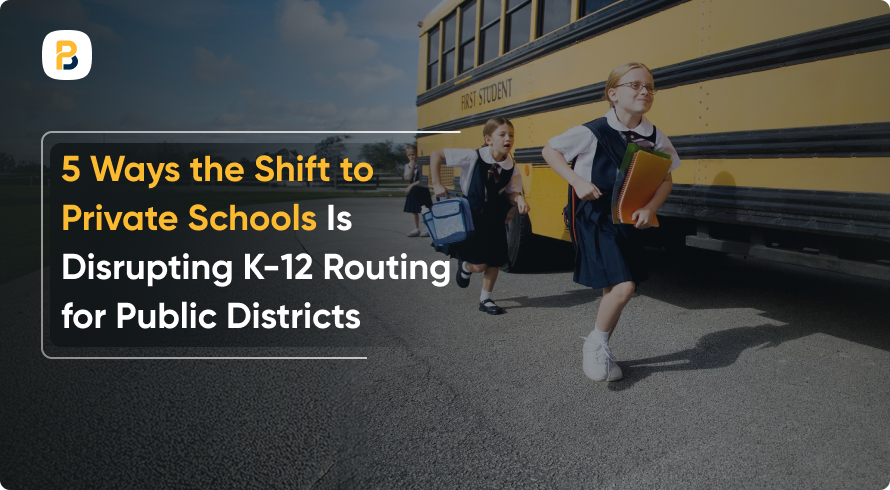
School transportation is becoming more complex as enrollment patterns continue to shift. More families are choosing private and charter schools, changing where students travel each day and making routing decisions less predictable for public school districts.
These enrollment changes don’t stay within school walls. Students who once traveled along predictable routes may now attend schools across town, while others leave district transportation altogether.
For transportation teams already managing tight budgets and staffing shortages, these shifts introduce new operational challenges. Here are five ways changing enrollment patterns are affecting K-12 routing and what districts should consider as they prepare for the school year.
1. Ridership Gaps Are Breaking Route Density
When students leave a public school for a private or charter option, they do not disappear from the map. Their seats on the bus disappear, but the route remains. What starts as an enrollment shift quickly becomes both a logistical and financial challenge for transportation teams.
Public school bus services contracted 1.3% to $13.6 billion in 2026 as enrollment declines and unfilled driver positions constrained service capacity. Fewer riders per route mean a higher cost per student, even though buses often still need to cover the same geographic area. That’s why transportation teams should review ridership density before each school year, rather than waiting until contracts or budgets are revisited.
- Sparse Stop Patterns Add Run Time: When five students are spread across a route that once served twenty, the bus still makes nearly the same number of stops. Travel time remains high while route efficiency declines.
- Consolidation Requires Real Data: Consolidating underutilized routes can improve efficiency, but only when decisions are backed by accurate, up-to-date ridership data. Route planning tools built for changing enrollment patterns help transportation teams evaluate consolidation scenarios before making changes that affect students and families.
2. Legal Obligations Are Adding Routes Districts Did Not Budget For
Many transportation directors are surprised to learn how much of the transportation responsibility for private and charter school students can fall on public districts. Understanding these legal requirements is essential because they directly influence fleet capacity, driver staffing, and transportation budgets.

In many states, transportation requirements for charter school students are not always matched by proportional state funding. That gap between responsibility and funding can place significant pressure on district transportation operations.
- Unfunded Mandates Strain Route Budgets: When districts are required to transport charter school students without receiving proportional funding, those additional routes compete for the same drivers, vehicles, and operational resources already serving public school students.
- State Law Varies Widely: Transportation requirements differ significantly from state to state, making it important for districts to review their legal obligations regularly as enrollment patterns evolve. The outsourcing versus in-house trade-offs explored in this blog post on student transportation decisions are worth considering when mandated routes begin stretching existing capacity.
3. Congestion Around Schools Is Getting Worse
Every student who switches from riding the school bus to being driven by a parent adds another vehicle to morning and afternoon traffic around school campuses. As more families explore private and charter school options, public districts often feel the ripple effects. More parent drop-offs can increase congestion, making it harder for buses to stay on schedule.
Bus Stop Timing Gets Harder to Predict: When traffic builds up around schools, even a small delay at one stop can affect the rest of the route. What begins as a few extra minutes can quickly impact on-time performance for every student that follows.
Real-Time Visibility Becomes Essential: Transportation teams that can see where buses are in real time are better equipped to respond to delays and keep families informed. Real-time tracking tools help dispatchers identify congestion-related issues early and communicate more accurate arrival updates before parents need to call.

4. Mid-Year Enrollment Swings Are Forcing Reactive Rerouting
Private school enrollment doesn’t always change at the start of a school year. Families relocate; students transfer mid-year, scholarship opportunities become available, and charter school waitlists open unexpectedly.
For example, adding just one new student to a route may seem like a minor change, but if that student lives well outside an existing stop pattern, it can require rerouting a bus, adjusting pickup times for dozens of other students, or even reassigning drivers. What starts as a single enrollment change can quickly ripple across the transportation network.
According to the BusPlanner Industry Survey 2026, 19% of transportation professionals identify schedule changes as an ongoing operational challenge. In reality, disruption often extends beyond the schedule itself. Without the right tools, mid-year routing changes can lead to manual route updates, driver reassignments, and delayed communication with families.
5. Parent Communication Is Falling Behind the Pace of Change
Every routing change creates a communication challenge. Whether a stop is moved, a pickup time changes, or a student is reassigned to a different route, families expect timely and accurate updates. As enrollment patterns become less predictable, keeping parents informed becomes just as important as planning the routes themselves.
Many transportation teams already have parent communication tools in place, but technology alone isn’t enough. When routing information isn’t updated quickly, families are left with outdated stop details or arrival times, leading to confusion, increased phone calls, and added pressure on dispatch and office staff.
- Outdated Stop Information Erodes Trust: When families rely on outdated pickup times or stop locations after a route change, confidence in the transportation system quickly declines. What starts as confusion often results in an increase in phone calls, placing additional pressure on dispatchers and transportation staff.
- Proactive Outreach Reduces Inbound Volume: Keeping families informed before they notice a change helps reduce uncertainty and minimizes reactive calls to the transportation office. A student transportation platform that connects routing data with parent notifications allows districts to communicate updates more efficiently while reducing the manual effort involved.
The Bottom Line
Enrollment patterns are changing, and routing strategies need to evolve with them. As more families explore private and charter school options, transportation departments are balancing shifting ridership, changing service obligations, and more frequent route adjustments, all while working with the same limited resources.
The districts responding most effectively aren’t waiting until the next school year to rethink their routes. They’re treating routing as an ongoing planning process, using accurate data to make informed decisions and keeping families informed as changes happen. As enrollment continues to evolve, a flexible, data-driven approach will help districts maintain reliable service and adapt with confidence.
Frequently Asked Questions
How do enrollment shifts affect K-12 bus routing?
As students move between public, private, and charter schools, transportation teams may need to adjust routes, stop locations, and vehicle assignments. Even small enrollment changes can reduce route efficiency and increase planning complexity.
Why are mid-year enrollment changes challenging for transportation departments?
Unlike changes that happen before the school year begins, mid-year enrollment shifts often require districts to update routes with little notice. This can lead to manual route adjustments, driver reassignments, and additional communication with families.
How can districts maintain efficient routes as enrollment changes?
Regularly reviewing ridership data and evaluating route performance helps districts respond more effectively to changing enrollment patterns. Modern routing software can also help transportation teams model different scenarios before implementing route changes.
Why is parent communication important during routing changes?
When pickup times or stop locations change, families need accurate updates as quickly as possible. Clear communication helps reduce confusion, lowers call volume to transportation offices, and builds trust with parents.