Winters are often one of the most demanding times of the year for student transportation professionals. Snowy roads, reduced visibility, and unpredictable weather patterns can quickly turn a typical school day into a logistical challenge. In such circumstances, ensuring that every student reaches school safely and on time becomes a true test of preparedness, coordination, and communication.
In this blog, we explore the most common winter challenges faced by student transportation providers and the best ways to overcome them.
Fleet-Related Issues
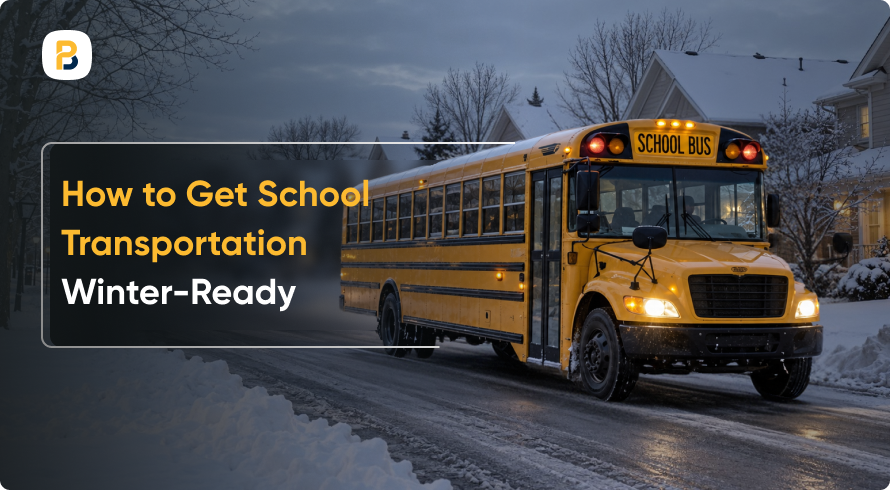
Cold weather takes a real toll on vehicle performance; battery capacity drops, engine oil thickens, and tire pressure falls. Here is what transportation departments can do to tackle this issue:
- Schedule Maintenance: Districts can leverage school bus fleet management software to plan preventive maintenance and avoid breakdowns during cold weather.
- Monitor Fleet Readiness: Track vehicle records and use data to ensure every bus is safe, compliant, and winter-ready.
Unexpected Road Closures
Due to heavy snowfall, roads may be closed, delays may occur, and alternate routes might be required at short notice. For student transportation managers, this adds an extra layer of complexity. This challenge can be managed by:
- Optimized Routing: Use school bus routing software to quickly reroute vehicles and notify parents or schools about changes in real time.
- Plan Alternate Routes in Advance: Build flexibility into route planning by identifying safe detour options ahead of time.
- Real-time Updates for Parents: When the route changes, the estimated time of arrival may also change. Real-time updates through mobile apps for student transportation allow you to keep parents informed about these changes.
Poor Visibility
Winter brings shorter days, fog, and heavy snowfall, all of which reduce visibility for drivers. Poor visibility increases the risk of missed stops and accidents, particularly on early-morning routes. Here are a few ways to deal with poor visibility:
- Use High-Quality Lights: Install high-quality lights and reflective markings on vehicles to improve visibility on the road.
- Train Drivers: Drivers should be trained to reduce speed and maintain extra distance from the vehicle ahead when visibility is low.

Student Wait Time at Stops
Winter mornings can be harsh! Students waiting at bus stops in freezing temperatures face discomfort and potential safety risks. Reducing wait times is essential for student safety and parent peace of mind. With the help of online portals and mobile apps, parents and students can receive live updates on the bus’s estimated arrival, allowing students to leave home at the right time and minimize exposure to the cold.
Key Takeaways
Winter presents unique challenges for student transportation, from road blockages and low visibility to unexpected route changes and long waits at stops.
By leveraging a student transportation platform, districts can proactively maintain vehicles, optimize routes, communicate in real time, and keep students safe. Contact us to learn how BusPlanner can help!
Frequently Asked Questions
What are the biggest winter challenges for school transportation?
Icy roads, delayed routes, reduced visibility, vehicle breakdowns, and driver shortages are the main hurdles districts face during winter.
When should districts start preparing for winter operations?
Planning in early fall ensures that timely maintenance, route reviews, and staff training are complete before the weather gets harsh.
How can transportation teams communicate faster during snow days?
Student transportation software with automated alerts, live bus tracking, and integrated parent apps can instantly share delay or closure updates with the transport teams and families.
How does technology help tackle winter challenges?
Integrated platforms like BusPlanner connect routing, GPS, and parent communication, reducing chaos during storms.