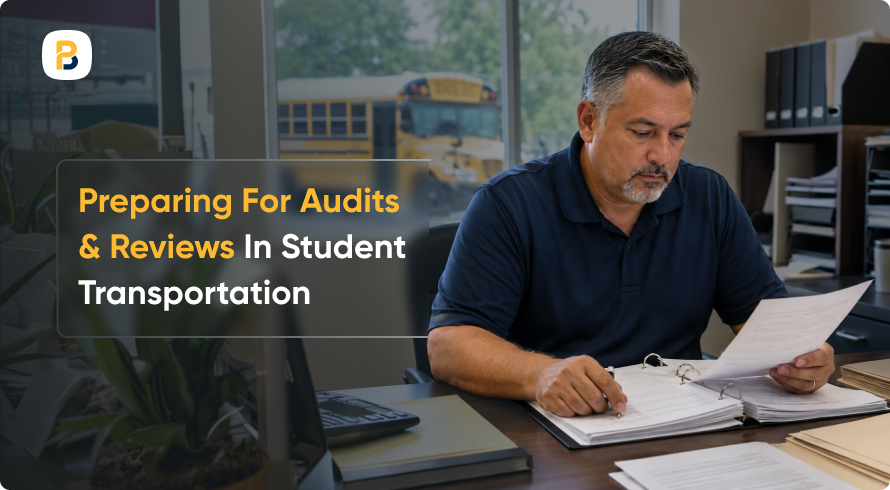
Audits and reviews get a lot easier when readiness is just part of how you operate. For US school districts, that means keeping route records, safety documentation, driver files, fleet information, communication logs, and service data organized before anyone asks for them.
Student transportation has become one of the fastest-growing line items in public school budgets, rising 14.5% in a single year between fiscal 2021 and 2022 in NCES data. As the spending grows, so does the attention on it. When a review asks how that money was spent, whether routes run efficiently, or whether the students you transport are eligible, your records are what answer for you.
Why Audit Readiness Matters In Transportation Operations
Audits and reviews touch more than compliance paperwork. They expose route inefficiencies, documentation gaps, safety risks, and unclear accountability, which is why staying ready works best as an everyday habit instead of a scramble.
- Service Reliability Matters: When documentation is incomplete, your team spends the review period chasing missing files instead of running daily service. Organized records let dispatch, routing, fleet, and administration answer with confidence.
- Safety Records Need To Be Accessible: NHTSA notes that less than 1% of all traffic fatalities involve children on school transportation vehicles, though students face the most risk approaching or leaving the bus. That makes stop-level safety documentation worth keeping current.
- Driver Capacity Can Affect Findings: A 2021 national survey by the pupil transportation associations found 51% of respondents called their driver shortage severe or desperate, and 65% ranked it their number one concern. Staffing pressure shows up in route coverage, training records, and service consistency, all of which a review can surface.

What To Organize Before An Audit Or Review
Good audit prep starts with knowing where records live and who owns them. You don’t need a complicated system. You need consistent folders, clear naming, current data, and a routine for checking that it’s accurate.
- Route and Stop Documentation: Keep current route sheets, stop locations, bell time assumptions, hazard notes, special transportation instructions, and route change approvals together in one place. For routing support, see modernizing transportation operations with routing software.
- Driver & Training Records: Maintain CDL status, endorsements, background check documentation, training completion, ride-along notes, incident follow-up, and refresher dates to district and state requirements.
- Fleet & Inspection Records: Organize preventive maintenance schedules, inspection reports, defect reports, repair history, mileage, fuel data, and out-of-service notes. FMCSA rules require any out-of-service defect to be fixed before the vehicle runs again.
- Incident & Communication Logs: Keep records of parent calls, late-bus notices, student behavior issues, accidents, complaints, and how each one was resolved. See parent communication strategies for transportation teams.
- Technology and Data Access: When route, dispatch, fleet, and communication records live in one connected student transportation system, they’re far easier to pull up the moment a reviewer asks.
How To Build A Repeatable Review Process
Audit readiness improves when it becomes a monthly routine instead of a last-minute scramble. The goal is to keep records accurate enough that a review confirms what your team already knows
- Assign Record Owners: Give each record category a clear owner. Routing, dispatch, fleet, safety, HR, and finance should each know which files they maintain and how often they update them.
- Run Quarterly Self-Reviews: Check a sample of driver files, route changes, maintenance records, incident logs, and parent communication every quarter. Small checks prevent big surprises.
- Use KPIs To Spot Weak Areas: Track on-time performance, open routes, complaints, missed stops, maintenance backlog, and driver attendance. For ideas, see transportation role KPIs.
- Document Corrective Actions: When a review finds a gap, record the issue, the owner, the action taken, and the completion date. That way you can show each issue was found, owned, and closed.
- Prepare A Review Binder: Build a digital folder with policies, contact lists, current routes, training summaries, fleet summaries, emergency procedures, and recent corrective actions.

Frequently Asked Questions
Q1. What Should A Student Transportation Audit Include?
A review may cover routes and stops, driver qualifications, training records, vehicle maintenance, incident logs, safety procedures, communication records, and operating metrics.
Q2. How Often Should Transportation Departments Self-Review?
A quarterly self-review works for most districts. Higher-risk areas like driver credentials, vehicle defects, and incident follow-up may need checking more often.
Q3. Who Should Own Audit Preparation?
Transportation leadership coordinates the process, but routing, dispatch, safety, fleet, HR, and finance usually each carry assigned responsibilities.