Whether a fleet is preparing for a new school year, returning from a break, or getting ready for a busy routing period, maintenance planning plays a major role in service reliability. Transportation teams need vehicles that are safe, documented, and ready to operate before the first route begins.
A thorough school bus fleet maintenance checklist does more than protect vehicles. It protects schedules, drivers, students, and the budgets that keep operations running. These four checks can help transportation departments identify issues early, reduce last-minute repairs, and keep buses ready for daily service.
1. Inspect Tires & Suspension Systems
Tires and suspension components experience constant wear during regular service. Identifying issues before buses return to their routes helps prevent service disruptions, improve ride quality, and reduce emergency repair costs during the busiest parts of the year.
- Check Tread Depth & Wear Patterns: Uneven wear may indicate alignment, suspension, or inflation issues that should be addressed before routes resume. Replacing worn tires before daily service begins helps reduce the risk of unexpected downtime.
- Inspect Suspension Components: Examine shocks, springs, bushings, and steering components for signs of wear that could affect ride quality and vehicle control. Catching suspension issues early can also reduce strain on other vehicle systems.
- Verify Tire Pressure Standards: Proper inflation supports safety, fuel efficiency, and tire longevity. Establishing a consistent tire inspection process helps drivers and maintenance teams maintain performance throughout the year.
2. Test Brakes & Safety Equipment
Braking performance is one of the most critical safety factors for any school bus fleet. Inspections also provide an opportunity to confirm that required safety equipment is present, functional, and ready before buses return to regular service.
- Evaluate Brake Performance: Inspect service brakes, parking brakes, pads, drums, rotors, and hydraulic or air brake systems in accordance with manufacturer and regulatory requirements. Any signs of excessive wear should be resolved before buses return to the route.
- Confirm Emergency Equipment Readiness: Verify that fire extinguishers, first aid kits, emergency exits, warning devices, and other required equipment meet district and state requirements. Replacing expired, missing, or damaged equipment is a simple step that can improve preparedness.
- Inspect Exterior Safety Features: Test crossing arms, stop arms, warning lights, mirrors, and reflectors to ensure proper operation. These systems play an important role in protecting students during loading and unloading.
3. Check Batteries & Electrical Systems
Electrical issues can quickly turn into service interruptions, especially when buses have been sitting idle or operating inconsistently. Modern school buses also rely on more onboard technology than ever, making electrical reliability an important part of fleet readiness.
- Test Battery Health: Evaluate voltage levels, charging capacity, and terminal condition. Replacing aging batteries before they fail can help prevent no-starts and route delays.
- Inspect Wiring & Connections: Look for corrosion, damaged insulation, loose connections, or signs of moisture exposure. Pay close attention to areas exposed to road debris, weather, and frequent vibration.
- Verify Onboard Technology: Confirm proper operation of GPS units, cameras, tablets, radios, and communication equipment. These tools support safety, visibility, and operational coordination throughout the school year.
4. Review Maintenance Records & Fleet Readiness
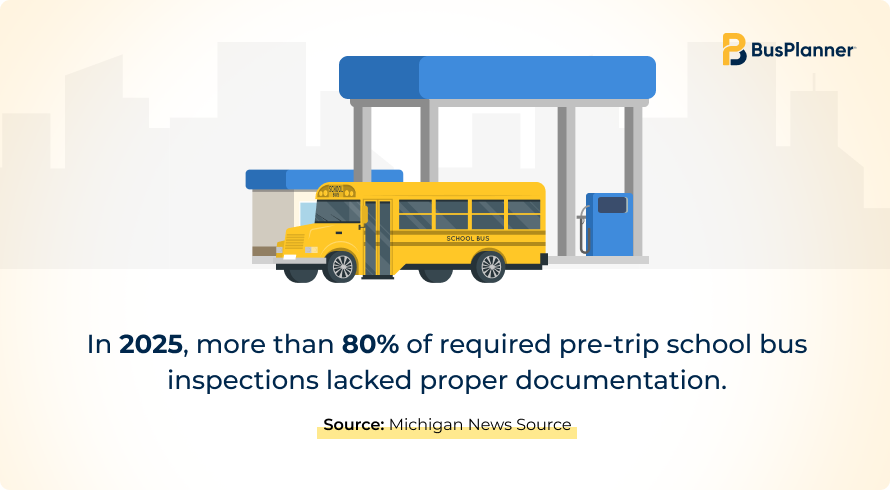
A final documentation review helps ensure every vehicle is ready, every repair is accounted for, and every route has the fleet support it needs. It also gives transportation leaders better visibility into replacement planning, budgeting, and operational risk.
- Audit Outstanding Repairs: Confirm that previously identified defects have been resolved, documented, or properly marked as not requiring immediate repair.
- Review Fleet Performance Trends: Analyze recurring maintenance problems, repeat repairs, and vehicles with frequent downtime. This can help identify buses that may need closer monitoring or replacement planning.
- Coordinate with Routing and Operations Teams: Make sure vehicle availability aligns with route planning, driver assignments, spares, and service needs. Fleet readiness is not only a maintenance issue; it directly affects routing reliability.

Conclusion
Preparing buses for daily service requires more than checking boxes on a maintenance form. A strong school bus fleet maintenance checklist helps transportation departments reduce breakdowns, improve safety, and support reliable service from the first route of the day.
For districts looking to improve maintenance visibility and fleet oversight, fleet management software can centralize vehicle information, maintenance records, and operational data. When paired with broader transportation planning efforts, these insights can support more informed decision-making throughout the year.
For a deeper look at preventive maintenance planning, explore our eBook Complete Guide To School Bus Maintenance, designed specifically for K-12 transportation professionals.
Frequently Asked Questions
Q1. What should be included in a school bus fleet maintenance checklist?
A school bus fleet maintenance checklist should include tires, brakes, safety equipment, batteries, electrical systems, fluids, belts, hoses, maintenance records, and overall fleet readiness.
Q2. How often should school buses be inspected?
School buses should be inspected regularly based on state requirements, district policies, manufacturer recommendations, and daily pre-trip inspection procedures.
Q3. Why is preventive maintenance important for school bus fleets?
Preventive maintenance helps reduce breakdowns, improve safety, extend vehicle life, and keep routes running reliably.
Q4. What are the most common school bus maintenance issues?
Common issues include tire wear, brake wear, battery problems, fluid leaks, electrical faults, and recurring mechanical repairs.
Q5.. How can transportation teams improve fleet maintenance visibility?
Teams can improve visibility by centralizing maintenance records, tracking repairs, monitoring vehicle performance trends, and connecting fleet data with routing and operations planning.