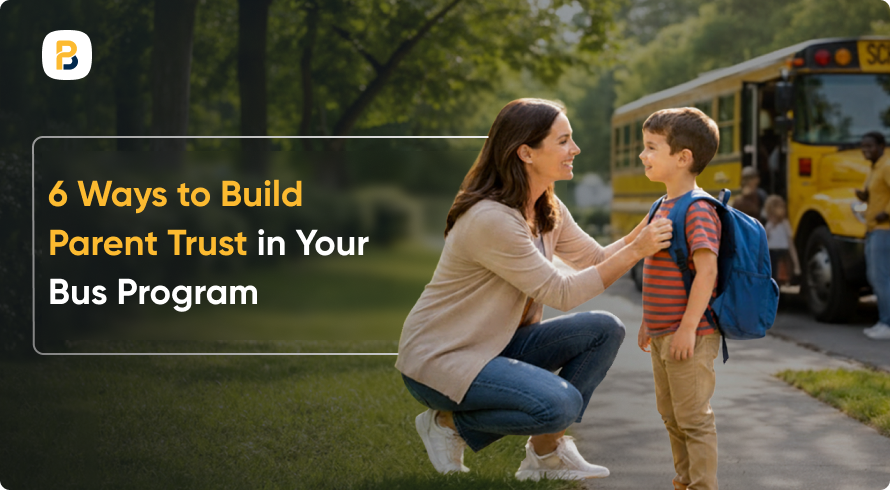
Parent trust is the foundation of a successful student transportation program. When families feel confident in your district’s ability to safely transport their children, they’re more likely to support transportation initiatives and view your team as partners in education.
Yet building that trust requires more than just safe vehicles and trained drivers. It demands transparent communication, reliable operations, and a commitment to keeping parents informed every step of the journey. The good news is that districts can take concrete steps to strengthen parent confidence in school bus safety and operations.
These six strategies will help your transportation department create lasting trust with the families you serve.
1. Implement Real-Time Bus Tracking for Parents
Nothing eases parents’ anxiety like knowing exactly where their child’s bus is at any moment. Real-time GPS tracking gives families visibility into arrival times and route progress without requiring phone calls to your office.
Modern tracking solutions integrate with parent apps that send automatic notifications when buses are running late or approaching stops. This level of transparency eliminates the guesswork that frustrates and builds parent trust, which school transportation programs need to thrive.
- Automatic Arrival Notifications: Parents receive alerts when the bus is five minutes away, reducing wait times at stops and improving morning routines.
- Real-Time Route Updates: Families can view their child's bus location on a map throughout the journey, providing peace of mind during delays.
- Delay Communication: Instant alerts about traffic issues or mechanical problems keep parents informed before they start calling the office.
- Historical Trip Data: Access to past route performance helps parents plan their schedules and understand typical arrival windows.
2. Create Accessible Communication Channels
Parents need multiple ways to reach the transportation team when questions arise. Offering diverse communication channels shows respect for different family preferences and schedules while reducing barriers to getting information.
The most effective districts combine traditional methods, such as phone support, with modern tools, such as parent portals and text messaging. This approach ensures every family can access the school bus safety communication they need in a format that works for them.
- Dedicated Parent Portal: A secure online platform where families can view routes, stop locations, and bus assignments without waiting on hold.
- Text Message Updates: Quick alerts about schedule changes or weather delays reach parents immediately on their mobile devices.
- Social Media Presence: Active accounts on platforms parents already use provide another touchpoint for updates and announcements.
- Multilingual Support: Translation services and bilingual staff ensure non-English speaking families receive the same quality of communication.
- Email Newsletters: Regular updates about safety initiatives, driver recognition, and transportation news keep families engaged year-round.

3. Share Safety Data and Training Standards
Transparent transportation operations start with showing parents exactly how you keep their children safe. Publishing your driver training requirements, vehicle inspection schedules, and safety protocols demonstrates that your program prioritizes student well-being above all else.
Districts that openly share this information position themselves as leaders in school bus safety communication. Consider creating an annual safety report that highlights training hours, inspection results, and safety improvements implemented throughout the year.
- Driver Certification Details: Explain the rigorous background checks, CDL requirements, and ongoing professional development every driver completes.
- Vehicle Maintenance Records: Share your fleet maintenance schedule and inspection frequency to show proactive vehicle care.
- Safety Drill Reports: Document evacuation drills, emergency preparedness training, and student safety education conducted each year.
- Incident Response Protocols: Outline clear procedures for handling accidents, medical emergencies, and severe weather situations.
4. Optimize Routes for Consistency and Reliability
Parents value predictability almost as much as safety. When buses arrive at consistent times and follow logical routes, families can build their daily routines around transportation schedules with confidence.
Investing in professional route optimization tools helps create efficient runs that minimize delays and maximize on-time performance. This reliability becomes a cornerstone of parent trust that school transportation teams build over time.
- Consistent Stop Times: Well-planned routes arrive within the same five-minute window daily, helping parents coordinate drop-offs and pickups.
- Logical Stop Placement: Strategic stop locations consider sidewalk availability, traffic patterns, and visibility to enhance safety.
- Balanced Route Loads: Proper ridership distribution prevents overcrowded buses and ensures comfortable rides for all students.
- Seasonal Adjustments: Proactive planning for bell-time changes and enrollment shifts helps maintain reliability throughout the school year.
5. Provide Clear Onboarding for New Families
First impressions shape parent confidence, and school bus programs are maintained for years. New families navigating transportation for the first time need clear guidance about routes, procedures, and what to expect from your service.
Creating a comprehensive onboarding process demonstrates to parents that you value their partnership from day one. Use online forms to streamline registration and provide welcome materials that answer common questions before they arise.
- Welcome Packet Distribution: Physical or digital materials that explain stop procedures, safety rules, and contact information provide parents with essential resources.
- Route Assignment Notifications: Clear communication about bus numbers, stop locations, and pickup times eliminates confusion on the first day.
- Video Walkthroughs: Short clips showing students boarding safely and buses departing help younger children know what to expect.
- Meet the Driver Events: Opportunities for families to meet drivers before school starts, build personal connections, and reduce anxiety.
6. Respond Quickly to Concerns and Feedback
How your team handles problems matters more than having perfect operations. Parents understand that delays and issues occur, but they expect responsive communication and genuine efforts to address their concerns.
Establishing clear protocols for complaint resolution and feedback collection shows families that their voices matter. Track response times and resolution rates to identify areas for improvement in your school bus safety communication practices.
- Same Day Response Policy: Commit to acknowledging every parent concern within 24 hours, even if full resolution takes longer.
- Follow-up Communication: Close the loop by informing parents about actions taken and improvements made based on their feedback.
- Annual Satisfaction Surveys: Regularly collecting feedback through online forms demonstrates a commitment to continuous improvement.
- Parent Advisory Committee: Invite engaged families to join quarterly meetings to provide input on transportation policies and initiatives.
- Complaint Tracking Systems: Document all concerns and resolutions to identify patterns and prevent recurring issues.

The Bottom Line
Building parent trust in school transportation programs takes sustained effort across multiple touchpoints. From implementing real-time tracking to creating responsive communication channels, each strategy reinforces your commitment to safety, transparency, and service excellence.
The districts that earn lasting parent confidence treat families as partners rather than customers. They proactively share information, welcome feedback, and continuously improve their operations based on what matters most to the communities they serve. By focusing on these six areas, your transportation team can transform parent relationships and strengthen support for your entire program.
Frequently Asked Questions
Q1. What is the most effective way to build parent trust in school transportation?
The most effective approach combines real-time bus tracking, transparent communication about safety standards, and responsive customer service. Parents need visibility into where their children are, confidence in driver training and vehicle maintenance, and quick answers when concerns arise. Districts that excel at parent trust in school transportation provide multiple communication channels and share detailed information about their safety protocols.
Q2. How does GPS tracking improve parent confidence in school bus programs?
GPS tracking eliminates uncertainty by showing parents exactly where their child's bus is at any moment. When families receive automatic notifications about arrival times and delays, they can adjust their schedules without calling the transportation office. This transparency in operations builds trust by demonstrating that the district prioritizes parent communication and values their time.
Q3. Why is consistent route timing important for parent satisfaction?
Predictable arrival and departure times allow families to build reliable daily routines around transportation schedules. When buses consistently arrive within the same five-minute window, parents can coordinate work schedules, childcare, and other commitments with confidence. This reliability becomes a key factor in parents' trust that school transportation teams maintain over time.
Q4. What safety information should districts share with parents?
Districts should openly communicate driver training requirements, background check procedures, vehicle inspection schedules, and emergency response protocols. Sharing annual safety reports that detail training hours, maintenance records, and safety improvements demonstrates a commitment to transparent transportation operations. This information helps parents understand the comprehensive measures in place to protect their children.
Q5. How quickly should transportation departments respond to parent concerns?
Best practice is acknowledging every parent inquiry within 24 hours, even if full resolution requires more time. Quick initial responses show families their concerns matter and reduce anxiety while solutions are developed. Districts can use parent portals and automated systems to ensure timely communication, significantly improving school bus safety communication and building lasting confidence.