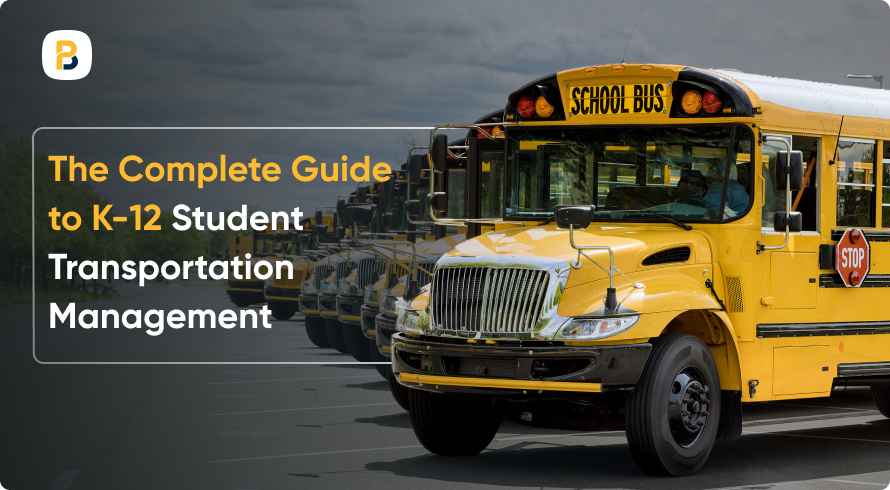
Student transportation is one of the largest operational responsibilities for school districts. Every school day, transportation teams coordinate routes, drivers, vehicles, and student information to ensure safe and reliable travel between home and school. Managing a system of that scale requires careful planning, accurate data, and strong coordination between transportation teams and district leadership.
This guide explains the core elements of K-12 student transportation management and how districts can strengthen operations through better planning and technology.
Why Student Transportation Management Matters In School District Operations
Transportation directly affects school attendance, operational budgets, and community trust. When transportation runs smoothly, students arrive on time, and families feel confident in the district’s services. When it fails, delays and safety concerns quickly escalate.
District transportation departments also manage one of the largest public fleets in the country, making operational efficiency critical.
- Complex Route Networks: The average school bus route in the United States is about 12.3 miles with a 28-minute travel time, requiring careful route planning to balance efficiency and student ride times.
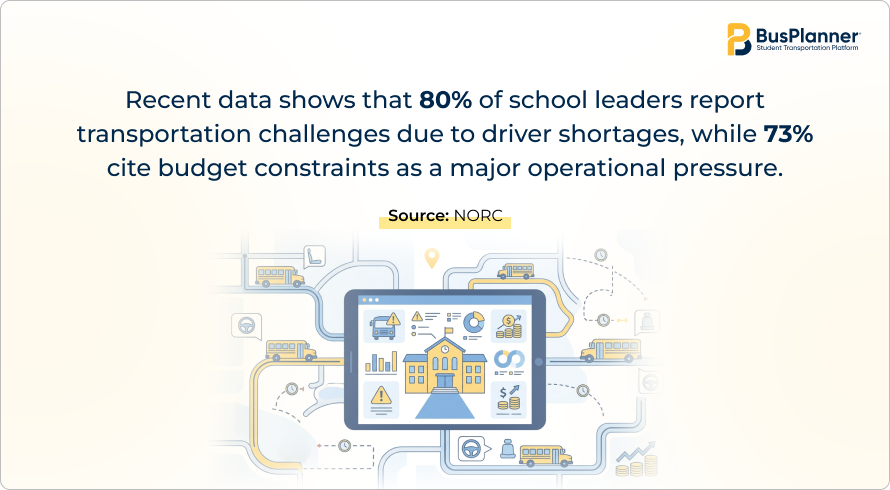
- High Operational Stakes: With hundreds of buses, drivers, and daily routes, transportation departments must manage staffing, fleet maintenance, and real-time operations simultaneously.
Transportation leaders who understand these operational pressures are better positioned to design systems that scale effectively.
Core Components Of Effective Student Transportation Management
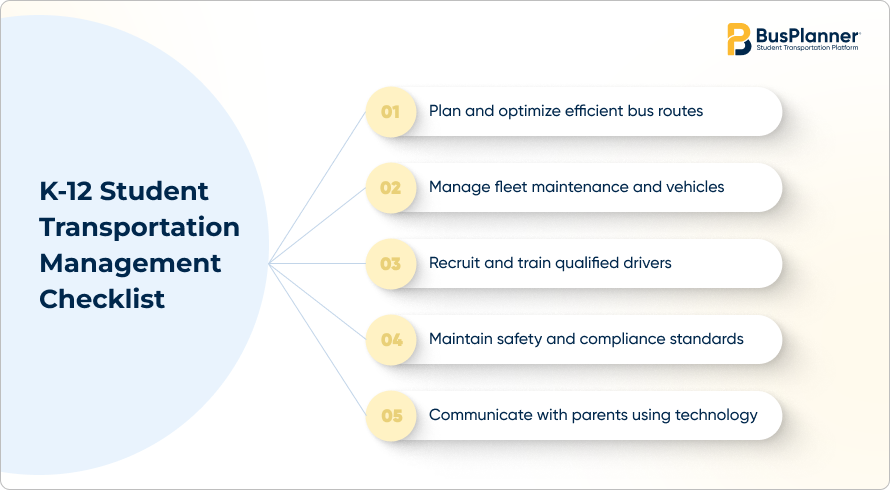
Successful transportation departments rely on a combination of planning processes, operational systems, and communication workflows. Each component plays a role in ensuring that students move safely and efficiently through the transportation network.
Below are the core elements that define modern student transportation management.
- Route Planning & Optimization: Transportation teams design routes that balance ride time, bus capacity, bell schedules, and geographic coverage. Effective routing reduces mileage and helps districts use fewer vehicles without sacrificing service quality.
- Fleet Management: School districts must track vehicle maintenance schedules, inspections, and utilization. A well-managed fleet reduces breakdowns and ensures buses remain compliant with state safety regulations.
- Driver Management & Staffing: Driver shortages remain a major operational challenge. Strong recruiting, scheduling, and training programs help districts maintain reliable service levels.
- Student Data Management: Accurate student address data, eligibility rules, and special transportation requirements are critical to safe and efficient routing.
How Data & Routing Technology Improve Transportation Efficiency
As transportation networks grow more complex, manual planning methods struggle to keep up. Districts increasingly rely on digital tools and analytics to plan routes, track buses, and respond to operational changes.
Key benefits of technology-driven transportation management include:
- Data Driven Route Optimization: Routing software analyzes geographic data, student density, and bell schedules to generate efficient route plans.
- Real-Time Operations Visibility: Dispatch teams can monitor vehicle locations and respond quickly to delays, weather disruptions, or operational issues.
- Improved Resource Allocation: Districts can evaluate route performance and identify opportunities to reduce mileage, fuel use, and fleet size.
Safety & Compliance In School Transportation Operations
Safety remains the top priority for transportation departments. School buses are widely considered one of the safest forms of student transportation, but maintaining that safety requires ongoing oversight.
Transportation leaders must manage driver training, vehicle inspections, and operational protocols that protect students at every stage of the trip.
- Driver Training Programs: Drivers receive specialized training in student behavior management, defensive driving, and emergency procedures.
- Vehicle Safety Standards: School buses follow strict federal and state safety standards, including reinforced body construction, flashing lights, and stop arms.
- Student Loading & Unloading Procedures: Transportation teams develop detailed procedures for bus stops, visibility zones, and student supervision.
Communication & Community Expectations
Transportation departments are often one of the most visible services a district provides to families. Parents expect timely updates, clear route information, and quick responses to transportation changes.
Improving communication helps districts reduce confusion, phone calls, and operational stress.
- Parent Communication Systems: Mobile notifications and online portals help parents track transportation schedules and receive updates during delays.
- School & Transportation Coordination: Clear communication between school administrators and transportation teams ensures that bell schedule changes or school events are reflected in route planning.
- Transparent Transportation Policies: Clearly defined eligibility rules and service guidelines help families understand how transportation decisions are made.
The Future Of Student Transportation Management
Student transportation is evolving quickly as districts adapt to new technology, staffing challenges, and sustainability goals.
New trends are shaping the next generation of transportation operations.
- Advanced Route Optimization: Predictive analytics and machine learning are helping transportation teams forecast demand and design more efficient routes.
- Integrated Transportation Platforms: Districts are moving toward unified systems that manage routing, dispatch, fleet data, and parent communication in a single environment.
These innovations are reshaping how transportation departments plan and operate their services.
Conclusion
Student transportation management is a complex operational challenge that affects millions of students every day. From routing and fleet management to safety and communication, transportation teams must coordinate multiple systems to keep operations running smoothly.
Districts that combine strong planning processes with modern transportation technology are better equipped to manage costs, improve service reliability, and maintain the safety standards families expect.
FAQs
Q1. What is student transportation management?
Student transportation management encompasses the planning, routing, staffing, and operational processes required to safely transport students between home and school.
Q2. How do school districts determine bus routes for students?
Districts design routes using student address data, school boundaries, bus capacity, and bell schedules. Many districts also use routing software to optimize routes, reduce travel time, and maintain safety standards.
Q3. Why is routing software important for school districts?
Routing software helps transportation teams design efficient routes, reduce mileage, and manage complex bell schedules.
Q4. What are the biggest challenges in student transportation today?
Driver shortages, rising operational costs, complex routing requirements, and communication expectations from families.