
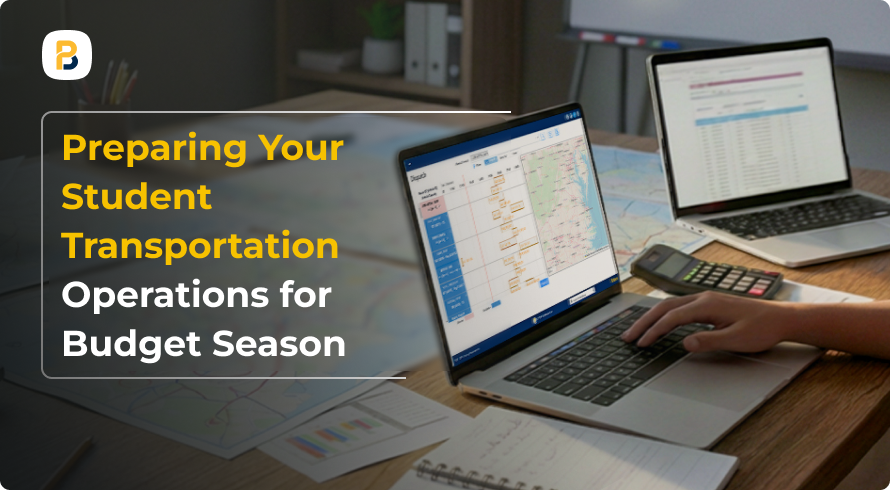
With spring approaching, the budget planning season for school districts is just around the corner. Fuel volatility, staffing shortages, aging fleets, and rising service expectations make it difficult to present a budget that is realistic and credible.
Preparing student transportation teams for budget season takes more than repeating prior assumptions. It requires clear operational data, cross-department alignment, and a shared understanding of how daily transportation decisions drive costs.
In this article, we explore how to effectively make your student transportation operations budget-ready.
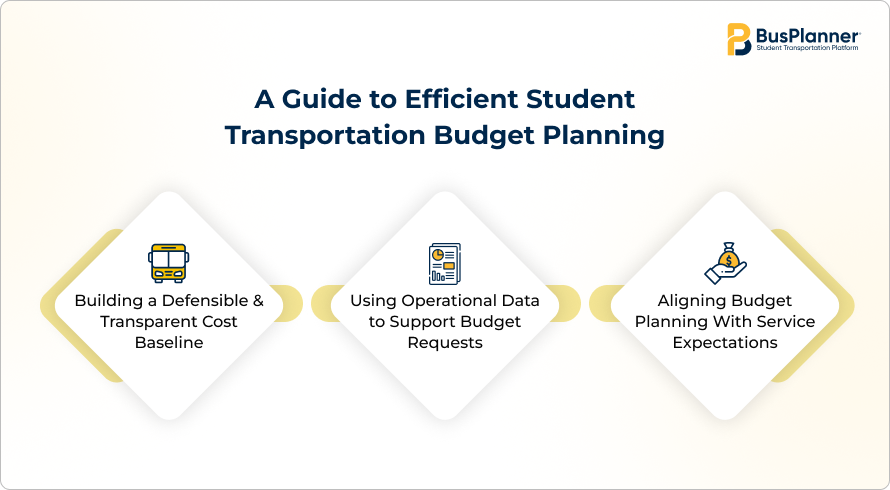
Building a Defensible & Transparent Cost Baseline
Before seeking new funding, transportation leaders need a baseline that clearly outlines current costs. This baseline becomes the foundation for every budget conversation and protects departments from unrealistic reductions.
- Separate Fixed and Variable Costs: Distinguish labor, fleet depreciation, and insurance from fuel, overtime, and vehicle maintenance parts to help finance teams understand which costs can realistically change within a fiscal year.
- Utilize Actual Route Level Data: Use route-level information from reliable school bus routing software instead of district-wide averages to make more credible projections, especially when enrollment, attendance zones, or school boundaries shift.
- Document Deferred Maintenance and Replacement Needs: Plan for aging fleets, postponed repairs, and delayed bus replacements as unavoidable future expenses to help leaders justify capital requests before failures turn into emergencies.
Using Operational Data to Support Budget Requests
Strong budget proposals rely on evidence rather than anecdotes. Reliable data turns operational challenges into measurable realities that decision makers can act on.
- Translate Daily Decisions into Financial Impact: Show how route changes, bell time adjustments, or driver absences affect costs to build understanding beyond the transportation department.
- Leverage Data-Driven Reporting: Generate consistent reports on mileage, ride time, fleet utilization, and staffing efficiency using an all-in-one student transportation platform, strengthening budget credibility when questions arise.
- Connect Efficiency Gains to Cost Avoidance: Explain how route optimization, better bus use, and staffing alignment prevent future route growth, overtime, or fleet expansion. This helps leaders justify these changes as measurable operational risk reduction instead of abstract efficiency claims.
Aligning Budget Planning With Service Expectations
Transportation budgets often fail when financial planning is disconnected from service promises. Aligning expectations from day one reduces friction later.
- Clarify What Service Levels are Being Funded: Establish ride-time targets, on-time performance standards, and coverage expectations. Use financial planning software to model costs and operating targets, reducing misalignment between budget approval and operational reality.
- Coordinate With Enrollment and Boundary Planning: Recognize that changes in student population, attendance zones, or school openings directly impact routing, staffing, and fleet needs, making coordination during budget planning essential.
- Set Clear Service Tradeoffs Up Front: Specify what service changes will occur when funding does not support all desired outcomes to build trust and avoid reactive adjustments mid-year.
Final Budget Readiness Checklist
Effective budget readiness in student transportation means daily operating realities are understood and reflected in financial plans. Before submission, transportation leaders should confirm that core cost drivers, staffing assumptions, and operational risks are validated.
- Verified Historical Cost Data: Ensure prior-year spending reflects actual operations, not estimates, one-time expenses, or outdated assumptions.
- Defined Staffing Assumptions: Confirm driver availability, training costs, overtime exposure, and absenteeism patterns are reflected in projections.
- Identified Risk Drivers: Anticipate changes in fuel pricing, growth in special education services, and aging fleet conditions so decision makers understand where cost pressure may emerge.
Key Takeaway: Turning Operational Insight into Budget Confidence
Transportation teams that plan effectively do not rely on last year’s numbers or isolated justifications. They enter budget season with shared visibility, consistent data, and alignment between operations and finance. When decisions are grounded in real operational insight, budgets are easier to defend, manage, and adjust as conditions change.
Discover how a comprehensive student transportation platform helps districts improve budget efficiency, strengthen decision-making, and maintain reliable service throughout the school year.
Frequently Asked Questions
When should student transportation teams start preparing for budget season?
Preparation should begin 6–9 months ahead of budget submission, giving transportation teams time to validate operational data.
What data is most important for student transportation budgets?
Route mileage, staffing utilization, fleet age, and historical cost trends are consistently the most impactful data points.
How can transportation leaders defend budgets during reductions?
Clear documentation of service impacts tied to funding changes helps decision-makers understand trade-offs rather than viewing reductions as abstract savings.