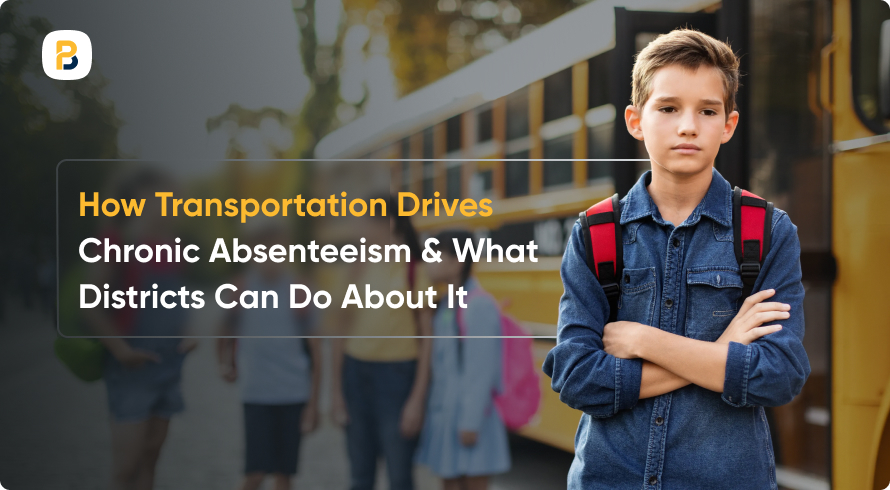
Every missed school day has a reason behind it. For some students, that reason has nothing to do with the classroom. It starts before the school day even begins While chronic absenteeism affects millions of students across the United States, transportation is often an overlooked part of the conversation.
Transportation won’t solve every attendance challenge, but it is one area where districts can make meaningful improvements. Understanding how transportation affects attendance is the first step toward building a more reliable path to the classroom.
Why Does Transportation Matter for Student Attendance?
For students who rely on district transportation, getting to school begins with the bus. When transportation works as expected, it supports consistent routines for students and families. When it doesn’t, even minor disruptions can make regular attendance more difficult.
Looking at student attendance alongside transportation data gives districts a clearer picture of where barriers may exist. Instead of viewing attendance and transportation as separate responsibilities, districts can use both to better understand recurring patterns and support more informed operational decisions.
With that connection established, the next step is identifying where transportation operations begin to break down.
Where Transportation Reliability Breaks Down
Transportation disruptions are not always the result of a single issue. More often, they stem from operational challenges that affect service over time. Understanding where these breakdowns occur helps districts identify opportunities to improve school bus reliability before they begin affecting attendance.
Common reliability issues include:
- Late Routes: Students may arrive late or miss class when buses consistently fall behind schedule.
- Missed or Cancelled Routes: Families may have no practical backup when service is interrupted.
- Driver Shortages: Vacant routes, substitute drivers, and route consolidations can reduce service consistency.
- Long Ride Times: Extended trips can place an additional burden on students, particularly in larger or rural districts.
These challenges don’t affect every student in the same way, which makes it even more important to understand who depends most on district transportation.
Some Students Depend on the Bus More Than Others
Transportation disruptions do not affect every student equally. For many low-income families, rural communities, and students experiencing homelessness, the school bus may be the only dependable way to reach school. When a route is delayed, cancelled, or consolidated, there may be no practical alternative.
This is especially important for students covered by the McKinney-Vento Act, which requires districts to remove transportation barriers and support access to a student’s school of origin. Reliable service helps districts protect instructional time and prevent transportation challenges from widening existing attendance gaps.

Turning Transportation Data Into Better Attendance
Improving attendance starts with understanding what’s happening across the transportation network. Looking at transportation data alongside student attendance can help districts identify recurring patterns, prioritize improvements, and make more informed operational decisions.
Districts can take practical steps such as:
- Review Route Performance: Identify recurring delays, missed stops, and service disruptions.
- Refine Routes: Adjust routes based on actual performance to improve efficiency and reduce unnecessary ride times.
- Compare Transportation and Attendance Data: Look for patterns that may point to transportation-related attendance challenges.
- Track Progress Over Time: Measure the impact of operational changes and identify where additional improvements are needed.
Small, data-informed decisions can strengthen daily transportation operations and help remove barriers that contribute to chronic absenteeism.
How Can Districts Keep Families Better Informed?
For parents, knowing what to expect each morning is just as important as the transportation service itself. Clear, timely updates help families plan ahead when schedules change and reduce the need to contact the transportation office for routine questions.
Tools like online parent portals and live GPS tracking give families direct access to the information they need, while transportation teams can share route updates and service changes more efficiently.
Making information easier to access creates a better experience for families and allows transportation staff to spend less time answering routine inquiries and more time managing daily operations.
Conclusion
Chronic absenteeism is a complex challenge, but transportation is one area where districts can take meaningful action. By improving daily operations, using transportation data effectively, and keeping families informed, districts can reduce avoidable barriers that keep students out of the classroom.
With the right tools and visibility, transportation teams can support more reliable service while contributing to broader district attendance goals.
Ready to strengthen your transportation operations? Explore how BusPlanner helps districts improve route planning, communication, and operational visibility.
Frequently Asked Questions
Q1. How does transportation contribute to chronic absenteeism?
Transportation challenges such as missed routes, long ride times, or inconsistent service can make it harder for students to get to school consistently. Identifying these patterns helps districts address transportation-related barriers that may affect attendance.
Q2: How can districts improve school bus reliability?
Districts can strengthen school bus reliability by monitoring route performance, reviewing operational data, and making informed adjustments to routes and service delivery. Small operational improvements can have a meaningful impact over time.
Q3: How can technology help improve communication with families?
Tools such as live GPS tracking, online parent portals, and real-time notifications give families better visibility into daily transportation. This helps reduce uncertainty while improving communication between districts and parents.