A single missed accommodation on a student’s IEP transportation plan can trigger a due process complaint. For K-12 districts navigating IEP student transportation compliance risk, the legal stakes are not abstract. Under the Individuals with Disabilities Education Act (IDEA), transportation is a related service, which means when it is listed on a student’s IEP, providing it correctly is a federal obligation, not a preference.
The NY FASST coalition launch on June 2, 2026 and a recent District Administration webinar on IDEA and McKinney-Vento compliance have brought renewed attention to how transportation teams are the last line of defense before a district lands in a hearing. The five risks below are the ones transportation operations leaders most commonly overlook. Understanding them is the first step toward closing the gap.
1. Vague or Incomplete IEP Transportation Language
The IEP is a legal document. Every accommodation listed in it carries enforceable weight, and transportation language that is imprecise creates direct compliance exposure for the district. Phrases like “special transportation needed” without specifics are not sufficient. According to guidance from the New York State Education Department, the IEP must include the nature of the special transportation, not just the fact that it is required.
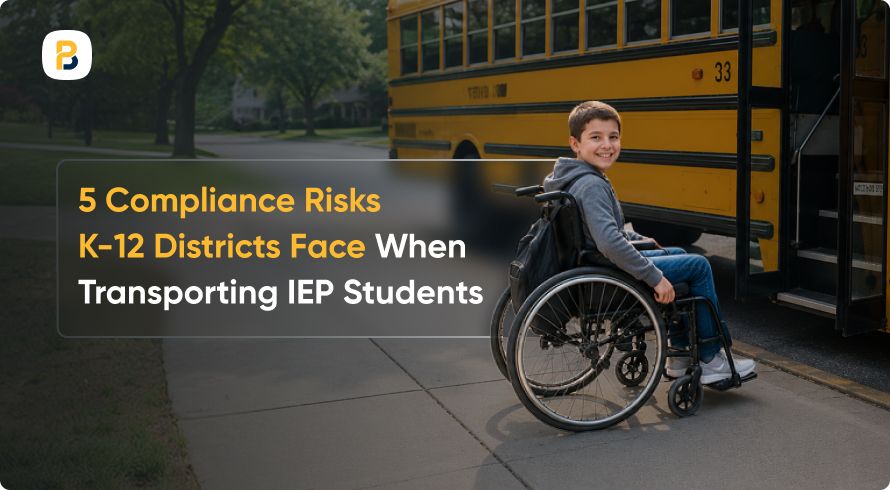
- Unspecified Seating and Equipment Needs: If a student requires a wheelchair securement device, front-of-bus seating, or a specific harness, that must be documented exactly. A general note about “accommodation” is not enforceable and will not hold up in a due process proceeding.
- Missing Behavioral or Medical Protocols: Transportation personnel must be directly informed of health needs, behavioral triggers, and emergency protocols tied to each student. When that information stays in the special education office and never reaches the driver, the district is operating blind on a route with legal implications.
- Annual Review Gaps: IEP transportation services must be reviewed at least annually. Needs change, students change, and a two-year-old transportation note attached to an updated IEP is a compliance gap waiting to surface.
2. Siloed Teams Creating Service Failures
- Late Notification of Placements: Out-of-district placements for students with disabilities sometimes come with service start dates that give transportation teams days, not weeks, to build a safe and compliant route. Compressed timelines increase the chance that accommodations are missed entirely.
- No Shared Ownership of Compliance: Transportation staff are often the people executing IEP requirements but the last to know what those requirements are. Building a formal handoff process between special education coordinators and transportation operations closes the accountability gap before a hearing does.

- Compounding Pressure From Workforce Strain: When staffing is tight and a new IEP route requires specialized training, the margin for error shrinks fast.
3. McKinney-Vento and IEP Overlap Mismanagement
- Competing Service Timelines: McKinney-Vento requires districts to provide transportation to the school of origin immediately, even during enrollment disputes. When that student also has IEP transportation mandates, the routes and accommodations must align with both frameworks at the same time.
- Frequent Address Changes Without Routing Updates: Students experiencing homelessness may move multiple times during a school year. Each move that is not immediately reflected in the transportation plan creates a gap between the legal obligation and the actual service being delivered.
- Documentation Inconsistencies Across Departments: Homeless liaisons and special education coordinators often track student information separately. When transportation teams pull from inconsistent records, the risk of serving the wrong address or missing an accommodation increases significantly.

4. Inadequate Driver and Aide Training Documentation
- No Written Evidence of Briefings: Verbal communication about a student’s behavioral needs or medical protocols is not sufficient. Districts need a paper trail showing that drivers and aides received written instructions tied to each student’s specific IEP requirements before the first day of service.
- Training Not Matched to Student Assignment: General special needs training is not the same as student-specific preparation. If a driver is assigned to a student with complex behavioral needs and the documentation only shows a general certification, that gap is exploitable in a complaint.
- Substitute Coverage Without Handoff Protocols: When a substitute driver covers a specialized route, the student-specific information must transfer with the assignment. A substitute who is uninformed about a student’s IEP accommodations creates both a safety risk and a compliance failure.
5. Missing Audit Trails for Service Changes and Delays
When a due process complaint is filed, the hearing officer asks for records. Specifically, records showing that the district delivered what the IEP required, on time and with the right accommodations, every day service was in session. Many districts cannot produce that documentation because it was never created in the first place. The BusPlanner Industry Report, 2026 found that 56% of transportation teams rely on a mix of radios, phone calls, emails, and ad hoc messaging tools, which means service decisions and delays are often never captured in a retrievable format.
- No Timestamped Record of Late or Missed Service: A missed pickup for an IEP student is not just an operational failure. It is potentially a denial of a federally required related service. Without a timestamped log showing what happened and what corrective action followed, the district has no defense.
- Schedule Changes Not Reflected in Official Records: When IEP transportation schedules change mid-year due to a new placement or a modified program, those changes must be updated in the official record, not just communicated verbally to the driver.
- Parent Communication Gaps Creating Complaints: When families do not receive timely notification about route changes or delays, informal complaints escalate quickly into formal ones. A student transportation platform with structured parent communication tools creates a documented record of every notification sent.
The Bottom Line
Every one of the five risks above is manageable with the right processes and the right tools in place. Transportation teams that invest in those systems now are building a defensible record, one route at a time. For a deeper look at what operational data your team should be tracking, explore the full BusPlanner Industry Report[https://busplanner.com/resources/ebooks].
Frequently Asked Questions
Q1. What are the most common IEP student transportation compliance risks for K-12 districts?
The most common risks include incomplete IEP transportation language, siloed communication between special education and transportation teams, McKinney-Vento overlap mismanagement, inadequate driver training documentation, and missing audit trails for service delays or changes. Each of these can expose districts to due process liability under IDEA. The BusPlanner Industry Report, 2026 found that 56% of transportation teams rely on ad hoc messaging tools, which makes creating defensible service records much harder.
Q2. How does IDEA define transportation as a related service for students with IEPs?
Under the Individuals with Disabilities Education Act, transportation is a related service when it is required for a student with a disability to access their free and appropriate public education. When transportation is listed in a student's IEP, providing it correctly is a federal obligation. Districts that fail to deliver IEP-mandated transportation risk due process complaints and potential findings of noncompliance. Explore how route planning tools can help teams manage IEP routes with greater accuracy.
Q3. What happens when a student qualifies for both IEP services and McKinney-Vento protections?
When a student experiencing housing instability also has an active IEP, both IDEA and the McKinney-Vento Homeless Assistance Act apply at the same time. McKinney-Vento requires immediate transportation to the school of origin, while IDEA mandates that all specific accommodations in the IEP are delivered concurrently. Frequent address changes add routing complexity, and documentation inconsistencies across departments are a leading source of compliance failures for these students.
Q4. Why should transportation directors be involved in IEP placement decisions before they are finalized?
When transportation directors are brought in after a placement decision is made, they inherit timelines and commitments they had no hand in shaping. This compressed planning window increases the risk of missing required accommodations, especially for out-of-district placements that require specialized vehicles or trained staff. Earlier involvement allows teams to evaluate capacity, identify staffing requirements, and design a service that is both compliant and sustainable from day one.
Q5. What records should districts keep to defend IEP transportation compliance during a due process hearing?
Districts should maintain timestamped logs of every pickup and drop-off, written documentation that drivers and aides were briefed on student-specific IEP requirements, records of any schedule changes and the dates those changes took effect, and parent notification logs for delays or disruptions. According to the BusPlanner Industry Report, 2026, 40% of transportation teams say manual follow-ups and repeated clarification are common during disruptions, which means critical service details often go undocumented. Structured dispatch tools can help close that gap.