Transportation reporting often loses accuracy when data is inconsistent across systems. Board discussions slow down when on-time performance differs between routing plans and actual dispatch activity. Audits become more difficult when mileage, driver hours, and route definitions vary across reports extracted from separate tools.
As a result, transportation leaders spend valuable time reconciling numbers instead of addressing service gaps. Well-designed reporting, powered by an all-in-one student transportation platform, creates a single source of truth that supports daily operations, clearer communication with district leadership, and more confident decision-making.
In this article, we explore reporting best practices for transportation directors.
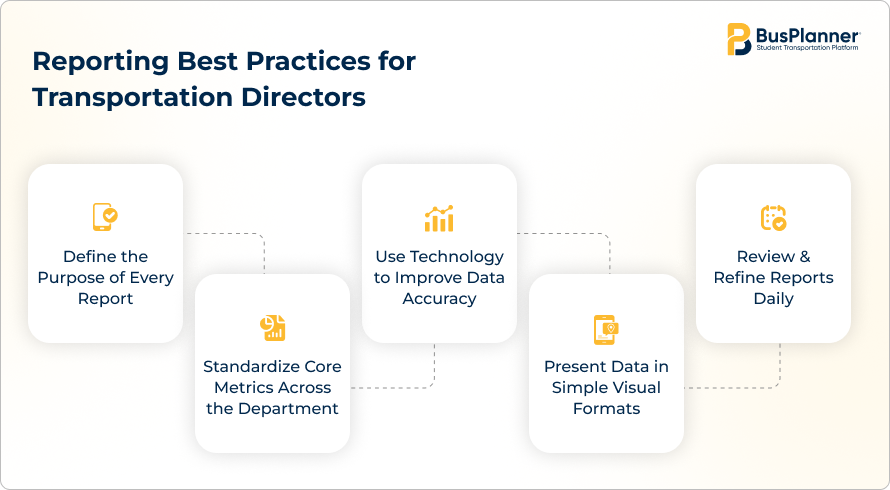
1. Define the Purpose of Every Report
Clearly define how the report will be used in daily decision-making, not just how it will be stored or shared. Purpose-driven reporting helps transportation directors avoid unnecessary data overload and keeps teams aligned around actionable goals.
- Operational Decision Support: Focuses reports on questions directors face daily, such as route efficiency, on-time performance, and driver availability.
- Accountability and Transparency: Use reports to explain how transportation decisions align with district goals and policies.
- Regulatory and Audit Readiness: Prepare reports with compliance in mind so that the required information is easy to find during reviews.
2. Standardize Core Metrics Across the Department
Establish shared definitions for key metrics so everyone interprets performance consistently. Standardizing how metrics are defined and calculated prevents misunderstandings between routing, dispatch, and administration teams.
- On-Time Performance: Tracks morning and afternoon arrival times using the same metrics across all districts, regardless of route type or bell schedule.
- Route Efficiency Indicators: Measure miles driven, stops per route, and student ride time using standardized routing data from school bus routing software.
- Driver and Vehicle Utilization: Monitors how drivers and buses are scheduled and used with data from school bus fleet management software.
3. Use Technology to Improve Data Accuracy
Rely on modern student transportation tools to capture operational data automatically whenever possible. Manual reporting increases the risk of errors and delays. Accurate data helps transportation leaders make confident decisions and respond quickly to service issues.
- Integrated Data Collection: Brings route details, driver assignments, and bus activity into a single student transportation platform, ensuring reports reflect the same information across routing, dispatch, and fleet operations.
- Real-Time Visibility: Utilizes school bus GPS software to show actual arrival times, delays, and route performance instead of estimates.
- Role-Based Reporting Views: Provide supervisors, dispatchers, and administrators with reports tailored to their responsibilities, while using the same route, driver, and vehicle data to reduce misinterpretation and keep teams aligned.
4. Present Data in Simple Visual Formats
Share reports clearly with transportation staff, school administrators, and district leadership. Simple visuals help teams quickly understand route performance, coverage issues, and trends without sorting through raw data.
- Clear Charts and Tables: Show charts that highlight trends in on-time performance, route efficiency, mileage, and driver coverage without unnecessary detail.
- Focused Summaries: Begin reports with short summaries that explain what changed from the previous period and how it affects daily transportation operations.
- Consistent Layouts: Maintain the same layout across routing, dispatch, and fleet reports so staff know where to find key information and results are easy to interpret.
5. Review & Refine Reports Daily
Treat reporting as an ongoing improvement process, not a one-time setup. Operational needs change during the school year, so reports should evolve. Regular review keeps reports useful and aligned with real challenges.
- Staff Input and Feedback: Ask dispatchers, planners, and supervisors which reports help them most.
- Seasonal Adjustments: Update reporting focus during peak times such as back-to-school planning or winter operations.
- Operational Changes: Revise reports when routes, bell times, staffing patterns, or service expectations change so reporting continues to reflect how transportation actually operates.
Key Takeaway: Build Reports That Drive Confident Decisions
For transportation directors, strong reporting practices prevent confusion, reduce defensiveness, and keep conversations focused on improvement. When metrics are purposeful, standardized, accurate, and easy to understand, reporting becomes a daily management tool that supports safer service and effective transportation management.
Discover how an all-in-one student transportation platform helps make clearer, better day-to-day transportation decisions.
FAQs
Q1. What common mistakes should transportation departments avoid in reporting?
Collecting too much data without a clear purpose is a common issue. Reports that are overly complex or inconsistent across teams often go unused and fail to support decision-making.
Q2. How do reports support long-term transportation planning?
Historical reporting data helps directors identify patterns related to ridership, costs, staffing, and fleet usage. These insights support effective planning for budgets, staffing levels, and future service changes.
Q3. Should reporting practices change throughout the school year?
Yes, reporting priorities often shift during back-to-school periods, winter weather, testing schedules, and summer planning. Adjusting reports ensures directors always have the most relevant information available.