No single routing decision breaks a school district. Instead, it’s the accumulation of hundreds of small choices, made under time pressure, staffing constraints, and changing conditions, that quietly reshape ride times, costs, equity, and service quality.
Every stop added, bell time adjusted, buffer shortened, or exception handled may seem minor in isolation. But together, these decisions determine whether a transportation program runs efficiently, serves students equitably, and stays within budget, or slowly drifts into higher costs, longer rides, and daily operational strain.
Student transportation is one of the most visible and mission-critical services a school district operates. Whether you’re a seasoned transportation director or new to routing, understanding the following can help you improve outcomes for students, parents, and your budget at your district.
1. Ride Times Matter for Students and Operations
A study summarized found that students with exceptionally long rides, i.e., more than an hour long, experienced a 12 % absenteeism rate, significantly higher than peers with rides of 30 minutes or less.
Optimizing routes to balance efficiency with minimized ride times leads to better outcomes for students.
Routes should be designed so that students spend a reasonable amount of time on the bus. Ideally, students should not spend over 30 minutes on the bus.
Routers can implement the following to minimize ride times:
- Ensure On-Time Performance: Leverage school bus GPS tracking software to enforce on-time performance.
- Consider High Traffic Areas: Implement smart buffers for high-parent-traffic around schools.
- Balance Bus Load: Actively monitor routes to identify overloaded buses
2. Special Needs Students Require Intentional Planning
Routing for special needs students is a set of individual requirements that must be understood and integrated into scheduling systems. Best practices include:
- Centralized Transportation Requests: Leverage online forms for student transportation to centralized transportation requests that note mobility needs and pick-up/drop-off requests.
- Driver and Aide Visibility: Give drivers and aides easy access to trip and student information, so everyone on the bus understands each student’s needs and accommodations.
- Constraint-Based Routing: Build student needs into each route, such as wheelchair lifts, door-to-door service, or assigned aides, so no critical requirement is missed.
These measures improve safety, reduce errors, and foster a more inclusive student transportation service.
3. Equitable Access Must Be Built Into Routing Decisions
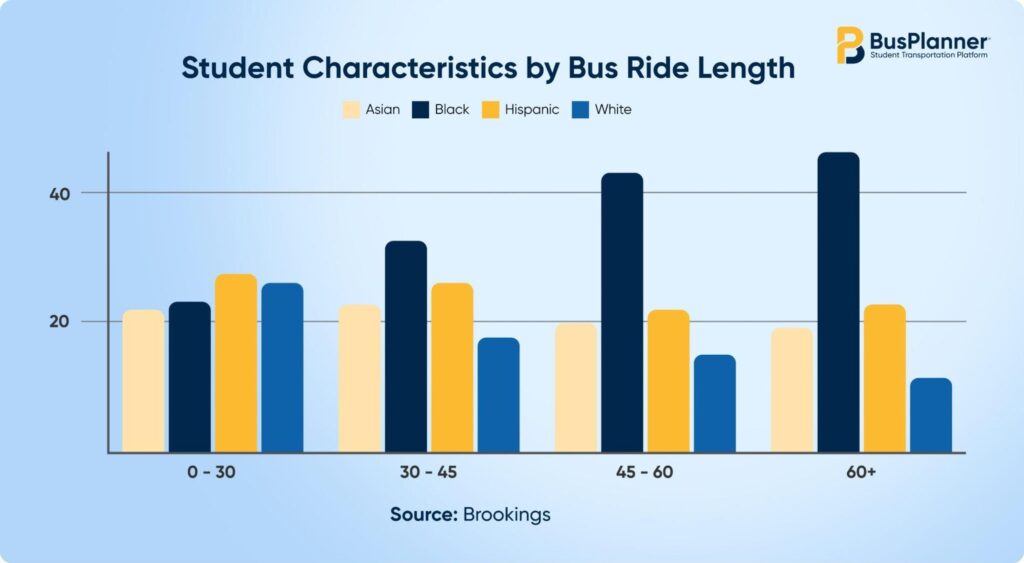
Ensuring equitable access in student transportation means making sure all students can get to school reliably and fairly, no matter where they live, their family’s income, or the resources they have at home.
In a study of more than 120,000 elementary students in New York City, researchers found that Black students were significantly overrepresented among those with long bus rides.
Routers must balance routes so that no group of students faces longer commutes or inaccessibility to school.
4. Poor Routing Harms the Budget
No single inefficiency breaks a transportation budget; costs rise as small decisions add up, like extra stops, slightly longer buffers, or a few minutes of deadhead between runs.
- Extra Mileage: Routes that aren’t optimized travel unnecessary miles, wasting fuel and increasing vehicle wear.
- Extra Buses: Small inefficiencies can push routes past thresholds that require additional buses to maintain service.
- Overtime Pay: Route imbalances and extended ride times often trigger daily or weekly overtime for drivers.
Individually, small inefficiencies may seem minor, but they add up over time. Extra stops, slightly longer buffers, and additional deadhead mileage can quietly push routes past cost thresholds.
Districts that analyze routes holistically often uncover hidden costs and inefficiencies, such as underused stops or excess deadhead. Addressing these areas stabilizes budgets and improves operational efficiency without reducing service quality.
A school bus financial planning tool allows you to see the cost of each route, enabling you to make more cost-friendly decisions while creating routes.
5. Routing Is a Continuous Process
The job of a router does not end at creating routes once at the start of the school year. They must continuously monitor and adjust routes for maximum operational efficiency.
Ongoing routing review includes:
- Remove Deadhead Mileage: Identifying and reducing excessive deadhead mileage
- Eliminate Unnecessary Stops: Removing underutilized or unnecessary stops
- Consider Enrollment Changes: Adjusting routes based on enrollment changes
Districts that revisit routes regularly often uncover inefficiencies that compound over time if left unchecked.
6. Modern Tools Streamline and Optimize Routing
Perhaps the most significant opportunity in student transportation today is the use of modern technology.
Advanced school bus routing software incorporates:
- AI Integration: Leverages artificial intelligence to optimize routes and support data-driven operational decisions.
- GPS Insights: Real-time GPS and predictive analytics to improve route performance and adjust dynamically.
- Cost Reduction: Minimizes unnecessary mileage and idle times, helping save on fuel and maintenance.
This tool can help transportation teams automate the otherwise tedious routing process, freeing up staff time and allowing districts to make data-driven decisions that enhance student service quality and operational efficiency.
Final Thoughts
Every successful routing program balances efficiency with student well-being, safety, and communication. If you implement even a few of these strategies, you’ll likely see measurable improvements in service quality and strong appreciation from parents, administrators, and most importantly, the students themselves.
Platforms like BusPlanner, used across school districts to analyze routing performance, provide more visibility into route costs, ride times, and inefficiencies, making it easier for districts to see and evaluate what their own data may reveal. Contact us now for more information!
Frequently Asked Questions
How long should student ride times ideally be?
While exact targets vary by district, many transportation leaders aim to keep average ride times under 30 minutes when possible. Research consistently shows that extended ride times are linked to higher absenteeism and increased behavior challenges, which also affect daily operations.
Why do small routing decisions have such a big impact over time?
Each added stop, extended buffer, or minor detour increases mileage, time, and labor costs. Individually, these changes seem harmless, but over a school year, they can push routes past thresholds that require overtime or additional buses.
How can routers improve equity through routing decisions?
Equity improves when routers actively monitor ride time distribution across neighborhoods and student groups. Reviewing data helps ensure the same communities are not repeatedly assigned the longest routes due to geography or outdated routing patterns.