

There are several factors other than route count that come into play when determining a student transportation department’s success. For a clearer picture, route performance metrics indicate areas of improvement and opportunities for your district.
In this article, we explore why route performance metrics matter more than route count.
Why Route Count Is a Misleading Metric
Route counts appear straightforward, but they fail to capture the operational strain that emerges during daily service. Examining why this metric falls short helps teams avoid false confidence in surface-level reporting.
- Uneven Resource Utilization: Exposes an imbalance between short, efficient routes and long, overextended runs, which reveals underlying cost differences that route counts cannot surface.
- Hidden Driver Strain: Highlights excessive run times that increase fatigue and absenteeism, signaling scheduling risks before staffing shortages escalate.
- Limited Planning Insight: Restricts visibility into where nearby routes overlap and bell time alignment, preventing proactive adjustments that reduce daily service issues.
What Route Performance Metrics Actually Reveal
Performance metrics reflect how routes perform in real operating conditions, rather than how many exist on paper. Focusing on these indicators helps transportation planners judge daily effectiveness more accurately.
- Average Route Duration: Quantifies how long drivers are on the road beyond what is needed to get students to school, making it easier to see where extra paid time and overtime can add up.
- Students Per Bus: Measures how evenly students are spread across buses in different neighborhoods and grades, helping spot empty or overcrowded runs.
- On-Time Performance: Tracks consistency of arrivals and departures, indicating the reliability levels experienced by schools and parents.
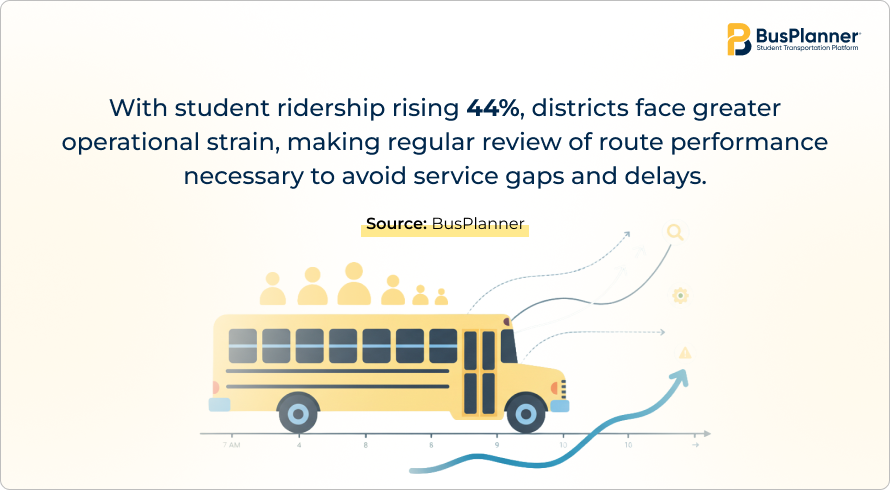
Operational Areas Impacted By Poor Route Performance
When performance remains unmeasured, negative effects ripple across departments. Recognizing these impacts helps leaders prioritize corrective action.
- Budget Predictability: Becomes less reliable when inefficient routes drive up fuel use and overtime hours, making it harder to plan transportation budgets accurately across the school year.
- Driver Retention: Weakens when inconsistent schedules disrupt driver work-life balance, increasing hiring pressure during already busy periods.
- Parent Communication: Breaks down when arrival times change without warning, leading to more phone calls and reduced trust in transportation service.
How Route Level Visibility Supports Better Decisions
Access to consistent route data shifts operations from reactive responses to informed planning. Using school bus routing software gives transportation teams the visibility needed to understand how routes perform over time, across geography, and under varying demand.
- Effective Route Adjustments: Identifies small changes that reduce mileage without increasing complexity, leading to steady efficiency gains across daily runs.
- Scenario Planning: Tests enrollment changes and boundary shifts using historical performance patterns, supporting more confident operational discussions with district leadership.
- Cross Department Alignment: Frames transportation needs using shared performance evidence, strengthening coordination with finance and administrative teams.
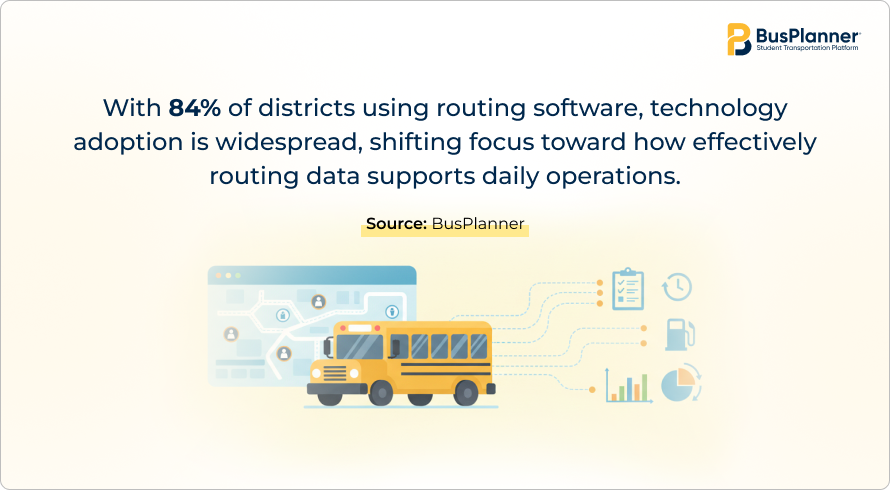
Key Takeaway: How Routes Actually Run Matters Most
The daily route count may describe how many buses leave the yard, but it does not explain how well the system performs. Route performance metrics provide transportation leaders with actionable insight into efficiency, cost control, and service reliability. By focusing on how routes operate rather than how many exist, districts gain the clarity needed to better support students, drivers, and budgets.
Discover how an all-in-one student transportation platform turns route data into clearer, better day-to-day transportation decisions.
FAQs
Q1. Why is route count still commonly used in school transportation?
Route count is easy to track and has historically served as a reporting standard, though it lacks operational depth.
Q2. Which route performance metrics should districts prioritize first?
Most districts start with route duration, on-time performance, and students per bus because they directly impact cost and service quality.
Q3. Can smaller districts benefit from tracking route performance metrics?
Yes. Smaller fleets often see faster gains because even minor inefficiencies have a noticeable impact on budgets and staffing.