
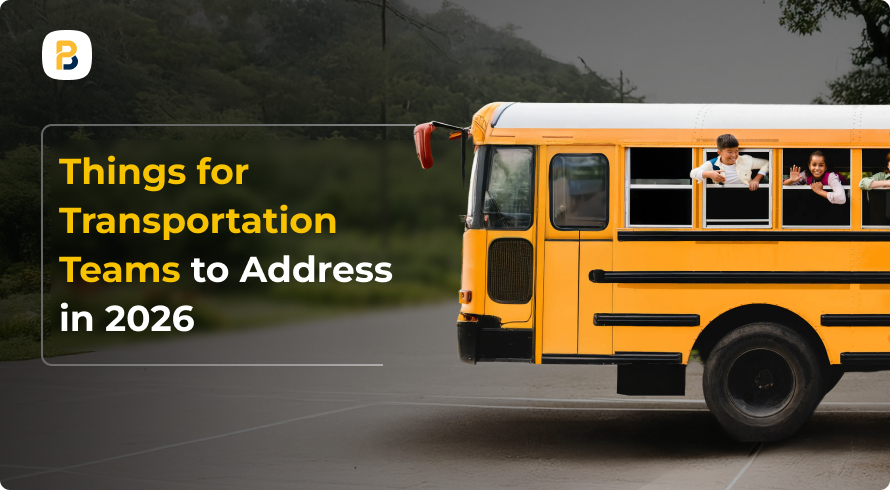
For many districts, challenges in 2026 do not result from a single major failure. Instead, issues surface early in the year through unstable routes, missed pickups, driver absences, and a noticeable increase in parent calls driven by outdated or misaligned information.
In this article, we outline key focus areas transportation teams should address in 2026. As districts move in the new year, transportation leaders must identify where readiness most often slips and focus attention on the areas where operational risks tend to emerge first.
1. Manage Parent Feedback Without Creating Service Gaps
Parent outreach is often seen as relationship building, but it also affects daily transportation operations. Gathering feedback the right way can set parent expectations that districts can reliably meet throughout the school year.
- Strengthen Core Procedures: Update all transportation procedures and clearly define them to support student safety and consistent parent communication, including code-of-conduct guidelines, incident response, and contingency plans.
- Target Real Issues: Prioritize concerns that repeatedly cause delays, missed pickups, or service disruptions, rather than reacting to every request.
- Share Clear Follow-Up: Explain to parents what will change and what will remain the same after feedback is reviewed. When parents do not receive closure, call volume and frustration often increase.
2. Ensure Driver Readiness & Safety Protocols
Driver readiness goes beyond paperwork and compliance checks. Many early-year issues arise when drivers, dispatch, and schools are not aligned during busy transition periods.
- Practice Real Scenarios: Reevaluate emergency situations and route delays using a realistic timeline. Confusion often occurs when expectations are discussed in theory but not practiced in context.
- Prepare for Student Adjustment: Discuss the changes in routine and student behavior timely. Preparation helps drivers respond calmly and maintain consistent service.
- Review Policies: Go through any rules or procedures that may have changed during the year. Assuming policies stayed the same often leads to inconsistency across drivers and routes.
3. Evaluate Fleet Utilization Decisions Beforehand
Fleet problems usually don’t happen all at once. They become visible when no spare buses are available due to absences, breakdowns, or weather-related issues.
- Check Backup Availability: Recognize that even if the total fleet size appears sufficient, there may be limited flexibility when multiple issues occur simultaneously.
- Make Changes Early: Understand that adjusting fleet assignments before peak service pressures build is far easier than reacting once routes are already running and parents are affected.
- Utilize Past Data: Note that historical fleet usage data often provides clearer insight than projections alone, especially when planning for recurring seasonal challenges.
4. Validate Route Accuracy Under Current Conditions
Routes that were effective last year may become inefficient for several reasons, such as changes in student count or schedule adjustments. When these updates build up, routes can take longer and cost more to run.
- Recheck Address Updates: Evaluate minor address changes that may affect stop orders, travel times, and routes. Review these updates carefully early in the year.
- Verify Maps and Stops: Audit outdated boundaries or stop locations that can cause routing errors, which are hard to correct once buses are on the road.
- Prepare for Infrastructure Changes: Plan for construction projects and winter road conditions that often alter traffic flow and timing assumptions compared to earlier in the year.
5. Identify Why Incident Plans Break Down in Practice
Most districts have incident response plans, but problems arise when they are challenging to use in real-world conditions.
- Speed Up Notifications: Deliver automated, real-time notifications through an effective student transportation platform when service disruptions occur, enabling faster responses and reducing downstream impact.
- Keep Messages Consistent: Reduce confusion for parents and schools by sharing consistent information across calls, emails, and apps. Build trust during disruptions through consistent messaging.
- Complete Incident Records: Maintain clear and accurate documentation to support follow-up actions and reduce additional administrative work after the situation is resolved.
6. Keep a Check & Balance of School Bus Fleet Health
Maintaining fleet health helps prevent early service disruptions. As the new year progresses, minor maintenance issues can quickly affect fleet reliability and service continuity.
- Inspect Bus Interiors: Address interior safety risks like damaged seat frames or worn steps early by using school bus fleet management software with digital inspection checklists and automated maintenance scheduling.
- Check Fluids and Systems: Prepare for cold weather by checking fluid levels, battery health, heating systems, and brake performance. Low temperatures often reveal maintenance issues not seen under normal conditions.
- Test Safety Equipment: Ensure emergency exits and safety tools work properly, enabling a faster response when issues arise.
Key Takeaways: Setting the New School Year Up for Success
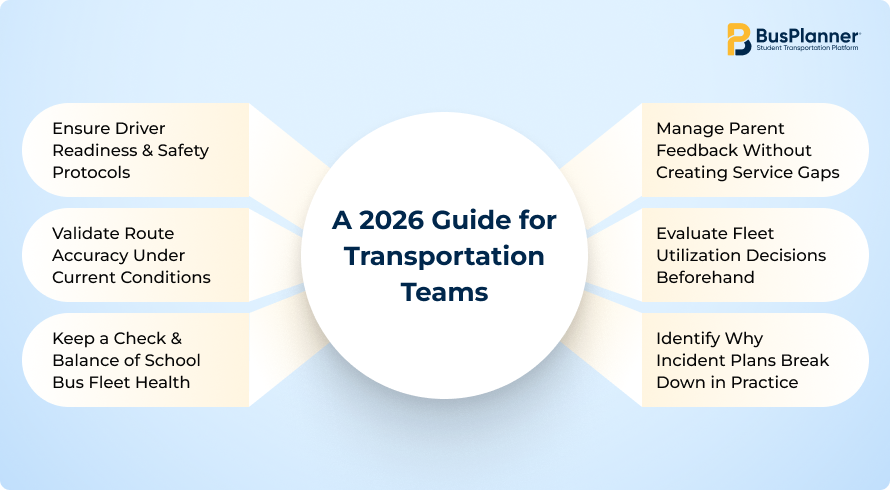
The start of a new year is less about completing a checklist and more about understanding what has shifted since last year. Districts facing early challenges usually do not overlook tasks, but underestimate how changes in data, staffing, and expectations increase operational risk.
An all-in-one student transportation platform provides timely visibility to these shifts, helping districts plan for current conditions and maintain operational efficiency.
Frequently Asked Questions
Why does fleet health require ongoing attention during the year?
Minor maintenance issues compound quickly during active service and can disrupt assigned routes, on-time performance, and safety if left unaddressed.
Which operational risks should transportation teams prioritize in 2026?
Gaps in route planning, fleet readiness, driver availability, and data accuracy are the most common sources of service disruption when not reassessed early.
Why is accurate transportation data critical?
Outdated student information, stop details, and schedules lead to routing errors, missed stops, and manual fixes that disrupt daily service.