
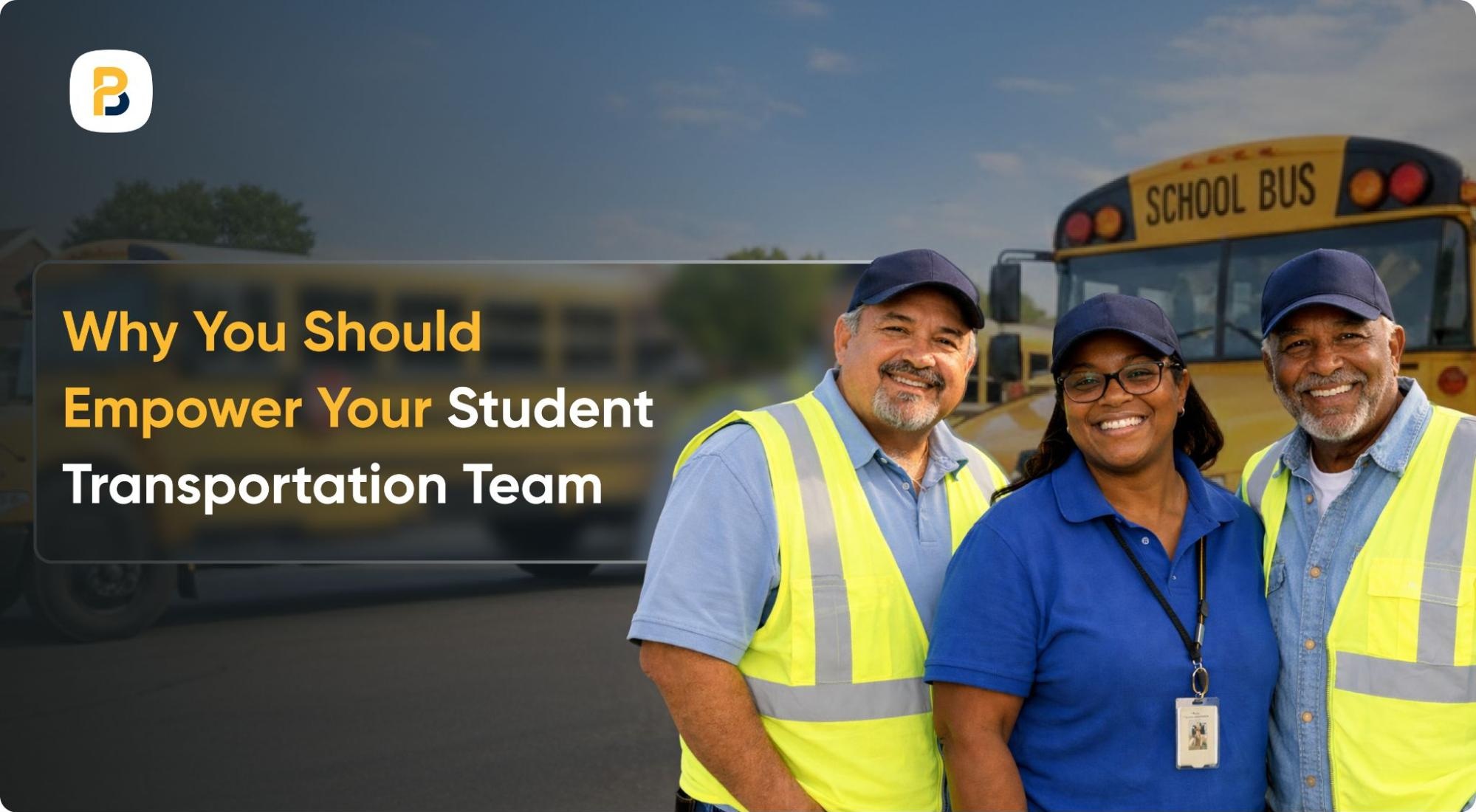
Student transportation departments operate under constant pressure. Driver shortages, shifting schedules, parent communication, and safety expectations all land on the same teams every day.
Strengthening your student transportation team is not about adding perks or new responsibilities. It’s about removing friction and giving staff the tools, authority, and clarity they need to do their jobs well.
Why It Matters In Daily Transportation Operations
Empowerment isn’t a leadership buzzword; it directly impacts daily performance and how transportation teams respond to challenges. When staff feel trusted and informed, they make better decisions under pressure and escalate fewer avoidable issues.
- Operational Resilience Under Pressure: Supported teams are better equipped to handle weather disruptions, driver absences, and route changes without waiting for top-down direction. This reduces service delays and parent complaints during peak hours.
- Improved Driver Retention: Driver shortages often reflect morale challenges. When drivers feel respected, informed, and equipped to succeed, they’re more likely to stay. Empowerment builds confidence and reinforces that they’re valued and supported.
- Safer Student Outcomes: Drivers and dispatch teams play a critical role in maintaining safety through consistent adherence to procedures and sound real-time decision-making.
How Districts Can Support Transportation Staff
Supporting transportation staff requires consistent operational choices, not one-time initiatives. The following strategies focus on practical steps districts can implement without restructuring their departments.
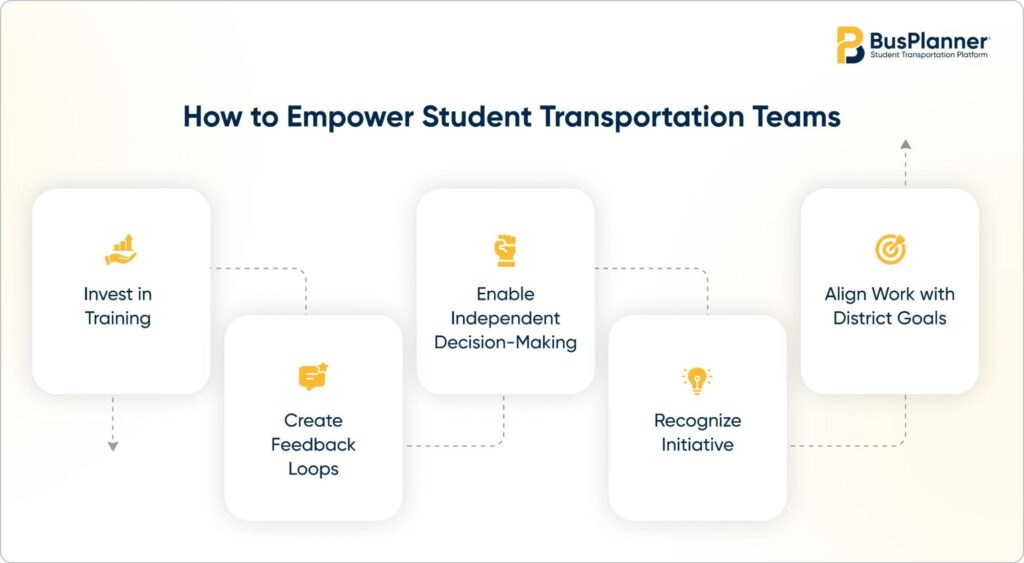
- Clarify Roles and Decision Authority: When transportation staff know what decisions they can make independently, response times improve, and confusion decreases. Clear boundaries also reduce burnout caused by constant second-guessing.
- Invest in Continuous Training: Regular refreshers on routing safety protocols and communication expectations help staff stay confident as conditions change throughout the school year.
- Create Feedback Loops: Drivers and dispatchers often identify inefficiencies before leadership does. Providing structured channels for feedback helps districts resolve issues before they escalate.
- Reduce Administrative Burden: Manual paperwork, phone calls, and duplicate data entry divert teams from students. Streamlining processes with student transportation software frees time for higher-value work and improves morale.
Technology That Supports Transportation Teams
Student transportation teams make dozens of decisions every day that depend on timing, visibility, and coordination. Student transportation software can be leveraged to reduce uncertainty and manual work, allowing staff to focus on student drivers and service reliability rather than reacting to avoidable issues.
- Centralized Operational Visibility: Student transportation software consolidates routes, schedules, student data, and service changes into a single shared system, enabling drivers, dispatchers, and planners to work from the same information rather than relying on phone calls or paper notes.
- Faster Decision-Making During Disruptions: When weather, traffic, or staffing issues arise, real-time access to accurate data allows teams to adjust routes, communicate changes, and maintain service without waiting for multiple approvals.
- Data That Supports Human Judgment: The goal of student transportation software is to provide teams with clear, timely information to make confident decisions throughout the school day.
Leadership Practices That Empower Teams
Empowerment is reinforced through everyday leadership actions. Transportation teams take direction from how leaders respond to challenges, priorities, and pressure. Consistent behavior helps make empowerment a reliable part of daily operations rather than an occasional initiative.
- Visible Support During High-Stress Events: When leaders are present and engaged during weather disruptions, staffing shortages, or route breakdowns, teams feel supported rather than scrutinized. This reinforces shared responsibility and reduces hesitation during critical decisions.
- Recognizing Team Decision-Making: Acknowledging thoughtful problem solving, even when outcomes are not perfect, encourages initiative and professional judgment. Teams are more likely to act confidently when they know effort and reasoning are valued, not just results.
- Clear Connection To District Priorities: Linking daily transportation decisions to broader district goals helps teams understand the purpose behind their work. When staff see how their actions support student attendance, safety, and equity, accountability improves naturally.
Conclusion
Empowering student transportation teams is about removing friction and giving staff the clarity, authority, and tools they need to perform confidently under pressure. When teams feel supported, operations become more stable, responsive, and reliable, even during disruptions.
Looking to strengthen your transportation operations? Discover how BusPlanner’s all-in-one student transportation suite can help your team operate with confidence and independence.