
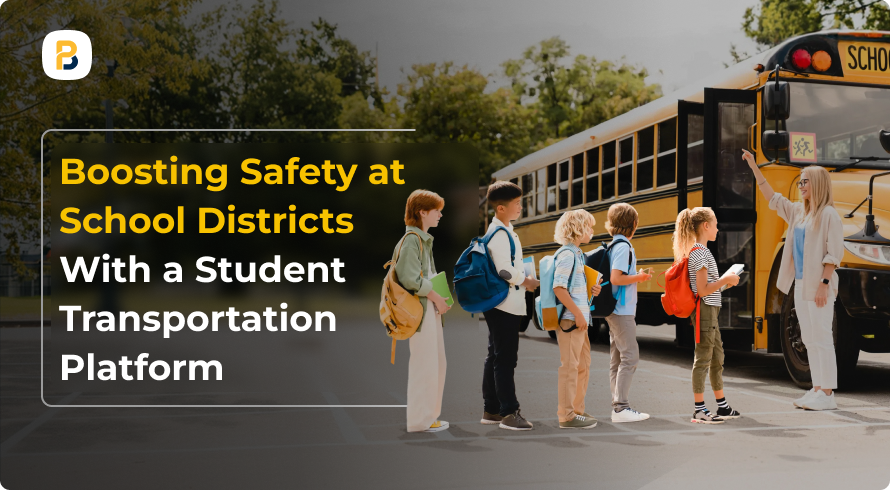
A student transportation platform integrates planning, operations, and communication into a single system, helping maintain the consistency that keeps school buses among the safest modes of travel. By coordinating daily operations, districts sustain safety where it matters most.
In this article, we explore how to enhance school district safety with a comprehensive student transportation software solution.
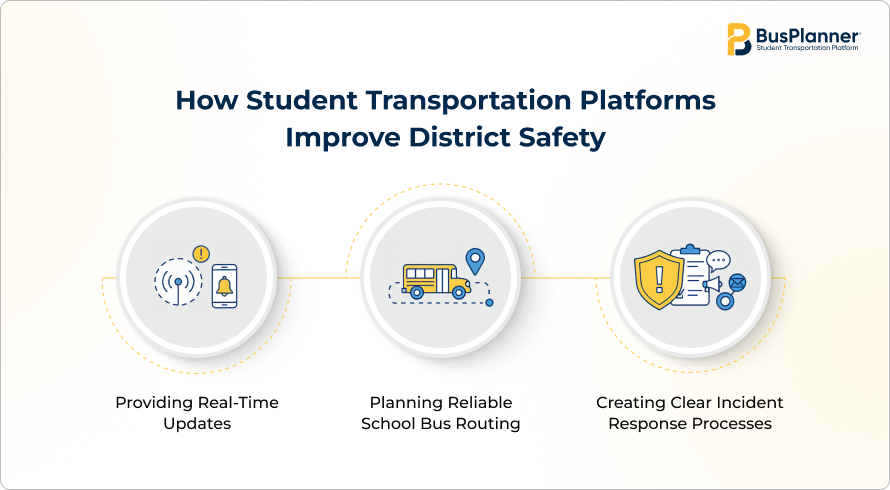
1. Providing Real-Time Updates
Clear visibility helps transportation teams make informed decisions as routes, traffic patterns, and student needs change. Knowing bus locations and route performance supports safer coordination among dispatch, schools, and drivers. School bus GPS software improves daily transportation decisions by turning live route and location data into actionable insights.
- Live Location Awareness: Use real-time location data to support dispatch during traffic delays, weather events, or route disruptions.
- Speed and Route Consistency: Review actual route performance to reinforce safe driving behavior through targeted feedback.
- Late Bus Transparency: Up-to-date location information enables schools to adjust supervision plans when arrivals shift.
- Accurate Trip Review: Verify bus location, arrival times, and route activity through GPS data to support incident, complaint, and service reviews.
2. Planning Reliable School Bus Routing
Routes form the foundation for safe transportation. Inefficient or frequently changed routes create risk by causing unsafe stops, uneven student loads, and uncertainty for drivers. School bus routing software helps districts apply clear safety standards to day-to-day operations.
- Bus Stop Safety Review: Evaluate stop locations for sightlines, traffic speed, and student movement to help districts limit unsafe loading areas and improve visibility.
- Road Hazard Avoidance: Steer buses away from high-speed corridors, complex intersections, and congestion points that increase exposure to incidents.
- Balanced Capacity Planning: Distribute students evenly across routes to reduce overcrowding and support consistent driver attention throughout each trip.
- Planned Route Changes: Ensure drivers receive timely, accurate updates via routing tools rather than relying on outdated instructions.
3. Creating Clear Incident Response Processes
Incidents require clear information and coordinated action. When details are scattered across systems or phone calls, responses are slow, and communication is inconsistent. School bus management software enables incident management, ensuring minimal delays and disruptions.
- Centralized Information Access: View driver, vehicle, route, and student information in one system to reduce confusion in time-sensitive situations.
- Predictable Incident Handling: Streamlined workflows guide consistent responses to service disruptions, even when staff roles or shifts change.
- On-Route Driver Support: Equip drivers with clear routes and student data to reduce confusion and maintain safety during service changes.
- Consistent Communication: Reliable, timely notifications and alerts help schools and parents stay informed about bus delays, route changes, and arrival updates.
Key Takeaway: Strengthening Daily Student Transportation Safety
Transportation safety depends on how well daily operations are executed, not just on policies or tools. A comprehensive student transportation platform supports safer service by providing drivers, schools, and transportation teams with reliable information and structured workflows to manage routine operations and disruptions.
Frequently Asked Questions
Why does route planning matter for school bus safety?
Consistent route planning reduces exposure to high-risk roads, unsafe stops, and long ride times that raise safety concerns.
How does live school bus visibility support safer operations?
Live bus tracking enables transportation teams to monitor routes in real-time, enabling quicker responses to disruptions, service issues, or safety concerns.
How does communication impact student transportation safety?
Clear, timely updates reduce confusion during service changes by keeping schools and parents informed about route status, delays, and arrival timing.