
Data-driven decision-making in student transportation operations is no longer optional. It is the difference between reacting to problems and preventing them.
1. Improve Routing Efficiency
Routing decisions affect fuel consumption, driver workload, on-time performance, and parent satisfaction. When routing is based on assumptions instead of real performance data, inefficiencies multiply quickly. Districts can optimize routes and enhance operational efficiency through data.
- Stop Time and Ride Time Analysis: Reviewing actual ride times helps ensure students are not on the bus longer than necessary while maintaining service standards.
- Route Consolidation Opportunities: Data reveals underutilized buses or overlapping service areas that can be optimized.
- Mileage Tracking for Cost Control: Fuel prices directly affect operating budgets. Mileage data allows districts to actively manage that impact.
2. Strengthen Safety Oversight
Safety is the top priority in every transportation department. Data provides measurable visibility into performance and risk.
- Incident Trend Monitoring: Tracking internal incident data ensures districts stay aligned with their safety record.
- GPS-Based Accountability: Real-time vehicle tracking with school bus GPS tracking software helps confirm route compliance and stop adherence.
- Driver Performance Metrics: Monitoring speeding alerts or harsh braking events supports targeted coaching rather than broad discipline.
3. Support Budget Planning
Transportation is often one of the largest non-instructional line items in a district budget. The National Center for Education Statistics (NCES) reports that in 2018–19, public school systems spent about $27.9 billion on student transportation in current dollars.
- Cost Per Rider Calculations: Understanding cost per transported student strengthens budget presentations to district leadership.
- Fuel and Maintenance Forecasting: Historical trends provide a baseline for future projections.
- Capital Replacement Planning: Fleet age and maintenance data guide bus replacement cycles.
Many districts use a centralized student transportation platform to unify routing, fleet, and financial data for stronger budget alignment.
4. Address Driver Shortages
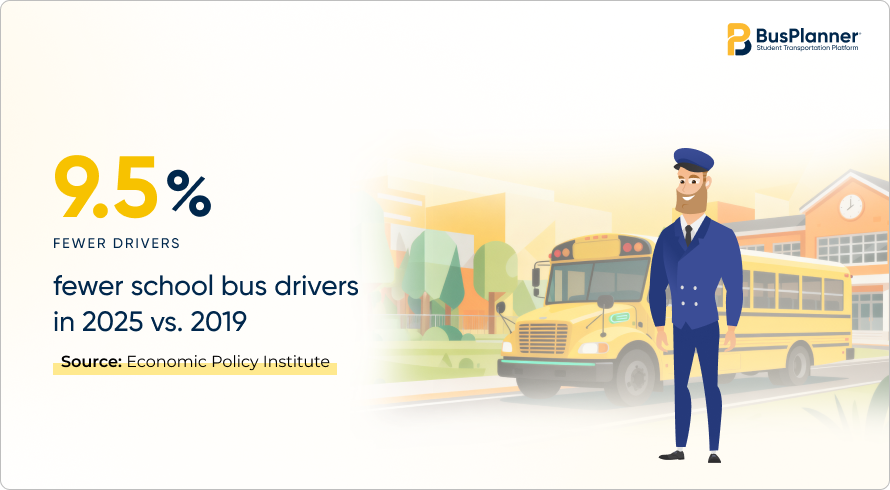
Driver shortages remain a nationwide challenge. Here is how data can help address this challenge:
- Absence Pattern Tracking: Identifying trends in absenteeism helps operations leaders proactively adjust coverage.
- Route Equity Analysis: Data can ensure workloads are balanced to prevent burnout.
- Recruitment Targeting: Analyzing service gaps helps districts prioritize hiring in high-demand areas.
5. Improve Communication and Transparency
Parents, principals, and superintendents expect clear answers. By providing access to the information you need, data makes those conversations easier and more productive.
- On Time Performance Reporting: Sharing measurable arrival metrics builds trust with schools and families.
- Call Volume Tracking: Monitoring peak call times helps staff appropriately during high-demand periods.
- Real Time Updates: Integrated communication tools reduce misinformation during weather or traffic disruptions.
6. Enable Smarter Long-Term Planning
Enrollment shifts, boundary changes, and new construction all affect transportation operations. Without reliable data, long-term planning becomes guesswork.
- Enrollment Trend Analysis: Student address data supports accurate route forecasting.
- Boundary and Zoning Support: Geographic data informs equitable service distribution.
- Scenario Modeling: Transportation leaders can test service adjustments before implementation.
7. Reduce Hidden Operational Costs
Inefficiencies often hide in plain sight. Data surfaces them before they become budget crises.
- Deadhead Mileage Identification: Tracking non-revenue miles exposes savings opportunities.
- Overtime Monitoring: Reviewing overtime trends helps align staffing with demand.
- Maintenance Downtime Analysis: Identifying repeat repairs supports smarter fleet decisions.
The Way Forward
Ultimately, the districts that thrive in today’s complex transportation environment will be the ones that treat data not as a byproduct of operations, but as a strategic asset. The way forward is clear: centralize your information, define the performance metrics that matter most, review them consistently, and empower your team to act on what the numbers reveal. Start small if needed; focus on ride time, on-time performance, or fuel usage, but commit to building a culture where decisions are grounded in evidence, not assumptions.
As student needs evolve, budgets tighten, and accountability expectations grow, data-driven leadership will separate reactive departments from resilient, future-ready transportation programs.
If you’re ready to move from insight to impact, now is the time to modernize your approach. Contact us to see how the BusPlanner’s powerful analytics tools can unify your routing, GPS, fleet, and financial data into one clear operational view, helping you reduce costs, strengthen safety oversight, and make faster, smarter decisions every day.
FAQs
Q1. Why is data-driven decision-making important in student transportation operations?
It allows districts to improve routing efficiency, strengthen safety oversight, control costs, and respond proactively to staffing and enrollment changes.
Q2. What types of data should transportation directors track?
Key metrics include ride time, route mileage, fuel usage, on-time performance, driver attendance, maintenance records, and incident reports.
Q3. How does a student transportation platform help with decision-making?
A centralized system connects routing, GPS, fleet, and financial data into one operational view, making reporting and analysis faster and more accurate.
Q4. Can small districts benefit from transportation data analytics?
Yes. Even smaller fleets can uncover cost savings and service improvements by reviewing route efficiency and performance trends.