
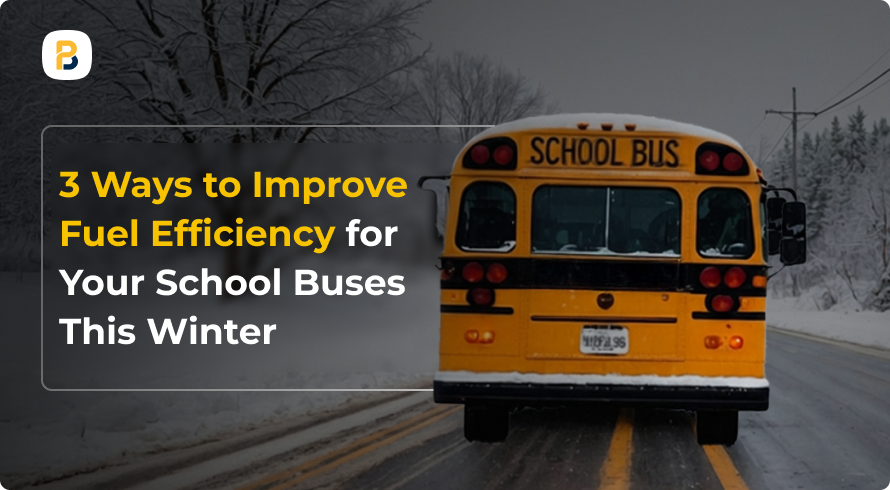
Winter fuel inefficiency rarely comes from a single issue. Longer warm-ups, cold starts, snow route detours, and stop-and-go driving all add idle time and extra miles to daily routes. For districts operating diesel fleets, these winter conditions quietly compound into higher fuel costs, delayed departures, and heavier maintenance workloads.
With nearly 90% of America’s half a million school buses still running on diesel, the goal is not to eliminate winter fuel use, but to reduce unnecessary fuel burn while maintaining safety and on-time service.
This article explores practical winter fuel-efficient strategies that transportation teams can apply during the school year.
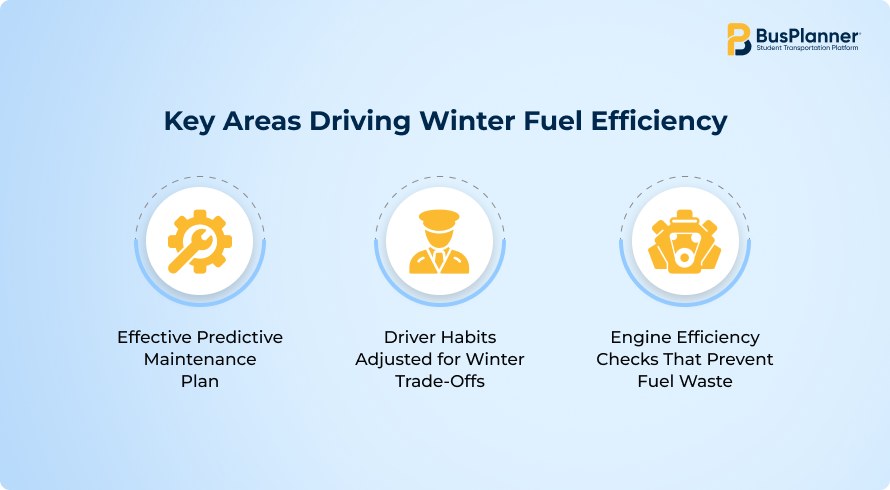
1. Effective Predictive Maintenance Plan
Cold temperatures increase engine resistance, thicken fluids, and expose weak components. When winter maintenance slips, buses burn more fuel just to maintain average performance.
- Switch to Winter-Grade Engine Oil: Low-viscosity oil flows more easily at cold temperatures, reducing friction during startup. Engines reach operating temperature faster rather than burning excess fuel under load.
- Verify Coolant Ratios & Heater Performance: Engines running below optimal temperature consume more fuel. Coolant mixtures should match winter conditions, and heaters should function properly so buses warm efficiently instead of excessively.
- Monitor Tire Pressure Proactively: Tire pressure drops by roughly one PSI for every 10° decrease in temperature. Underinflated tires increase rolling resistance and force engines to work harder on every route.
2. Driver Habits Adjusted for Winter Trade-Offs
Winter driving increases fuel use through longer warm-ups, cautious speeds, and repeated re-acceleration. Driver behavior still matters, but winter safety requirements introduce trade-offs that must be managed carefully.
- Gradual Acceleration After Stops: Hard acceleration on cold engines increases fuel consumption and reduces traction. Smooth throttle input lowers mechanical strain and improves control on slick roads.
- Controlled Steering in Poor Conditions: Abrupt steering increases tire slip and traction loss, followed by recovery acceleration that raises fuel use. Smooth steering reduces both safety risk and fuel waste.
- Steady Anticipatory Braking: Longer braking distances in winter reduce the risk of sudden stops. Fewer hard stops mean less fuel-intensive re-acceleration events, especially on routes with frequent stops.
3. Engine Efficiency Checks That Prevent Fuel Waste
Even well-maintained buses lose efficiency in winter if airflow or combustion is compromised. These checks help prevent fuel waste that often goes unnoticed in colder months.
- Engine Compression Levels: Poor compression leads to incomplete combustion, especially during cold starts, resulting in wasted fuel and delayed engine ignition.
- Fuel Lines & Water Separators: Moisture buildup in fuel systems can freeze, restrict flow, or reduce combustion efficiency. Winter inspections help prevent blockages before they disrupt routes.
- Air Intake Systems: A clean airflow system allows engines to operate smoothly without compensating with excess fuel.
Key Takeaway: Optimizing Winter Fuel Usage for School Buses
Improving winter fuel efficiency goes beyond reducing fuel use. It requires managing and monitoring indicators such as idle time, minimizing weather-related route variability, and preventing cold-start issues that disrupt service. Addressing these areas together helps districts maintain on-time performance without adding strain to drivers or maintenance teams.
Routing and fleet management tools like BusPlanner can help districts monitor these signals and support seamless winter operations.
Frequently Asked Questions
Do school buses use a lot of gas?
School bus fleets consume 8.2 million gallons of diesel annually, contributing to high transportation costs for districts.
Does fuel economy decrease in winter?
Cold weather thickens school bus fluids, strains engines, and lowers tire pressure, all of which can reduce fuel efficiency.
What drains gas the most?
Neglecting maintenance, excessive idling, sudden acceleration, and poor route management can increase your fuel consumption over time.