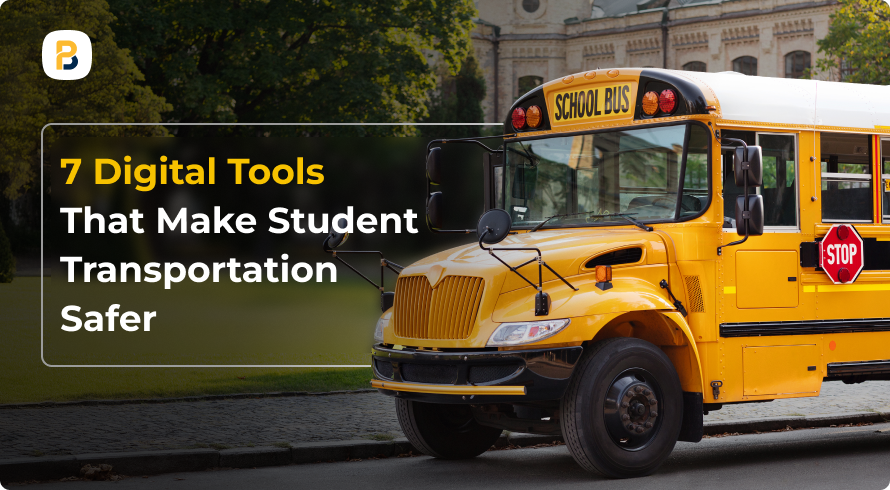
Safety improvements rarely come from one big change. They come from better visibility, faster communication, and fewer manual steps in the moments that matter. For districts managing thousands of daily student movements, the right digital stack can support safer decisions without adding chaos to dispatch, routing, or the front office.
Each school day, more than 25 million children ride school buses in the United States. If you are evaluating tools, prioritize the ones that shorten response time, reduce uncertainty at stops, and strengthen accountability across the ride.
A centralized student transportation platform for school districts can support that layered approach when it connects routing, dispatch, and communication workflows in one place.
1. GPS Tracking And Fleet Telematics
When dispatchers can see what is happening right now, small issues stay small. School bus GPS solutions support safer operations by turning location, speed, and vehicle health into actionable signals for your team.
- Live Map Awareness: Use real-time bus visibility to help dispatch reroute around closures, congestion, or weather hazards before they create unsafe stop conditions.
- Driver Behavior Signals: Identify patterns such as speeding, harsh braking, and hard turns so drivers can be coached using objective trend reports.
- Vehicle Health Alerts: Use diagnostic data to detect potential issues early, helping prevent buses from breaking down in risky locations or conditions.
- Post Incident Clarity: Access time-stamped trip history to reconstruct events and provide accurate timelines when reviewing an incident.
2. Real-Time Family And Staff Communications
Stop safety is often a communication problem in disguise. When parents do not know where the bus is, students may wait longer than necessary, change locations, or cross streets to look for it.
- Stop ETA Notifications: Send alerts in mobile apps for parents to reduce guesswork and help families time arrivals so students are not waiting unsupervised.
- Turn-by-Turn Driver Directions: Provide digital directions so drivers follow the safest approved routes and stop approach paths, limiting unexpected turns or informal stop adjustments.
- Operations Wide Consistency: Ensure updates related to delays, reroutes, or stop changes reach drivers, dispatchers, and schools at the same time to prevent conflicting instructions that could create unsafe conditions.
3. Student Ridership Verification Tools
Knowing who got on, who got off, and where it happened is a safety and service issue. Ridership verification tools support accurate accountability, especially for special programs, transfers, and changing custody plans.
- Boarding and Alighting Logs: Digital check-ins create a time and location record tied to the correct run.
- Exception Alerts: Notifications can flag when a student does not scan at an expected stop or boards an unexpected bus.
- Fewer Manual Lists: Drivers and monitors spend less time on paper rosters and more time focusing on loading zone awareness.
- Faster Follow-Up: When a parent calls, dispatch can respond with verified information rather than assumptions.
4. Routing Software With Safety-Based Constraints
The routing tools you use to assign stops, walking distances, and ride times influence where students stand, how long they wait, and how predictable service feels.
- Safer Stop Selection: School bus routing software can help evaluate stop spacing, turn restrictions, and road types to avoid higher-risk placements.
- Capacity and Ride Time Controls: Balanced loads reduce overcrowding and improve supervision conditions on board.
- Documentation for Reviews: When stop decisions are questioned, you can reference the criteria used, not just tradition.
5. Incident Reporting And Emergency Response Tools
In a real incident, the operational goal is an adequate and speedy response. Digital incident tools reduce reliance on memory and phone trees, so teams follow the same steps under pressure.
- One Touch Driver Alerts: Drivers can quickly trigger an alert to dispatch without needing multi-step calls.
- Role-Based Notifications: Transportation staff, school leaders, and safety teams receive the right information at the right time.
- After Action Learning: Reports support trend analysis so prevention and safety practices can improve over time.
What The Data Says About Why This Matters

School buses have a strong safety record compared to passenger vehicles. NHTSA notes students are nearly eight times safer riding in a school bus than riding in cars with parents or guardians, and provides fatality rate comparisons by vehicle miles traveled. Still, severe crashes happen, and many fatalities in school bus-related crashes involve people outside the bus, especially near loading and unloading zones.
That makes stop location decisions, arrival timing, driver consistency, and real-time communication critical safety levers rather than administrative conveniences.
Training creates standards. Policy defines expectations. But most safety breakdowns do not happen during normal operations; they happen during variability. Substitute drivers. Weather reroutes. Late buses. Stop changes. Enrollment shifts. Custody updates. When routine changes, cognitive load increases, and so does risk.
Digital tools that improve visibility, reduce uncertainty, and standardize workflows help districts manage that variability. They reduce reliance on memory, verbal relays, and informal adjustments. They ensure that when conditions shift, the system responds consistently.
In that way, digital platforms do not replace training or policy. They reinforce them at the exact moments students are most exposed. Contact us today to see how BusPlanner’s student transportation platform supports safety!
Frequently Asked Questions
Which tool usually delivers the fastest safety improvement?
GPS visibility plus reliable family communications often deliver quick wins because they reduce uncertainty at stops and improve dispatch response.
Do cameras automatically improve safety on their own?
They help most when paired with a clear retrieval process, defined review criteria, and a coaching approach that focuses on prevention.
How should districts prioritize tool adoption?
Start with loading and unloading risk reduction, then add layers that improve visibility, accountability, and incident response time.