School bus inspections ensure vehicles are safe and compliant before transporting students. Federal motor vehicle safety requirements set minimum performance and equipment standards that buses must meet. Yet many buses that pass daily checks are still placed out of service during inspections because defects are not resolved or documented for inspectors to verify.
Limited mechanic availability and inspections scheduled during peak route hours make it harder to fix issues before buses are needed for service. When repair status, documentation, and vehicle availability are not aligned across teams, minor problems can disrupt routes and increase strain.
This article outlines practical ways districts can simplify inspections by integrating readiness into daily student transportation operations rather than treating it as a one-time task.
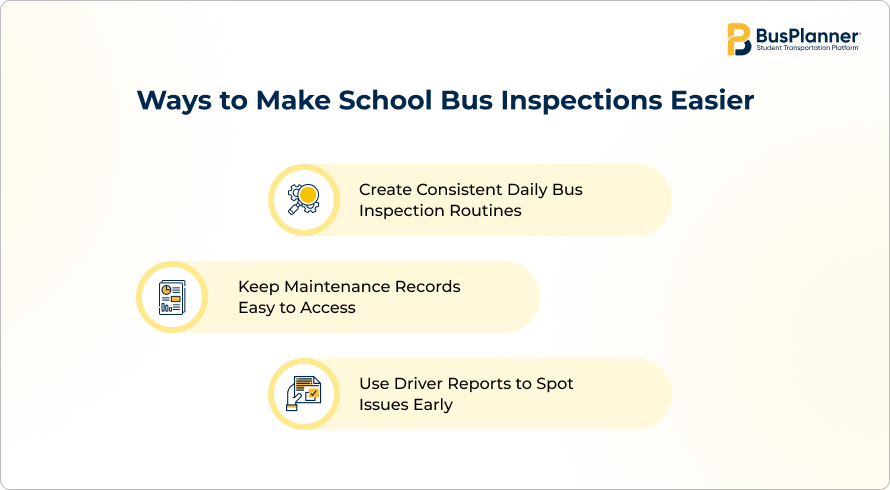
1. Create Consistent Daily Bus Inspection Routines
Day-to-day pre-checks help identify vehicle issues before inspection day. Using the same review process for every school bus helps consistently spot problems.
- Daily Walkarounds: Conduct visual safety checks before buses leave the yard to identify visible issues early to prevent defects from carrying forward into inspection cycles.
- Shared Checklists: Use one districtwide inspection checklist to align expectations across locations. Consistency reduces missed steps and conflicting reports.
- Aligned Training: Review inspection responsibilities with drivers and maintenance staff during safety meetings. Shared understanding improves accountability and follow-through.
- Proactive Maintenance: Address reported issues well before inspection timelines to avoid unexpectedly pulling buses out of service. Early action supports route stability during peak demand.
2. Keep Maintenance Records Easy to Access
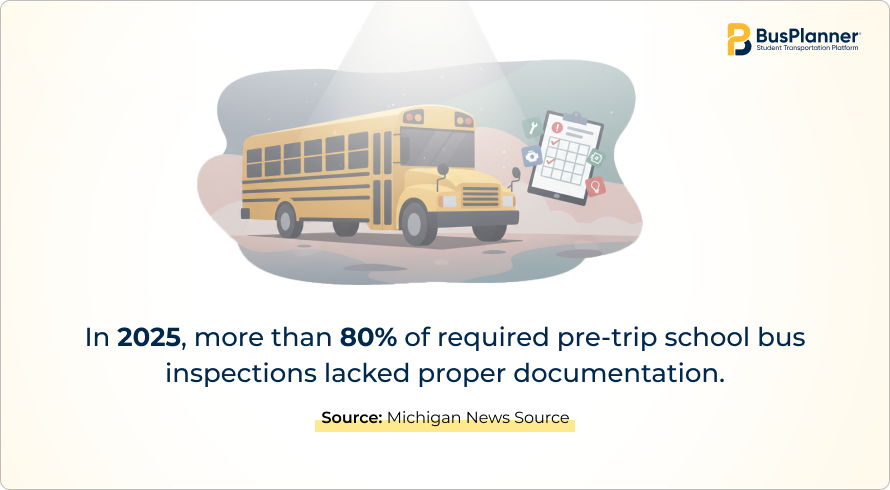
Inspection delays often stem from documentation gaps rather than mechanical failures. Inspectors need clear proof that reported defects were corrected and returned to service.
- Centralized Records: Store inspection and repair documentation in one location for quick retrieval. Centralized access reduces confusion on inspection day.
- Documented Repairs: Keep a track of when issues were reported, fixed, and returned to service to help inspectors confirm compliance.
- Inspection Readiness: Present complete, organized records at the start of inspections to shorten review time and limit follow-up questions.
- Defined Ownership: Assign responsibility for updating maintenance records to keep information current despite staffing changes or workload shifts.
3. Use Driver Reports to Spot Issues Early
Drivers operate buses daily and often notice changes in vehicle condition first. Their input helps maintenance teams address issues early.
- Simplified Reporting: Encourage drivers to submit concerns as part of their daily routine using consistent reporting methods to ensure issues are not overlooked.
- Operational Value: Strengthen fleet reliability by turning daily driver observations into preventive maintenance actions that reduce inspection risk.
- Timely Response: Resolve reported issues promptly to stop minor defects from becoming inspection failures and maintain driver trust.
- Clear Updates: Communicate repair status back to drivers once work is completed, so concerns are not repeatedly reported.
Key Takeaway: Successful Inspections Start With Better Processes
School bus inspections run more effectively when preparation is part of daily transportation operations rather than left to the last minute. Organized records, preventive maintenance, and clear communication reduce the risk of buses being placed out of service.
A comprehensive school bus fleet management software centralizes maintenance records, reported vehicle defects, and bus service status, enabling districts to coordinate inspection readiness across fleet, dispatch, and maintenance teams.
Frequently Asked Questions
How often are school buses inspected?
Most states require a full inspection at least once per year, along with regular safety checks throughout the school year.
Who is responsible for completing daily and periodic school bus inspections?
Drivers conduct daily pre-trip and post-trip inspections, while maintenance teams handle scheduled and compliance inspections.
What are the most common issues found during school bus inspections?
Interior safety concerns, brake and tire wear, lighting issues, and incomplete documentation are among the most frequent inspection findings.