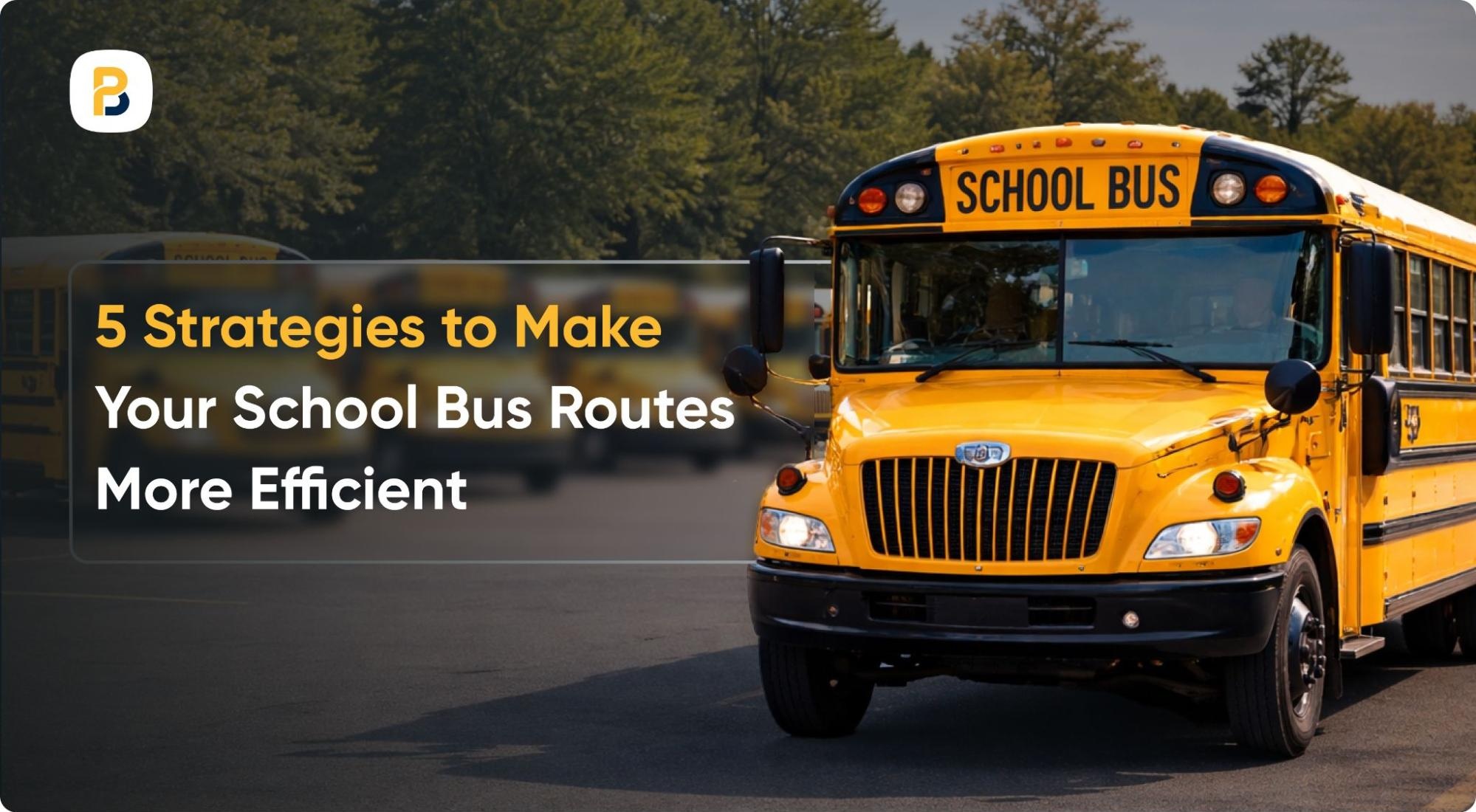
Every transportation department aims to deliver safe, on-time, and efficient service. Today, that means building routing systems that can adapt to enrollment changes, staffing shortages, and rising costs, not just creating a perfect plan at the start of the year. When flexibility is built in, small disruptions remain manageable rather than becoming ongoing challenges.
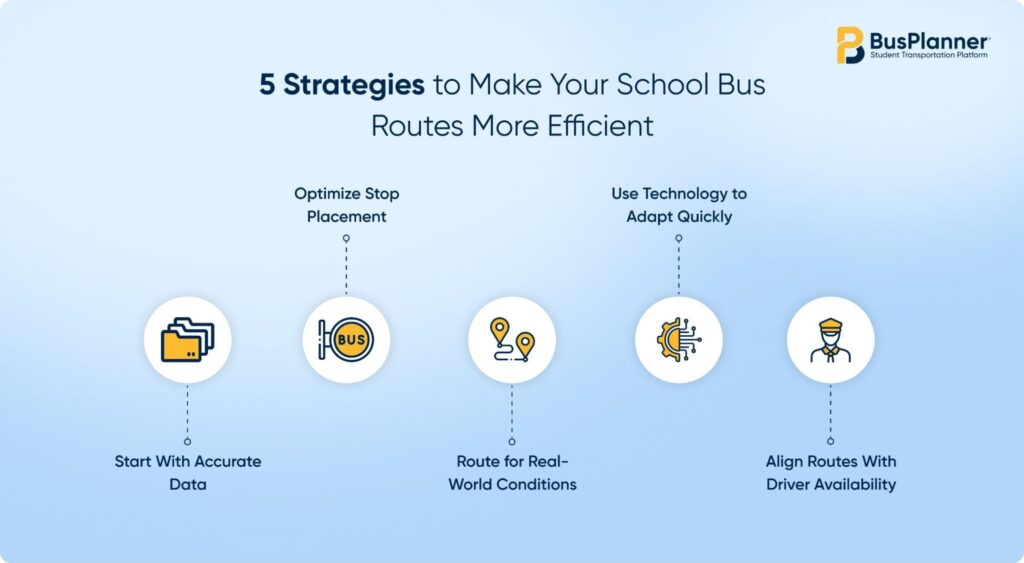
Below are five practical strategies transportation leaders are using to move beyond surface-level optimization and build routing systems that perform consistently throughout the school year.
1. Establish The Basics Through Proper Data Collection
Before any routing improvements can take place, data quality sets the ceiling for what is possible. Inaccurate or outdated information introduces inefficiencies that ripple across routes, vehicles, and driver assignments. This section outlines the core data maintenance practices that transportation teams can directly control.
- Audit Student Address Data Regularly: Incorrect or outdated addresses lead to unnecessary mileage and inefficient stop placement. Routine reviews help prevent errors from compounding across routes.
- Remove Inactive or Duplicate Ride Records: Legacy records inflate ridership counts and distort route loads, making efficient planning more difficult.
- Verify Bell Times & School Calendars: Even minor scheduling discrepancies can disrupt route timing and vehicle utilization.
- Maintain Accurate Stop Level Information: Stops should reflect real-world access and safety conditions, not historical decisions that no longer apply.
Clean data reduces avoidable complexity and creates a stable foundation for every routing decision that follows.
2. Optimize Stop Placement Based On Operational Reality
Stop placement directly impacts route length, ride time, and driver consistency. Over time, stops accumulate due to exceptions and one-off requests, gradually increasing mileage and runtime.
- Review Stop Spacing Against Internal Practices: Stops placed too close together increase dwell time and unnecessarily extend routes. Periodic reviews help identify opportunities for consolidation.
- Evaluate Stop Density Route By Route: Looking at the number of stops on each route helps planners spot inefficiencies that are not obvious when reviewing stops individually.
- Update Stops As Enrollment Changes Occur: Student moves and program changes can quickly make stop patterns outdated. Adjusting stops throughout the year prevents long-term inefficiencies.
- Update Stops As Enrollment Changes Occur: Student moves and program changes can quickly make stop patterns outdated. Adjusting stops throughout the year prevents long-term inefficiencies.
Transportation teams that actively manage stop placement often see immediate improvements in route consistency and driver satisfaction.

3. Build Routes Around How Buses Actually Move
A route that looks efficient on a map does not always perform well on the road. Traffic patterns, turn restrictions, and neighborhood layouts all affect how buses operate in practice.
- Account for Known Congestion Areas: Stops placed too close together increase dwell time and unnecessarily extend routes. Periodic reviews help identify opportunities for consolidation.
- Balance Ride Time & Capacity Together: The shortest distance is not always the most reliable route when ride time limits and loading patterns are considered.
- Adjust Routes As Conditions Change: Construction, detours, and seasonal traffic patterns should trigger proactive route updates rather than daily workarounds.
4. Use Technology To Adapt Faster To Change
Routing is not a one-time task completed before the school year begins. New students enroll, staffing levels change, and unexpected disruptions occur throughout the year. This section focuses on how transportation teams can respond more quickly when conditions shift.
- Model “What-If” Scenarios: Scenario planning allows teams to evaluate options without rebuilding routes from scratch.
- Make Targeted Adjustments Instead Of Full Rebuilds: Incremental changes reduce disruption for drivers and families.
- Respond Quickly To Mid-Year Enrollment Changes: Faster adjustments prevent temporary fixes from becoming permanent inefficiencies.
Many districts rely on a student transportation platform to support this flexibility, allowing planners to evaluate tradeoffs between ride time, fleet usage, and staffing while maintaining service stability.
5. Align Routing Decisions With Driver Availability
Driver availability is one of the most significant constraints facing transportation departments today. Routes that look efficient on paper can fail quickly if they do not align with realistic staffing levels. This section explains how routing decisions can support operational stability.
- Design Routes Within Realistic Shift Lengths: Overly long or complex runs increase absenteeism and fatigue.
- Create Consistent Route Assignments: Familiar routes improve driver confidence and reduce daily errors.
- Limit Unnecessary Route Complexity: Simpler routes are easier to cover when staffing changes occur.
Conclusion
Improving school bus route efficiency is about building systems that can adapt to constant change. Transportation teams that focus on accurate data, realistic operating conditions, staffing awareness, and continuous refinement are better positioned to maintain reliable service throughout the year.
By grounding routing decisions in factors that transportation professionals can directly control, districts can move beyond reactive fixes and toward sustainable, long-term efficiency supported by thoughtful planning and consistent review.
Discover how BusPlanner helps districts strengthen operations and build more resilient routes. Request a demo today.
Frequently Asked Questions
How does better routing improve efficiency?
It reduces unnecessary mileage, shortens ride times, and helps districts use drivers and buses more effectively.
Can better routing reduce costs?
Yes. More efficient routes can lower fuel use, reduce overtime, and improve overall resource use.
Does better routing help with driver retention?
Yes. More predictable routes and balanced workloads help reduce burnout and improve driver satisfaction.
How often should routes be reviewed?
It is recommended that districts review routes at least seasonally or anytime there’s a major change in enrollment or staffing.