In recent years, districts have faced challenges in improving student transportation safety and efficiency amid rising costs, policy changes, and a persistent shortage of drivers. Even today, 80 percent of school leaders report driver shortages, and 73 percent cite budget constraints as key barriers to efficient student transportation.
Throughout these challenges, the U.S. student transportation industry, which transports nearly 24 million K–12 students daily, continues to grow. Building on this momentum, districts are placing greater emphasis on safety, sustainability, and cost efficiency, making 2026 a defining year for reimagining how students travel to and from school.
This article explores the key trends influencing student transportation in 2026 and beyond.
1. Special Needs Transportation: Empowering Every Student’s Journey
Today’s school transportation systems must meet the diverse needs of students, ranging from special education and field trips to rural areas, while maximizing the effective use of resources.
- Efficient Routing: Seamlessly ensure door-to-door service for each special needs child.
- Reduced Ride Time: Students enjoy a comfortable commute with optimized routes, reducing their time on the bus.
- Equipment Matching: For secure and reliable transport, provide harnesses, lifts, and other equipment.
- Inclusive Service: Ensures equitable and reliable access for all students across communities.
Discover more about strategies for special needs transportation and inclusive planning in our recent blog post.
2. Electric Fleets: Budget Relief & Community Value
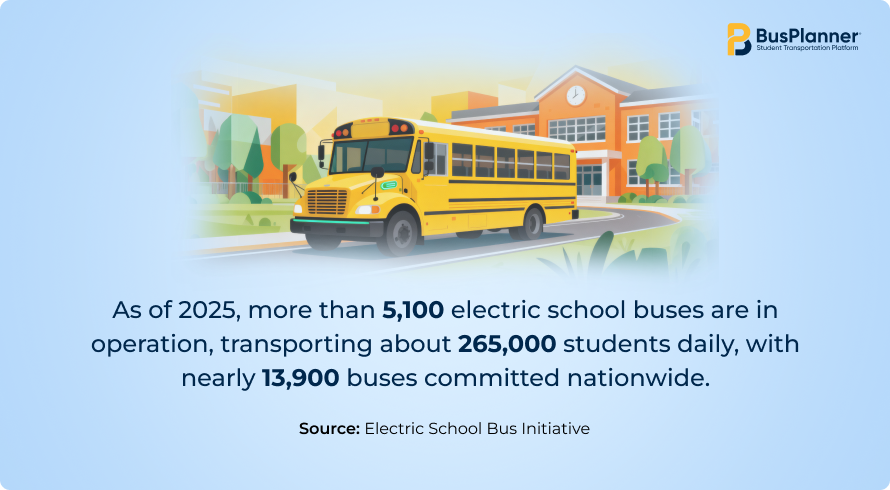
School districts across the U.S. are turning to electric and hybrid buses to cut costs and advance sustainability goals.
- EV and Hybrid Options: Supports cleaner and sustainable transportation by offering lower lifetime operating and maintenance costs.
- Fuel Efficiency Tracking: Identify savings opportunities by utilizing advanced systems to monitor idling, fuel consumption, and maintenance schedules.
- Public Perception: Improves district reputation and stakeholder trust by a visible commitment to clean energy.
- Strategic Investment: Provides financial and environmental returns that grow over time.
3. Parent & Student Apps: Building Transparency & Trust
Digital communication tools and mobile apps are transforming how parents engage with daily transportation, improving visibility and credibility.
- Instant Notifications: Parents receive quick updates about bus locations and timing.
- Interactive Route Maps: Helps parents plan mornings and track changes easily.
- Operational Efficiency: Fewer parent calls allow staff to focus on strategic issues.
- Relationship Strengthening: Consistent updates build lasting trust with the school districts.
4. Real-Time GPS Tracking: Visibility Equals Safety
School bus GPS software gives families, drivers, and administrators the clarity to respond quickly and confidently.
- Parent Assurance: The ease of viewing live bus updates helps parents stay informed and reduces uncertainty.
- Incident Management: Real-time alerts improve response speed during emergencies.
- Fleet Oversight: Administrators gain accurate data for operational decisions.
- Trust Through Transparency: Shared visibility enhances accountability across all levels.
Key Takeaway: Driving the Future of Student Transportation
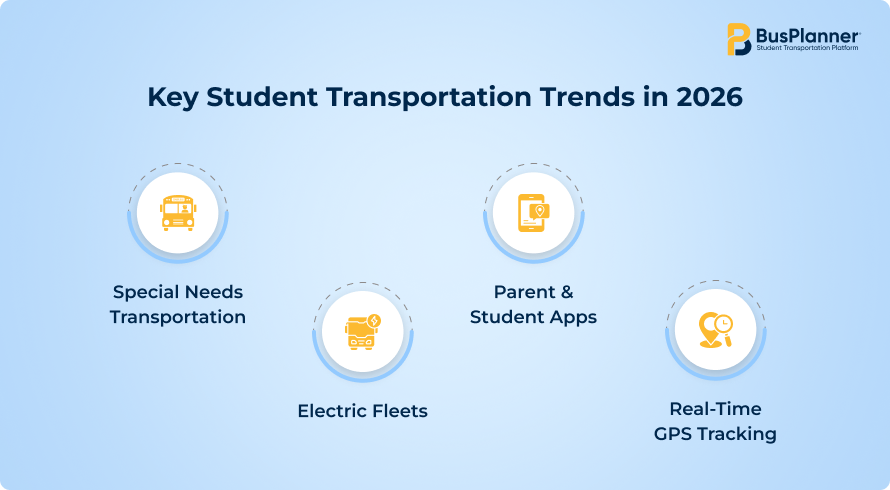
From electrified fleets to advanced routing and digital tools, student transportation is undergoing rapid transformation. For school districts, 2026 represents more than just efficiency; it marks a shift toward creating a safer and forward-thinking transportation network that better serves every student.
Stay ahead of the curve. Book a demo with BusPlanner, and learn how we are making strides in special needs student transportation.
Frequently Asked Questions
Why are more schools using electric buses?
They’re cheaper to run, easier to maintain, and help reduce pollution around schools.
Can parents track their child’s school bus?
Yes, most districts use real-time GPS and parent apps that show live bus locations and send delay alerts.
Why is the school bus the best way for students to travel?
It’s the safest, most reliable, and well-regulated form of transportation for students.