The Schools and Libraries Universal Service Support Program (E-Rate) is a federal initiative that enables K-12 educational institutions and public libraries to obtain cost-effective broadband and telecommunications services.
A rise in technology is seen across schools today, and E-Rate funding plays a big role in making that possible. As more districts invest in student transportation software and digital tools, the need for strong, reliable connectivity continues to grow.
What is E-Rate Funding?
The program was authorized under the Telecommunications Act of 1996 (Section 254) and is administered by the Universal Service Administrative Company (USAC) on behalf of the FCC. Discounts range from 20% to 90%, depending on poverty level and rural/urban status, with higher funding going to rural schools and libraries.
Schools and libraries can apply for E-Rate funding under two main categories:
- Category One: Covers the services that enable internet access to a building, including telecommunications and broadband.
- Category Two: Covers funding for hardware, which includes Wi-Fi equipment, routers, cabling, as well as the maintenance or management of internal networks that deliver internet to classrooms, offices, and libraries.
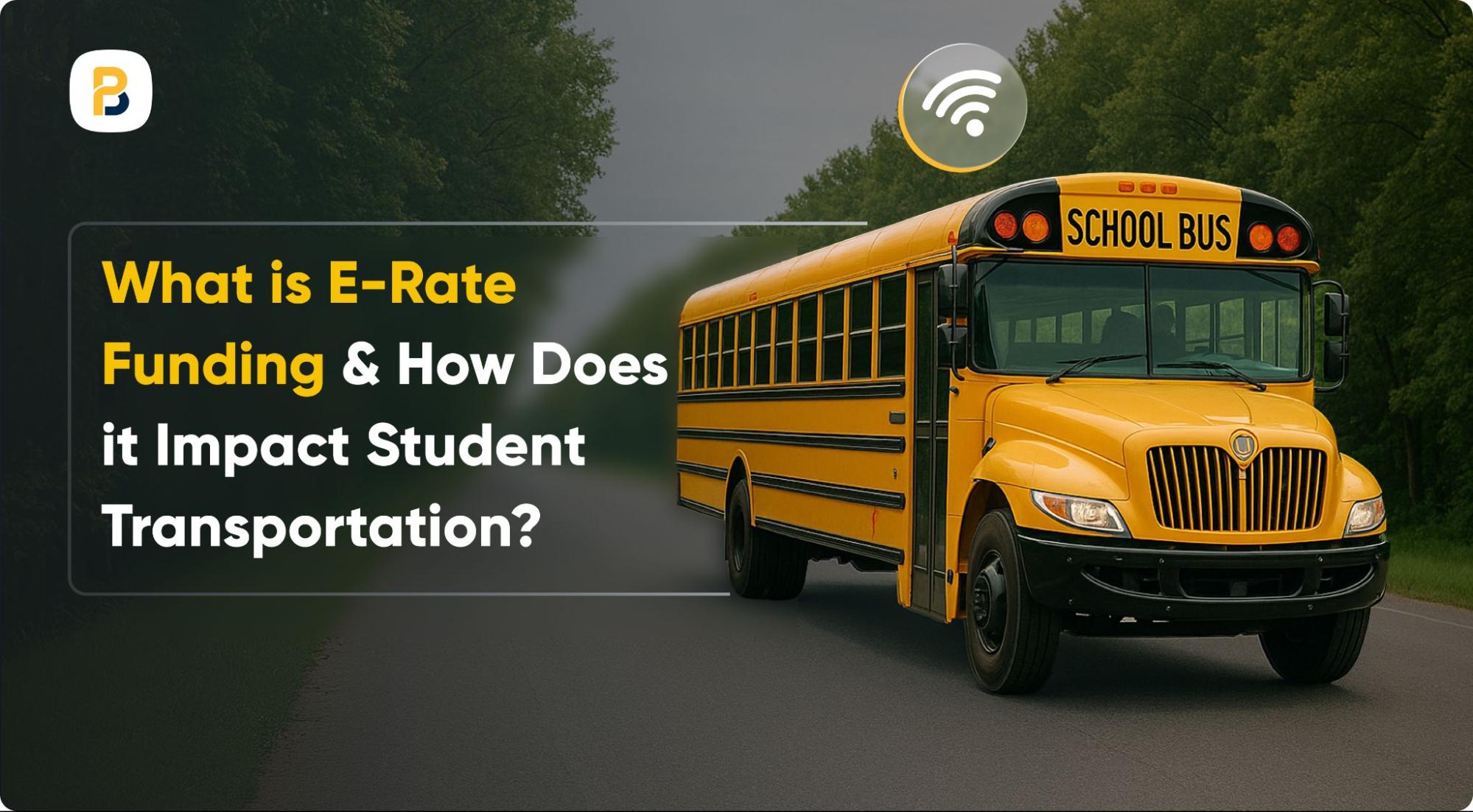
As of FY 2024, the FCC had expanded the list of eligible services to include Wi-Fi hotspots and bus Wi-Fi, improving real-time connectivity between school districts and their student transportation team.

Impact on Student Transportation
Reliable internet access, supported by the E-Rate program, gives transportation departments the tools they need to operate more efficiently, communicate more effectively, and keep students safer on the road.
1. Cost Savings Through Network Upgrades
E-Rate covers part of the cost of broadband and internal networks, freeing up district budgets to invest in student transportation software, GPS tools, or fleet upgrades that would otherwise be too expensive.
2. Enhanced Connectivity for School Buses
By providing Wi-Fi and reliable internet access on school buses, districts can turn travel time into meaningful learning opportunities. Students in rural or underserved areas often spend the most time on buses and have limited access to home internet. With Wi-Fi-enabled buses, they can stay connected, access digital lessons, and complete assignments while on the road.
At the same time, connected buses enable real-time communication between drivers, dispatchers, and schools, ensuring safer routes, faster updates, and more efficient daily operations. This combination of learning access and operational improvement makes bus connectivity a powerful step toward greater equity for districts.
3. Real-Time GPS and Communication Systems
Reliable broadband enables student transportation software to use live GPS tracking, route updates, and driver messaging tools. This helps districts monitor buses in real-time and respond quickly to route changes or emergencies.
4. Stronger Data Integration
Improved connectivity enables districts to adopt student transportation software that connects routing, dispatch, and fleet data in one place. This seamless flow of information supports better planning, faster reporting, and decision-making across departments.

Policy Updates
It’s important for districts to stay informed about any recent policy changes regarding E-Rate eligibility. While bus Wi-Fi was eligible for E-Rate funding in 2024, the FCC has ended support for bus Wi-Fi and off-campus hotspot services starting in 2025. This means districts planning to apply for funding should carefully review the current year’s rules and deadlines, as the eligibility window may be limited.
As funding priorities shift, transportation leaders need to plan ahead, maintain compliance, and consider alternative funding strategies rather than relying solely on E-Rate for connected-bus projects.
Conclusion
E-Rate funding has helped schools build the strong digital networks needed for both learning and transportation. By improving connectivity, districts can make bus operations safer, more efficient, and more inclusive for all students. As technology and policies evolve, staying connected and planning ahead will be key to keeping student transportation moving forward.