

When it comes to getting students to and from school safely, nothing beats the school bus. According to the NHTSA, children who ride the bus are about 70 times safer than those who travel in a car.
No mode of transport is entirely risk-free, and given this reality, every district should evaluate and invest in key bus safety features, not just for compliance but also to reduce risk, protect students, and lower liability.
Districts should look into these essential safety features to help keep students protected.
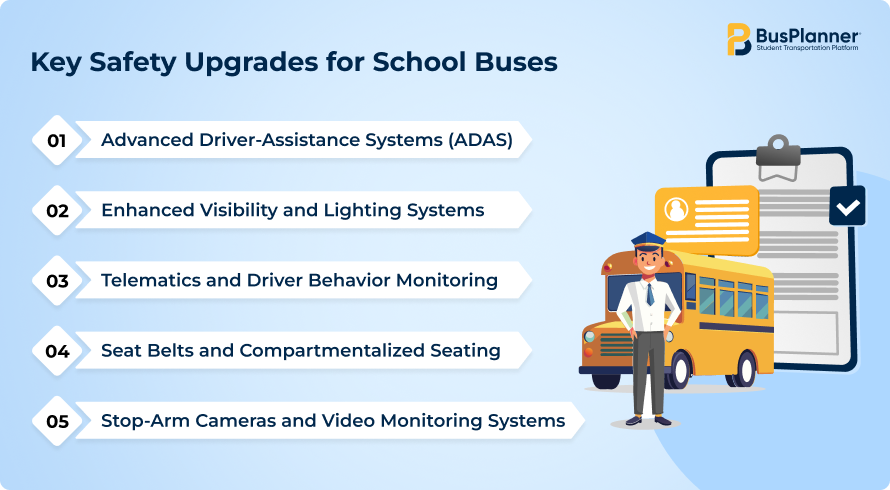
1. Advanced Driver-Assistance Systems (ADAS)
School bus safety begins with integrating technology that helps drivers prevent accidents before they happen. ADAS includes systems such as:
- Collision Warning and Automatic Emergency Braking (AEB): By detecting obstacles or vehicles ahead, AEB systems automatically apply brakes if the driver doesn’t respond in time.
- Lane-departure Alerts and Lane-keeping Assistance: Helps prevent unintentional drifting caused by distractions or fatigue.
- Electronic Stability Control: Minimizes the risk of rollover on sharp turns or slippery roads.
- Blind-spot Monitoring: Alerts drivers of vehicles or pedestrians in hard-to-see zones.
Districts that invest in ADAS not only improve safety by reducing the risk of human error, but also extend vehicle life and reduce insurance claims.
2. Stop-Arm Cameras and Video Monitoring Systems
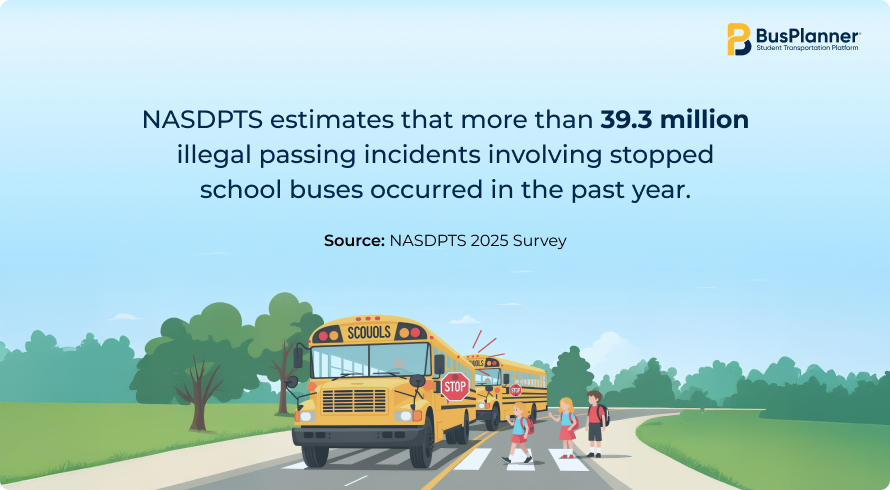
When it comes to student safety, one of the most critical moments is when children board or exit the school bus. The 10-foot perimeter around a school bus, often called the danger zone, is the most hazardous area for students, where most boarding and exiting incidents occur each year. To ensure student safety during this critical time as well as throughout the entire ride, school buses should be equipped with the following safety systems:
- Stop-arm Cameras: Captures footage of drivers who illegally pass stopped school buses, a major cause of student injuries identified by the NASDPTS.
- 360° Exterior Cameras: Eliminates blind spots and improves awareness around loading zones.
- Interior Surveillance Cameras: Monitor student behavior, including bullying, vandalism, and vaping, as well as unsafe driving behavior, providing evidence in the event of any incidents.
3. Enhanced Visibility and Lighting Systems
Visibility is one of the most fundamental aspects of school bus safety, both for the driver and surrounding traffic. A well-lit bus is not only easier to spot on dark winter mornings or foggy afternoons, but it also helps drivers maintain clear awareness of students and road conditions.
Bus visibility can be enhanced through:
- LED Warning and Strobe lights: Opting for brighter, longer-lasting LED systems rather than halogen bulbs ensures maximum visibility in fog, rain, or snow.
- Crossing Control Arms: Automatically extending arms safely guide students across the road, well within the driver’s line of sight.
4. Telematics and Driver Behavior Monitoring
Real-time insight is one of the most powerful tools for safety and efficiency. The safest fleets today are data-driven, using telematics and GPS systems that continuously track vehicle performance, driver behavior, and route activity.
- GPS Tracking and Speed Monitoring: Provides route visibility and encourages responsible driving.
- Driver Behavior Alerts: Detect harsh braking, rapid acceleration, and distracted driving patterns.
- Predictive Maintenance Analytics: Modern school bus fleet management software monitors engine health and flags potential failures before they occur.
5. Seat Belts and Compartmentalized Seating
Seat belts on school buses have long been the subject of debate among transportation professionals, parents, and policymakers. While school buses are built with strong structural integrity and rely on compartmentalization, most buses also feature high-backed, energy-absorbing seats that provide cushioning for passengers in the event of a crash. Many newer safety standards demonstrate that seatbelts provide an important additional layer of protection. Districts should consider installing lap-shoulder belts in their buses to offer students better upper-body restraint and limit forward motion during sudden stops or crashes.
Simply installing belts isn’t enough; districts must invest in driver and student training, enforce belt-use policies, and monitor compliance to realize the safety benefits fully.
Conclusion
While school buses already set the standard for transportation safety, continuous investment in the latest safety technologies helps maintain and improve that standard. Safety isn’t a one-time purchase; it’s an ongoing commitment. By prioritizing these upgrades, districts protect students, reduce liability, and set a higher bar for trusted student transportation.
Contact us to discover how BusPlanner helps keep your students safer and your operations running smoothly.
Frequently Asked Questions
What are the most important safety features on a school bus?
Modern school buses should include advanced driver-assistance systems (ADAS), stop-arm cameras, LED lighting, seat belts or compartmentalized seating, and telematics. These tools help prevent accidents, improve visibility, and protect students both inside and outside the bus.
What is the “danger zone” around a school bus?
The danger zone refers to the 10-foot area around a school bus where students are most at risk of being struck by another vehicle or the bus itself. Improving visibility with mirrors, lighting, and cameras significantly reduces these risks.
How does a telematics system improve school bus safety?
Telematics systems monitor driver behavior, vehicle diagnostics, and route activity in real time. This data helps districts identify risky driving patterns, schedule maintenance proactively, and ensure every route operates safely and efficiently.
How often should safety systems on buses be checked?
A complete inspection should be performed before each school year and monthly during operation, focusing on brakes, lights, cameras, and emergency systems. Regular maintenance ensures that safety equipment remains reliable and compliant with regulations.
How does BusPlanner support school bus safety?
BusPlanner integrates routing, GPS tracking, and telematics to give districts real-time visibility into their fleets. It helps monitor driver behavior, reduce unsafe stops, and optimize routes, ensuring every student arrives safely and every trip runs efficiently.