

Winter weather can make daily transportation more challenging, so it’s essential to ensure your school buses are ready for the colder months. Taking time to inspect, maintain, and prepare your fleet helps reduce breakdowns and keeps routes running safely and on schedule.
Here’s a simple guide to getting your school buses winter-ready.
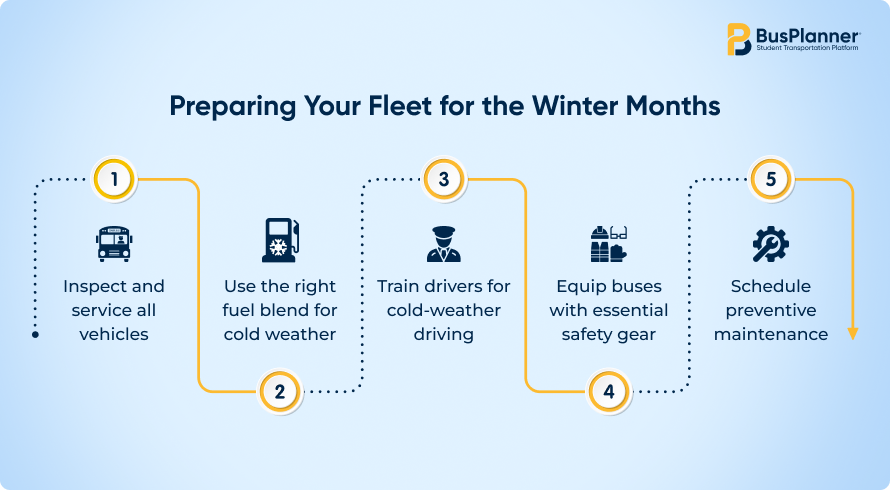
1. Inspect the Vehicles
Before winter begins, make sure you conduct a thorough inspection of the vehicles. Here is what you should pay special attention to:
- Brakes and Tires: Check brake linings, pads, and rotors for wear. Ensure tires have adequate tread depth and are correctly inflated for cold weather.
- Battery Health: Cold weather can reduce battery performance. Test batteries and replace any that are weak or near the end of their lifespan.
- Heating Systems: Ensure that the defrosters and heaters are functioning properly to keep both drivers and students warm.
Use a school bus management system to track maintenance schedules, log inspections, and receive automatic reminders for upcoming service needs. This helps ensure no vehicle is overlooked and that maintenance records remain up to date for compliance and safety audits.
2. Use the Right Fluids for Cold Weather
Winter temperatures can impact engine and fuel performance. Make sure to use:
- Winter-grade Engine Oil: Cold weather can make standard engine oil thicker, making it harder for engines to start and increasing wear. Switching to winter-grade oil helps maintain proper lubrication and easier startups in low temperatures.
- Winter-blend Diesel Fuel or Additives: Diesel can “gel” in freezing temperatures, clogging fuel lines and filters. Use a winter-blend diesel or add anti-gel additives to keep the fuel flowing reliably in cold weather.
These measures can help you prevent costly downtime.
3. Train Drivers for Winters
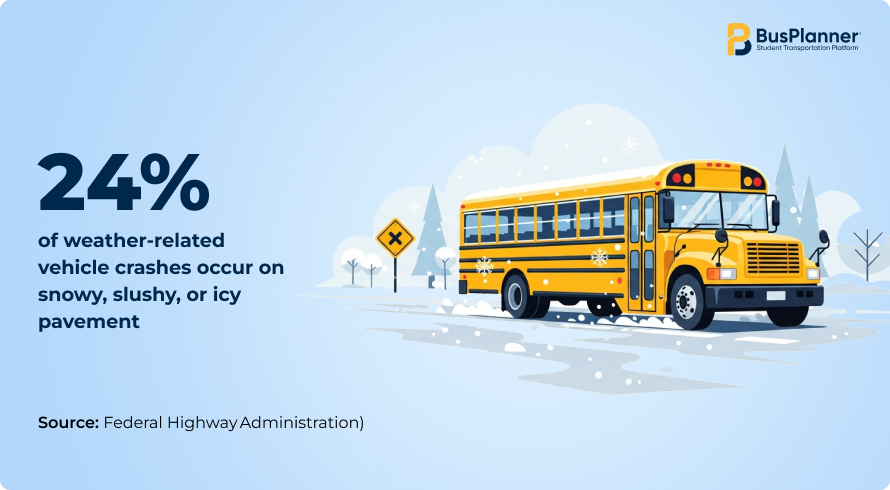
Driver readiness is critical to safe winter operations. Even experienced drivers can benefit from a refresher course on driving buses in winter before the season begins.
- Driving Techniques: Cover safe braking and cornering techniques on snow and ice, maintaining longer following distances, and reducing speed appropriately.
- Communication and Emergency Procedures: Review steps for reporting route delays, breakdowns, or accidents, and ensure all drivers know who to contact in an emergency.
4. Keep Safety Equipment Onboard
Winter weather can be unpredictable, so having the right tools and supplies available can make a big difference in an emergency.
- Winter Emergency Kits: Equip each bus with essentials such as ice scrapers, snow brushes, and small shovels for clearing snow.
- Traction and Visibility Tools: Include sand or salt to improve traction in icy conditions and ensure each bus has functioning flashlights with extra batteries.
- Comfort and Safety Items: Keep blankets, gloves, and a first-aid kit onboard in case students or drivers need to wait for assistance during an unexpected delay.
5. Plan Ahead to Maintain On-Time Performance
Proper planning ensures reliability and safety, even when weather conditions change unexpectedly.
- Alternate Routes: Prepare backup routes in case of road closures, accidents, or unsafe driving conditions. Having predefined options reduces response time when changes are needed.
- Route Optimization: Use a school bus routing software tool to improve on-time performance and minimize student wait times at stops. It can also help reroute buses around accidents, construction, or severe weather, improving safety and reducing fuel and maintenance costs.
- Parent Communication: Establish a reliable communication system to notify parents of emergencies, delays, or changes to the estimated time of arrival (ETA). You can also leverage mobile apps for student transportation to keep parents informed.
Conclusion
A well-prepared fleet and a clear winter plan help keep students safe and ensure reliable transportation schedules. Regular inspections, proper maintenance, trained drivers, and effective communication systems all work together to ensure smooth operations, regardless of how cold or unpredictable the weather becomes.
Contact BusPlanner today to learn how we can help you streamline your transportation operations this winter and beyond.
Frequently Asked Questions
Why is winter maintenance necessary for school buses?
Winter maintenance helps ensure buses start reliably, handle icy roads safely, and prevent costly breakdowns caused by cold weather.
What should be included in a winter bus inspection?
A thorough winter inspection should check the following items: batteries, tire tread and pressure, brakes, heating systems, engine fluids, wiper blades, and defrosters.
How often should school buses be serviced during winter?
It’s best to perform a full inspection before winter starts, with follow-up checks every few weeks depending on road conditions and mileage.
What steps can be taken to improve driver visibility?
Replace worn wiper blades, keep windshield washer fluid full with a winter formula, and regularly clear ice and snow from all windows and mirrors.
How can schools reduce delays and cancellations in winter?
Implement GPS tracking software and communication systems to monitor road conditions, reroute buses in real-time, and notify parents of any schedule changes.