
Amid rising traffic congestion, growing safety concerns, and increasingly busy family schedules, school transport systems have a crucial role to play. To encourage greater adoption of school bus services, schools and transport providers must prioritize improvements in safety, convenience, and reliability.
Below are key ways to make school buses a more attractive and dependable option for both students and parents.
1. Ensure Complete Student Security
While student transport is already considered one of the safest modes of travel, it’s crucial to make it even safer. According to the U.S. National Highway Traffic Safety Administration, less than 1% of all traffic fatalities involve passengers on school transportation vehicles.
Here is how schools and transport providers can boost parental confidence, making the bus not just a safe choice, but a trusted one:
- GPS-Enabled Buses: Real-time school bus GPS tracking allows parents and school administrators to know exactly where each bus is at any given moment.
- Well-Trained Drivers: Proper training empowers staff to handle both driving and student behavior effectively, creating a secure and supportive environment.
- Emergency Preparedness: Equipping buses with first-aid kits, fire extinguishers, and emergency response protocols ensures quick action when needed.
- Ridership Tracking: Using student ID scans, schools can track when and where each student boards and exits the bus, ensuring full visibility into student location status.
- Mobile Apps & Online Portals: Instant communication tools such as mobile apps for student transportation allow parents and schools to stay in the loop. Whether routes change, delays occur, or emergencies arise, notifications can be sent in real time.
2. Make Routes Shorter & More Efficient
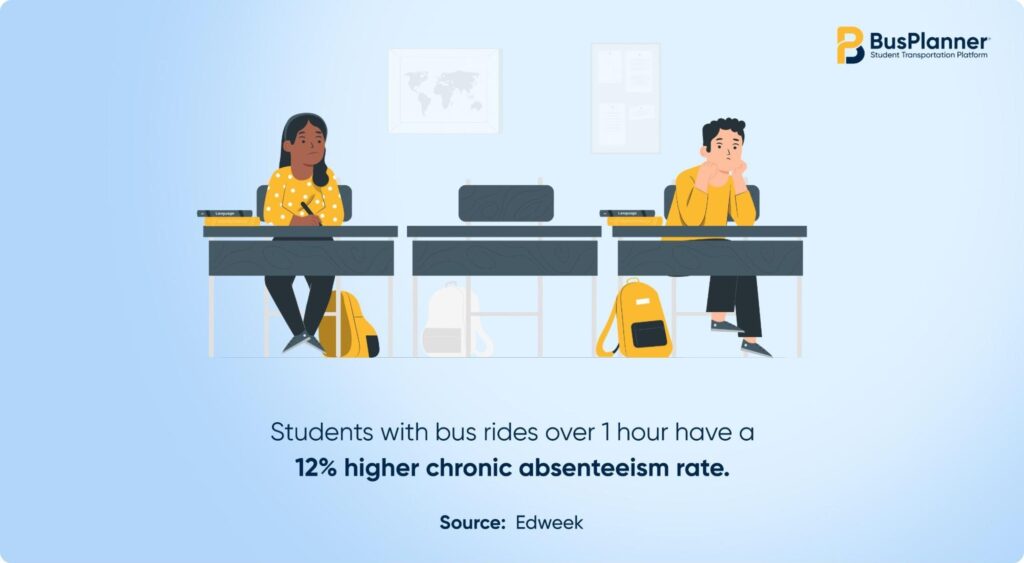
Long bus rides can take a toll on students. They’re linked to higher absenteeism, making school buses less attractive to families. A study of over 120,000 New York City students found that those with very long rides (over one hour) had a 12% chronic absenteeism rate.
The following are a few practical strategies to reduce student ride times:
- Route Optimization Software: Advanced school bus routing tools analyze student data and schedules to generate the most efficient bus routes. This reduces travel time and ensures buses follow the most efficient routes.
- Consolidated Stops: Grouping nearby households into shared pickup points minimizes unnecessary detours. Fewer stops mean faster trips, more predictable schedules, and less time spent on the road.
- Alternate Routes for Closures: Whether due to construction, weather, or emergencies, road closures can cause major delays. Having pre-planned alternate routes allows buses to adapt quickly and maintain punctuality.
- Real-Time Updates for Drivers: Access to real-time traffic data enables transportation teams and drivers to make immediate adjustments when unexpected delays occur. This minimizes delays and keeps buses on schedule.
3. Provide a Reliable Mode of Transport
Reliability is essential in school transportation. Parents rely on punctuality and consistency to coordinate their own schedules. To ensure the reliability of the school transportation system, you can implement the following:
- On-Time Performance Tracking: Monitoring and reporting punctuality helps resolve any performance issues and maintain high standards.
- Regular Bus Maintenance: School bus fleet management tools help keep buses in top condition, ensuring they are always road-ready and less likely to break down.
- Reassign Routes to Back-up Drivers: Modern dispatch tools let transportation teams reassign or split routes instantly when a driver is absent. This keeps buses on schedule, prevents cancellations, and ensures a reliable, consistent service for students and parents.
4. Improve Accessibility for All
Accessibility is essential for equity and inclusion, and it directly impacts how appealing school bus services are to families.
- Equitable Access for Far-Off Areas: Buses should reach students in neighborhoods farther from school or poorly served by public transport. Providing service to these areas ensures all students have reliable transportation, making the school bus a practical choice for families who might otherwise rely on cars.
- Support for Students with Special Needs: About 15% of U.S. public school students (roughly 7.5 million children) receive special education services under the Individuals with Disabilities Act. Accordingly, it is crucial to equip buses with accessibility equipment and proper seating arrangements for special needs students. Drivers should also be properly trained to ensure they can tackle the challenges that may arise in transporting children with special needs.
Key Takeaways
The way forward is clear: embrace technology, thoughtful planning, and inclusive practices to create a school bus system that families can rely on every day. When safety, efficiency, and accessibility are prioritized, school buses become more than just a mode of transport; they become a convenient, dependable, and appealing choice for parents and students alike.
Contact us to learn how BusPlanner can help you make your student transportation more attractive for student transportation.
Frequently Asked Questions
How to modernize student transportation operations?
Modernize student transportation by using GPS tracking, route optimization software, and mobile apps for real-time updates. Digitally track student ridership, maintain buses regularly, and ensure accessibility for all students.
How can reliability be improved in school bus services?
Regular bus maintenance, on-time performance tracking, and backup driver plans help ensure buses run on schedule and parents can depend on them.
What immediate actions can schools take to make buses more attractive?
Schools can start by implementing GPS tracking, improving communication with parents, optimizing routes, and ensuring buses are well-maintained and inclusive for all students.