
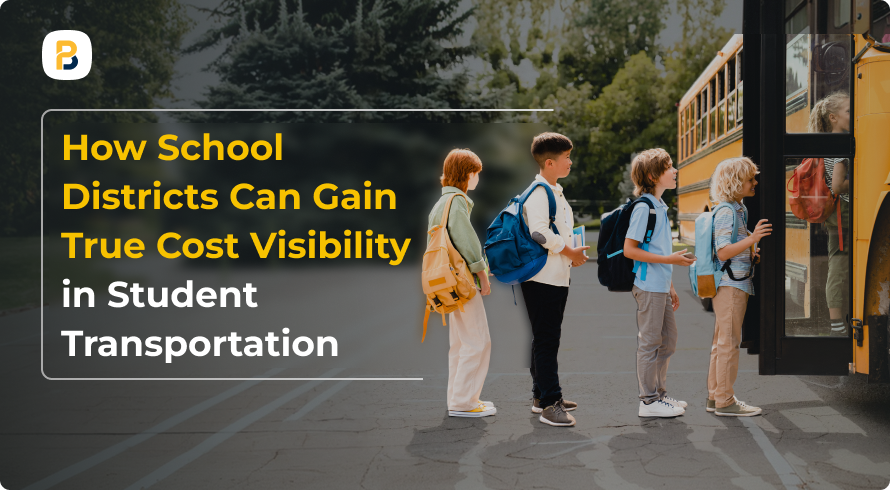
Gaining clear and accurate cost visibility in student transportation remains one of the toughest challenges for school districts. Transportation leaders often manage multiple systems, manual spreadsheets, and separate routing, labor, and fleet reports while trying to explain rising costs to district leadership.
In this article, we explore how school districts can gain true cost visibility in student transportation.
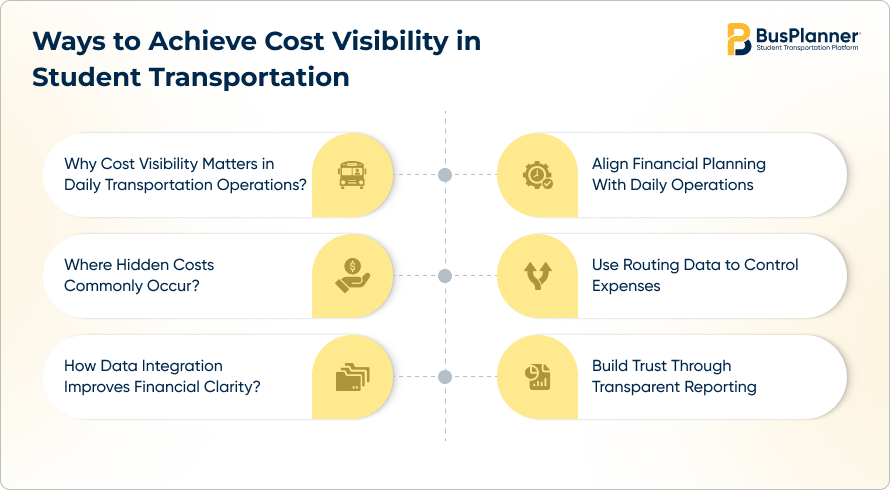
Why Cost Visibility Matters in Daily Transportation Operations?
School transportation is one of the largest operational expenses for districts, yet many departments still lack real-time financial clarity. When leaders do not understand what drives costs, they react to problems after money has been spent rather than planning ahead to control costs.
- Budget Forecasting Accuracy: Improves annual and mid-year projections by tracking actual costs against planned budgets as expenses occur.
- Operational Accountability: Connects spending directly to routes, vehicles, and staffing decisions rather than relying on aggregate totals.
- Stakeholder Transparency: Provides clear explanations to district leadership and school boards using consistent and defensible data.
Where Hidden Costs Commonly Occur?
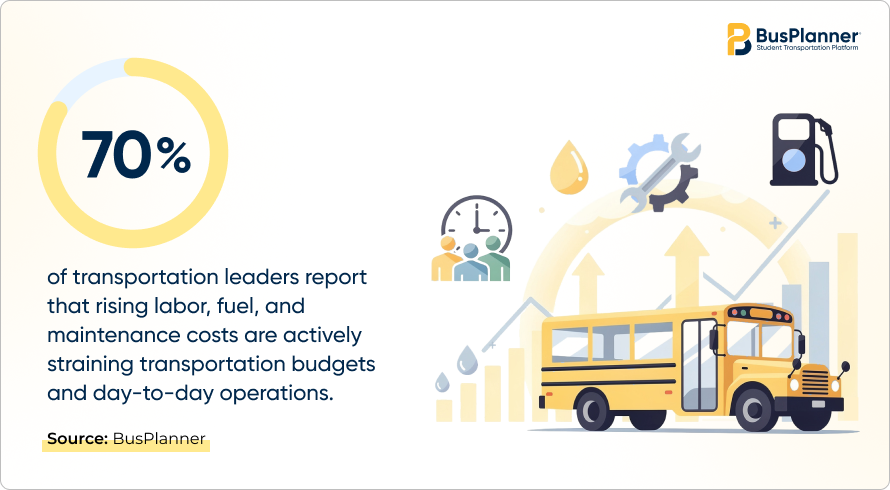
Hidden transportation costs often don’t show up in familiar cost areas like fuel or driver wages, making budget pressure harder to explain when ridership and route counts remain steady.
- Inefficient Route Design: Increases costs when overlapping routes, low utilization, and outdated boundaries lead to excess mileage and driver hours.
- Unplanned Maintenance Events: Create budget volatility when reactive repairs replace preventive maintenance strategies.
- Manual Administrative Work: Consumes staff time and inflates indirect costs when reporting and reconciliation depend on spreadsheets.
How Data Integration Improves Financial Clarity?
Cost visibility improves when routing, dispatch, GPS, fleet, and finance data are reviewed side by side, helping districts link daily operational decisions to actual transportation costs.
- Unified Cost Tracking: Combines routing mileage, driver hours, and vehicle usage into one consistent view of cost per route.
- Scenario Planning Support: Evaluates how changes in bell time, new housing developments, or boundary adjustments affect transportation spending before implementation.
- Reduced Reporting Errors: Minimizes discrepancies by eliminating duplicate data entry across departments.
Align Financial Planning With Daily Operations
Financial planning software improves cost visibility by leveraging routing, labor, and fleet cost data generated by daily operations, without adding an administrative burden. This allows districts to understand long-term cost trends while adjusting to short-term operational changes.
- Route-Level Cost Analysis: Understands costs per mile, per student, and per trip, rather than relying on averages.
- Fleet Utilization Insights: Identify underused vehicles and high-cost assets using school bus fleet management software.
- Multi-Year Cost Projections: Model fleet replacement, labor growth, and fuel variability using historical trends.
Use Routing Data to Control Expenses
Routing decisions directly influence fuel use, driver hours, and fleet wear. Reducing unnecessary mileage lowers both operating costs and long-term vehicle maintenance expenses. Leveraging school bus routing software helps districts model efficient paths that still meet service expectations.
- Mileage Reduction Opportunities: Pinpoint routes with excessive deadhead miles or low ridership.
- Driver Time Optimization: Balances workloads to limit overtime while maintaining reliable service.
- Service Level Adjustments: Align routes with actual attendance and enrollment trends rather than historical patterns.
Build Trust Through Transparent Reporting
Clear reporting builds trust with district leadership and the community. When transportation leaders explain cost drivers in simple terms, conversations shift from budget cuts to informed trade-offs.
- Board-Ready Summaries: Present routing, labor, and fleet costs in clear financial terms that school boards and district leaders can easily understand.
- Public Accountability: Demonstrates transportation spending and budget changes using consistent, repeatable cost metrics.
- Cross-Department Cost Alignment: Ensures transportation and finance teams review the same route costs, labor hours, and overtime data when making budget decisions.
Key Takeaway: Turning Cost Data Into Confident Transportation Decisions
True cost visibility in student transportation does not come from adding more manual work. It comes from using route data, driver hours, fleet usage, and budget information together in a consistent way. Districts that align routing decisions, fleet planning, and financial forecasting gain the insight needed to manage costs while maintaining service safety and reliability.
Discover how an all-in-one student transportation platform brings clarity to transportation costs and budgeting.
FAQs
Q1. What is cost visibility in student transportation?
Understanding where transportation dollars go across routes, vehicles, drivers, and time is the foundation of true cost visibility in student transportation.
Q2. How does cost visibility support better budget planning?
Cost visibility helps districts compare planned budgets with actual route, labor, and fleet costs, allowing leaders to forecast more accurately.
Q3. Can better routing really reduce transportation costs?
Yes. Reducing unnecessary mileage and balancing driver workloads lowers fuel use, maintenance expenses, and overtime costs.