
School transportation accounts for a measurable share of district emissions. In the United States, school buses travel over 4 billion miles annually and consume more than 822 million gallons of fuel per year, creating an emissions footprint that districts cannot ignore.
Reducing emissions in student transportation is both a regulatory focus and an environmental responsibility. With the right tools and planning mindset, districts can cut fuel use while improving efficiency. This blog post provides 6 effective tips to reduce emissions with a student transportation software:
1. Optimize Routes to Minimize Mileage
Route optimization is often the fastest way districts reduce emissions without touching the fleet, but it usually comes at the cost of tighter bell-time margins or longer average ride times.
School bus routing software helps transportation teams design routes that minimize total vehicle miles traveled while considering service constraints.
- Minimize Total Miles: The software calculates the shortest feasible path for each run, helping reduce fuel burned and emissions output.
- Balance Loads Efficiently: By optimizing bus capacity and stop sequencing, planners avoid unnecessary redundancy on the road.
- Adjust for Traffic Patterns: Advanced systems adjust for known traffic delays, which further cuts time and emissions.
The emissions gains are real, but only if planners are willing to revisit long-standing route boundaries.
2. Eliminate Unnecessary Stops
Every stop adds time, idling, and fuel usage. Reducing stop counts without compromising student safety lowers emissions.
- Consolidate Stops Where Safe: Group nearby stops to shorten routes and reduce stop-start emissions.
- Use Data to Evaluate Stop Use: Ridership data reveals underused stops to safely retire them.
- Improve On-Time Performance: Fewer stops often mean more predictable arrival times.
3. Reduce Idling for Cleaner Air
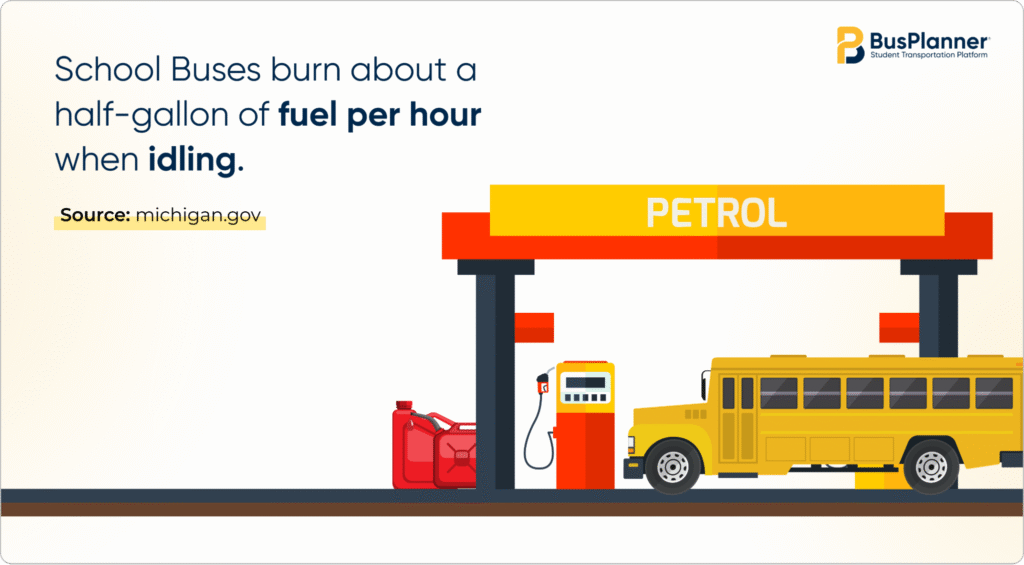
Idling consumes fuel without moving the bus and produces emissions at student breathing height. Cutting idling is a straightforward emissions win.
- Use Idle Monitoring Tools: GPS solutions for student transportation can flag excessive idle time.
- Train Drivers on Idle Policies: Encourage drivers to shut engines during long waits.
- Schedule to Avoid Congestion: Better timing reduces the need to idle in heavy traffic.
4. Improve Driving Habits with Data Insights
Fuel-efficient driving not only cuts emissions but also reduces maintenance costs. Analytics from a student transportation platform give actionable insights.
- Monitor Speed and Acceleration: Aggressive driving increases fuel use inefficiently.
- Reward Efficient Driving: Use scorecards to recognize drivers with low emissions performance.
- Coach for Improvement: Targeted training based on real data yields measurable behavior change.
5. Use Turn-By-Turn Directions to Avoid Wrong Turns
Wrong turns add miles and idling while emitting unnecessary pollutants. A Mobile app for school bus drivers enables dispatchers to provide turn-by-turn guidance, keeping drivers on the most efficient route.
- Reduce Route Deviations: Navigation keeps drivers aligned with optimized route plans.
- Cut Backtracking: Avoids costly mistakes that increase fuel consumption.
- Improve Driver Confidence: Especially helpful for new or substitute drivers.
Key Takeaways for Reducing Emissions
Reducing emissions using student transportation software starts with a system designed for complex real-world operations. A robust student transportation platform offers comprehensive routing optimization and data insights to help schools cut fuel use and pollutants. By aligning efficient planning with actionable data across your fleet, your district can meet sustainability goals and improve operational performance.
Frequently Asked Questions
What is the biggest source of emissions in school transportation?
In most districts, fuel consumed per mile and idle time are the largest contributors to greenhouse gas emissions.
Can routing software alone significantly lower emissions?
Yes. Even without changing vehicles, better routing and stop planning can reduce annual mileage and emissions significantly.