

Student transportation departments are under increasing pressure to do more with less. They’re expected to reduce ride times without compromising service quality, enhance accessibility while keeping routes efficient, and transport more students even as budgets tighten.
Ultimately, it all comes down to optimizing operations and planning smarter. A well-structured transportation budget isn’t just about cutting costs; it’s about investing intelligently in tools, processes, and strategies that maximize efficiency.
Below are several impactful strategies to help improve your school transportation budget:
1. Identify Areas of Inefficiency

Before making improvements, it’s crucial to know where inefficiencies exist. Many transportation departments rely on outdated processes or assumptions that no longer reflect real operational needs.
Using the industry’s first free ROI calculator, specifically designed for student transportation, provides data-driven insights into potential savings in the following areas:
- Reduced Slack Time: The reduction in wasted driver and bus time between runs.
- Administrative Tasks: Savings achieved by reducing the staff time spent handling routine tasks such as answering parent calls, processing trip requests, or updating schedules.
- Optimized Routing: Cost saved by eliminating redundant or inefficient routes.
- Fuel and Mileage: Lowered costs by reducing unnecessary miles.
2. Leverage Financial Planning Tools
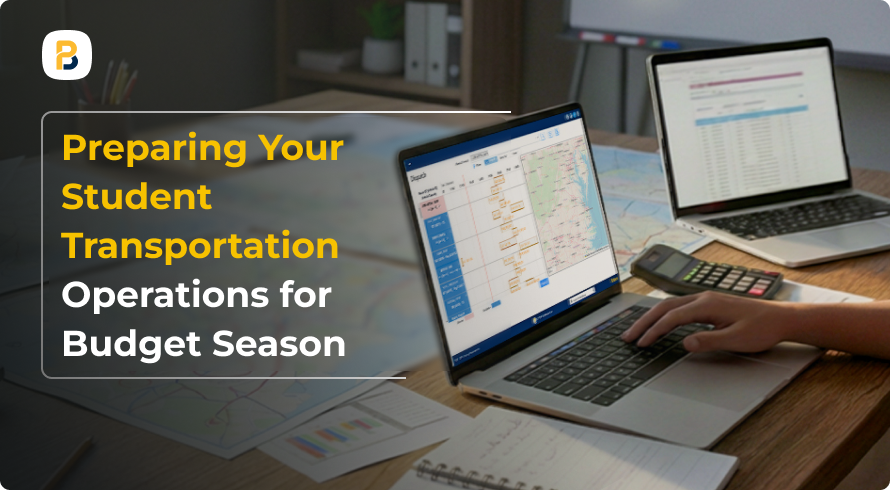
Modern financial planning tools offer forecasting, budget simulations, and planned-versus-actual spending analysis tailored for school districts. They help transportation leaders:
- Forecast Budget Accurately: These tools can help predict future expenses such as fuel, bus repairs, and staffing needs, allowing you to plan for them in advance.
- Optimize Routes: Want to add a new stop, adjust bell times, or reduce miles traveled? Financial planning tools let you test different route scenarios and immediately see their economic impact.
- Track Planned vs. Actual Costs: These tools compare the costs you expected with the expenses you actually incurred. This makes it easy to spot overspending, understand why it happened, and adjust before minor issues turn into big budget problems.
- Strategically Allocate Resources: With clear cost insights, you can allocate your buses, drivers, and budget more effectively.
3. Optimize Routes
Routing inefficiencies are one of the biggest drivers of unnecessary transportation costs. Route optimization can help you:
- Lower Fuel Consumption: Cutting unnecessary miles directly reduces fuel usage, helping your budget stretch further.
- Minimize Vehicle Wear: Fewer miles and more efficient routes mean less strain on buses, lowering maintenance and repair costs.
- Balance Loads to Avoid Half-Empty Buses: Distributing students more evenly across buses maximizes capacity and reduces the need for extra runs.
4. Automate Processes

Administrative work is essential but can be extremely time-consuming when done manually. Automation helps streamline daily tasks and reduces the workload on transportation staff.
- Transportation Requests: Online portals for student transportation allow guardians and schools to submit requests through an online system. This makes it easier for staff to review, approve, and process requests without manual paperwork.
- Parent Communication: Mobile apps for student transportation can automatically send updates, such as bus arrival times and delays, directly to parents. This reduces phone calls to the transportation office and frees up admin staff for more critical tasks.
- Automated Routing: Routing software can automatically detect and remove deadhead miles, saving hours of manual route adjustments. This leads to more efficient routes and lower fuel and labor costs.
5. Keep Up With Policies and Compliance Requirements
Keeping up with the latest transportation laws, safety regulations, and state or federal policies is essential, not just for student safety but also for protecting your budget. Non-compliance can lead to unexpected fines, penalties, or costly corrective actions.
- Avoid Fines and Penalties: Policies around driver qualifications, vehicle inspections, student safety procedures, and reporting requirements change regularly. Staying informed helps you avoid costly violations that can strain your budget.
- Prevent Unplanned Expenses: By understanding upcoming policy changes, such as new emissions standards, training requirements, or equipment updates, you can plan ahead instead of scrambling to pay for last-minute compliance upgrades.
Final Thoughts
A more efficient and balanced school transportation budget is the result of layered, strategic improvements. By analyzing inefficiencies, leveraging technology, optimizing routes, and enhancing planning processes, districts can deliver better transportation services while maintaining fiscal responsibility.
Contact us to see how BusPlanner’s suite of solutions empowers transportation teams to strengthen their financial planning with data-driven insights, smarter routing, and tools designed to reduce operational costs.
Frequently Asked Questions
What is the student transportation ROI Calculator, and why should districts use it?
The industry’s first-ever ROI Calculator helps districts estimate potential savings from improvements like automation, route optimization, and fuel reduction. It provides a clear financial picture, enabling districts to improve their budgeting decisions.
Why is school transportation budgeting becoming more challenging?
Rising fuel prices, driver shortages, increasing service expectations, and aging bus fleets add pressure on transportation budgets. Districts are expected to do more with fewer resources, making efficient planning more important than ever.
How can a student transportation financial planning tool support your goals?
These tools help districts model scenarios, forecast expenses, optimize routes, and automate processes, thereby reducing operational costs and improving financial planning accuracy.