
In 2026, student transportation departments are facing a growing operational challenge: overlapping safety mandates, expanded reporting requirements, and evolving funding rules are increasing compliance workloads without proportionate increases in staffing or budget certainty.
These legislative shifts matter because they influence real operational decisions. Below are four key legislative areas shaping student transportation this year, with a closer look at what they mean operationally:
1. Pupil Safety Requirements
These requirements matter because they directly affect how buses are equipped, how drivers are trained, and how incidents are prevented and documented. Lawmakers continue to focus on improving safety outcomes during daily transportation operations:
- State-Level Safety Mandates: Recent proposals in Congress emphasize enhanced safety equipment on school buses, including improved seating standards and advanced collision avoidance technologies.
- Bullying Prevention: Several states now explicitly include school buses in anti-bullying statutes, reinforcing expectations for reporting, documentation, and coordination with school administrators.
Safety mandates increasingly affect fleet replacement timing and capital planning, often requiring districts to delay purchases, extend bus life cycles, or allocate staff time to additional documentation and incident reporting.
2. Accessibility and Special Needs Transportation
Transportation for students with disabilities brings distinct planning and compliance responsibilities. Legislative requirements in this area directly affect routing, staffing, equipment, and training decisions.
- IDEA Transportation as a Required Related Service: The Individuals with Disabilities Education Act provides federal funding to support students with disabilities, and transportation is considered a related service when a student must access special education. This includes specialized routes, equipment, and aides for eligible students only.
- Accessibility Requirements Influence Route and Stop Planning: The Americans with Disabilities Act (ADA) continues to emphasize safe and accessible bus stops and vehicles, requiring careful planning for students with mobility or medical needs.
- Training Expectations for Special Needs Transportation: Legislative language is increasingly reinforcing the need for specialized driver and aide training in securement procedures, communication, and student safety.
These requirements may increase planning complexity, often leading to longer routes, additional staffing needs, and higher operating costs that must be balanced against overall route efficiency.
3. Student Transportation Funding
Funding policies shape what transportation departments can realistically sustain. Legislative changes related to funding influence how districts plan fleets, manage budgets, and prioritize long-term investments.
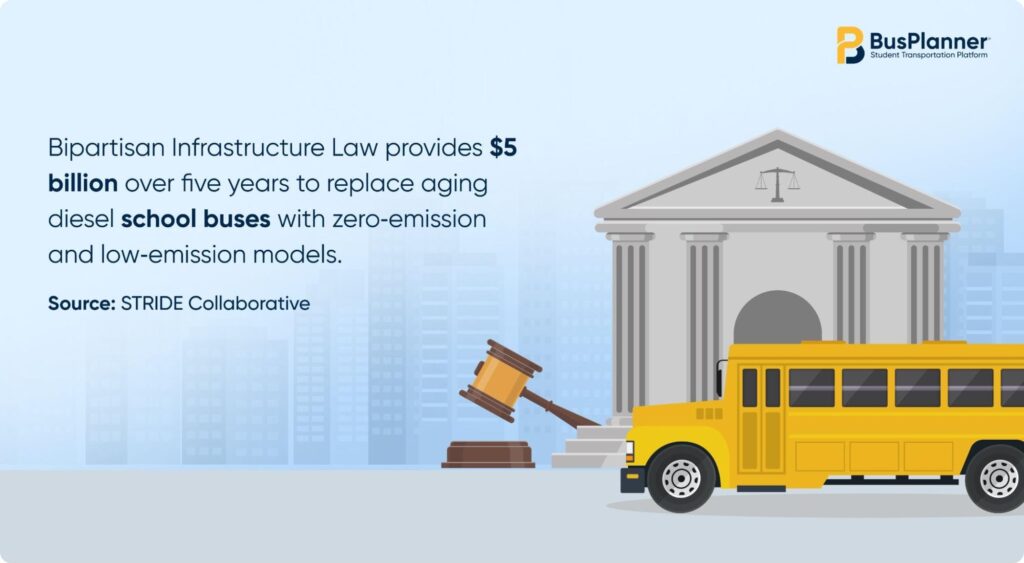
- School Bus Replacement Funding: Federal investment through the Bipartisan Infrastructure Law continues to support replacement of aging diesel buses, influencing long-term fleet planning and procurement timelines as states distribute funds.
- Title I Transportation Limited to Program Access Needs: Title I is an act that provides federal funding to support students from low-income households, and transportation costs may be allowable in limited cases when they are required for participation in a Title I-funded program, such as school choice or supplemental services.
- Funding Formula Adjustments Impact Budgeting: Some states are revisiting student transportation funding formulas based on ridership, geography, or density, which can affect annual budgets and staffing decisions.
These funding rules increasingly constrain how and when districts can spend transportation dollars, requiring more coordination with finance teams
4. Reporting and Data Transparency Requirements
Administrative workload and accountability are significantly affected by reporting requirements. Transportation teams are being asked to track and report more information to support funding, safety oversight, and public transparency.
- Performance Metrics Are Being Formalized: States are adopting requirements for reporting on time performance, safety incidents, and ridership data, increasing the need for consistent data practices.
- Ridership Verification and Audit Standards Are Tightening: Legislative changes in some states reinforce audit expectations tied to funding eligibility and student counts.
- Interagency Data Sharing is Becoming More Common: Laws promoting coordination between transportation departments and emergency services increase the importance of accurate and accessible transportation data.
These mandates may expand administrative workload, shifting dispatcher and manager time toward data validation and compliance tracking rather than routing optimization or service improvements.
Conclusion
Legislative changes rarely disrupt transportation operations all at once. Instead, they accumulate, adding coordination demands across safety, accessibility, funding, and reporting, thereby steadily increasing the administrative drag on transportation teams.
For transportation leaders, the challenge is less about understanding individual rules and more about managing the operational friction they create: additional documentation, cross-department coordination, and planning constraints that pull time and attention away from service delivery. Districts that recognize this shift can better anticipate where staff capacity will be strained and adjust processes accordingly, rather than treating each new requirement as an isolated compliance task.
See how BusPlanner’s suite of solutions can help your district ensure regulatory compliance. Contact us today!
Frequently Asked Questions
What federal changes should we watch most closely this year?
Federal proposals around safety equipment standards and school bus replacement funding continue to evolve and may require early vendor engagement for procurement planning.
How can we prepare for state emissions requirements?
Review your current fleet age, fuel types, and projected replacement budgets, and engage with your state energy office for available incentives to support clean fuel transitions.
Do these legislative changes apply equally across all district sizes?
Not always. Funding formula adjustments and compliance burdens often vary across urban, suburban, and rural districts, so assess their impact in your specific context.
What role does data reporting play in meeting new laws?
Data reporting is increasingly central. Districts will need accurate student ridership schedules, safety incidents, and performance metrics to comply and demonstrate accountability.