

In 2025, student transportation across North America underwent a rapid transformation. Districts faced higher costs, driver shortages, and increased safety expectations while meeting rigorous compliance standards. These challenges sparked change, driving school systems toward more tech-enabled and sustainable operations.
This article explores key learnings for student transportation departments in 2025.
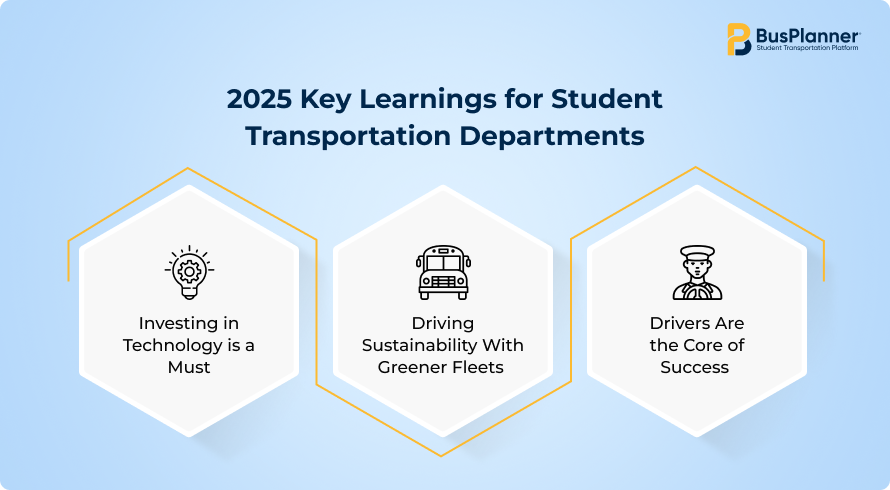
1. Investing in Technology is a Must
Technology is the foundation of modern student transportation. School districts that embraced innovation gained efficiency, transparency, and community trust.
- AI-Powered Routing: Lowers fuel use by 20–25% and shortens travel time by 20%, enabling districts to streamline routes effectively.
- Mobile Apps: Provides parents with confidence and peace of mind through real-time bus tracking via reliable parent apps.
- Driver Telematics: Enhances monitoring to improve safety and accountability on the road.
- Cloud-Based Solutions: Centralized access improves data security and disaster recovery.
2. Driving Sustainability With Greener Fleets
A key lesson from 2025 is that efficiency and sustainability go hand in hand. The shift to greener fleets reduces emissions while generating meaningful cost savings for school districts.
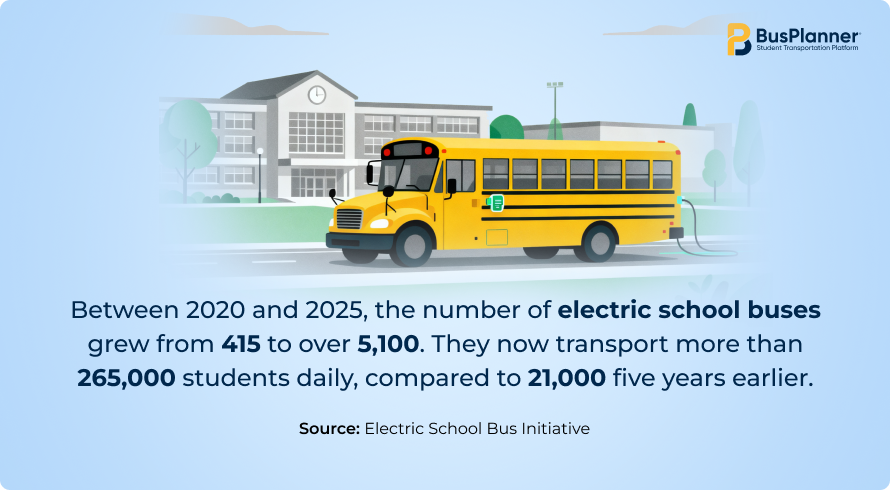
- Electric and Hybrid Buses: Make school transportation more sustainable with electric buses that safely and efficiently transport students every day.
- Route Optimization: Advanced routing strategies lower pollution by eliminating unnecessary mileage and improving route planning for smoother daily operations.
- GPS Integration: Take data-driven decisions during severe weather or route disruptions with real-time GPS tracking.
- Community Leadership: Green initiatives position districts as leaders committed to sustainability, accountability, and positive community impact.
3. Drivers Are the Core of Success
The driver shortage was one of the biggest challenges in 2025, with 80% of school leaders reporting transportation issues from a lack of qualified drivers. Districts learned that retaining skilled drivers starts with stronger support, recognition, and better working conditions.
- Behavior Management Training: Strengthen safety, boost confidence, and reduce turnover with specialized training that equips drivers to manage student behavior.
- Clear Support Policies: Boost driver morale, confidence, and job satisfaction with well-defined discipline frameworks that foster fairness and accountability.
- Incentive Programs: Motivate drivers, build loyalty, and improve retention with recognition, rewards, and career development opportunities.
- Reduced Hiring Costs: Prioritizing employee development delivers greater long-term value and is far more cost-effective than constant recruitment and onboarding.
Conclusion: Driving the Student Transportation Future Forward
Innovation is shaping the future of student transportation. Technology and sustainability are combining to create safer, more efficient, and connected systems. School districts embracing this change are redefining how students move every day.
Get in touch with us today to learn how BusPlanner’s all-in-one student transportation software can help your school district achieve operational efficiency.
Frequently Asked Questions
How do schools ensure safety during student transportation?
Schools ensure safety through trained drivers, routine bus inspections, GPS tracking, and clear boarding rules.
What are the modes of transportation for students?
Students travel to school by private car, public transport, bicycle, school bus, or on foot.
What is the most common type of school bus?
The Type C school bus is the most common, while Type D buses are the largest for high-capacity routes.