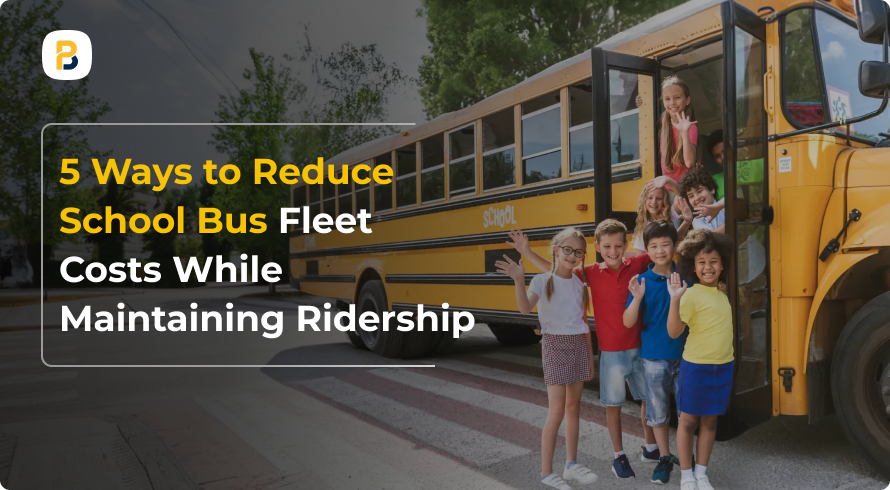
Rising costs and enrollment shifts have put transportation leaders in a difficult position. Districts are expected to spend less while still delivering safe, reliable service that families trust. Cutting routes or service hours may save money in the short term, but it often drives parents to carpool, creating congestion and long-term ridership loss.
The strategies below focus on controlling fleet costs while protecting the student experience that keeps riders on the bus.
Optimize Route Efficiency With Data
Daily routing decisions directly affect fuel spend, driver hours, and on-time performance. When routes are built on outdated assumptions, costs increase quietly over time. This section outlines how districts can identify and correct inefficiencies while preserving stop coverage and the student experience.
- Leverage Actual Ridership Patterns: Reviewing stop-level ridership data allows districts to rebalance loads and right-size routes without eliminating service or increasing ride times.
- Adjust Bell Times Strategically: Even small bell time shifts can reduce the number of buses required by improving run stacking, helping districts maintain existing routes with fewer vehicles.
- Use Scenario Planning Tools: Modern student transportation financial planning software lets routers model proposed changes before they go live, minimizing trial-and-error and avoiding disruptions for families. Districts using student transportation platforms often uncover savings without negatively affecting ride time or reliability.
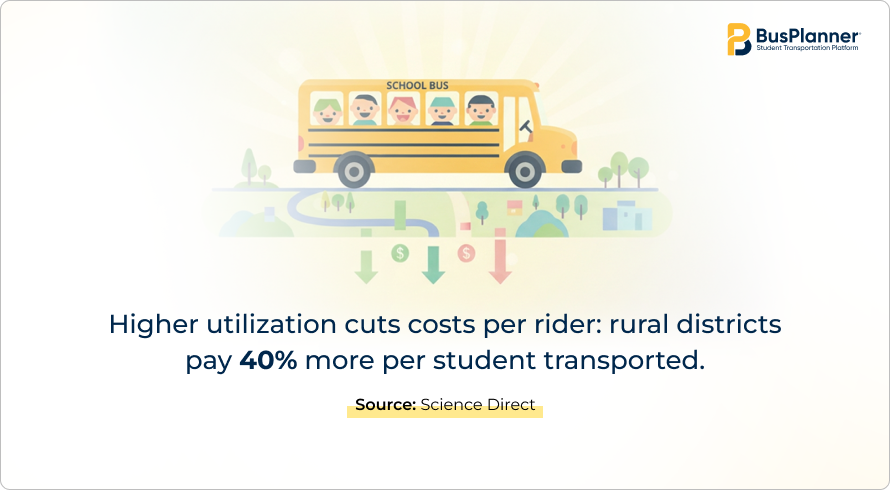
Taken together, these strategies improve fleet utilization, one of the strongest drivers of cost efficiency. Research shows that costs per mile and per rider vary widely across districts, and that higher utilization (more students per bus and more runs per bus) significantly lowers cost per student, while underutilized buses quietly inflate transportation spending.
Pasco County Schools used data to redesign its transportation plan, reducing total routes by nearly 50 percent while maintaining service coverage. The result was substantial savings in fuel, labor, and fleet wear, demonstrating how data-driven routing can unlock efficiencies that are difficult to identify manually.
Reduce Fuel Spend Without Cutting Service
Fuel remains one of the most volatile line items in transportation budgets. Instead of reducing mileage by eliminating routes, districts can lower consumption through operational adjustments.
- Improve Idle Time Management: Studies suggest that excessive idling can waste thousands of gallons of fuel per bus annually. Limiting idling can significantly reduce fuel consumption and engine wear.
- Balance Loads Across Fleet Types: A school transportation optimization study models bus type and route design together, showing that selecting appropriate vehicle sizes and optimizing routes reduces total travel distance and operating costs while meeting service constraints.
- Plan Detours Proactively: Construction and seasonal traffic changes increase fuel usage when not planned for in advance. Districts that plan alternate routing ahead of time see fewer surprise cost spikes.
Extend Fleet Life Through Smarter Maintenance
Maintenance efficiency directly affects fleet costs. Keeping buses in optimal condition for longer defers expensive replacements and minimizes downtime.
- Track Preventive Work: Districts that rigorously enforce preventive maintenance schedules see fewer breakdowns and more predictable repair costs, helping avoid costly emergency repairs that strain labor and parts budgets.
- Analyze Vehicle Cost Trends: Monitoring maintenance cost per mile for each bus helps transportation directors identify aging buses that are becoming too expensive to operate relative to replacement.
- Coordinate Maintenance With Operations: Ensuring maintenance schedules align with service needs minimizes reliance on spare buses and reduces overtime for mechanics and drivers.
The objective is not simply to perform scheduled service, but to actively manage maintenance cost per mile, road calls, and downtime trends so issues are addressed before they escalate into expensive failures. A school bus fleet management tool enables districts to track these indicators consistently, extend usable fleet life, reduce emergency repairs, and avoid the indirect costs of missed runs and overtime.
Prevent Ridership Decline Through Communication
Cost-saving changes can be disruptive if poorly communicated. Clear, proactive communication helps families understand the reasons for route adjustments, protecting trust and continued ridership.
- Advance Notice Helps Maintain Trust: Timely notification of changes allows families to plan ahead and reduces confusion that can drive parents to choose private transport options.
- Explain the Rationale: When districts share how routing updates reduce delays or improve reliability, families are more likely to view changes favorably.
- Use Consistent Messaging Channels: Centralized communication platforms reduce staff workload and ensure riders receive the same information simultaneously.
Mobile apps for student transport streamline communication by automating alerts, centralizing communication, and providing real-time updates to parents.
Align Planning Decisions Across Departments
Transportation does not exist in a vacuum. Collaboration with other district departments strengthens planning and protects service quality.
- Incorporate Transportation Into Boundary Changes: Early involvement in boundary or program placement decisions prevents inefficient service areas that increase route length and cost.
- Standardize Data Across Systems: Consistent datasets across departments reduce duplication of work and ensure routing decisions are based on the most current student information available.
Conclusion
Reducing school bus fleet costs does not require service cuts. The strongest savings come from improving route efficiency, fuel management, preventive maintenance, coordinated planning, and communication.
When operations are disciplined and data-driven, districts control spending while maintaining reliability and reasonable ride times. For transportation leaders facing tighter budgets and rising expectations, operational precision, not reduced coverage, drives sustainable cost control.
Contact us now to see how BusPlanner’s suite of solutions helps districts maintain service quality and ridership without adding more pressure on the transportation budget.
Frequently Asked Questions
Does reducing ride time help control costs?
Shorter, more balanced routes often reduce overtime and fuel use while improving the student experience.
How does technology fit into cost management?
Technology supports better decision-making, but results depend on how consistently data is used across planning, dispatch, and maintenance.
Will families notice these changes?
When communication is clear and service reliability improves, most families see the changes as positive.