School transportation teams across North America are being asked to do more with less. Rising fuel and labor costs, ongoing driver shortages, and shrinking or stagnant budgets are forcing districts to re-examine how they operate, without compromising safety or reliability.
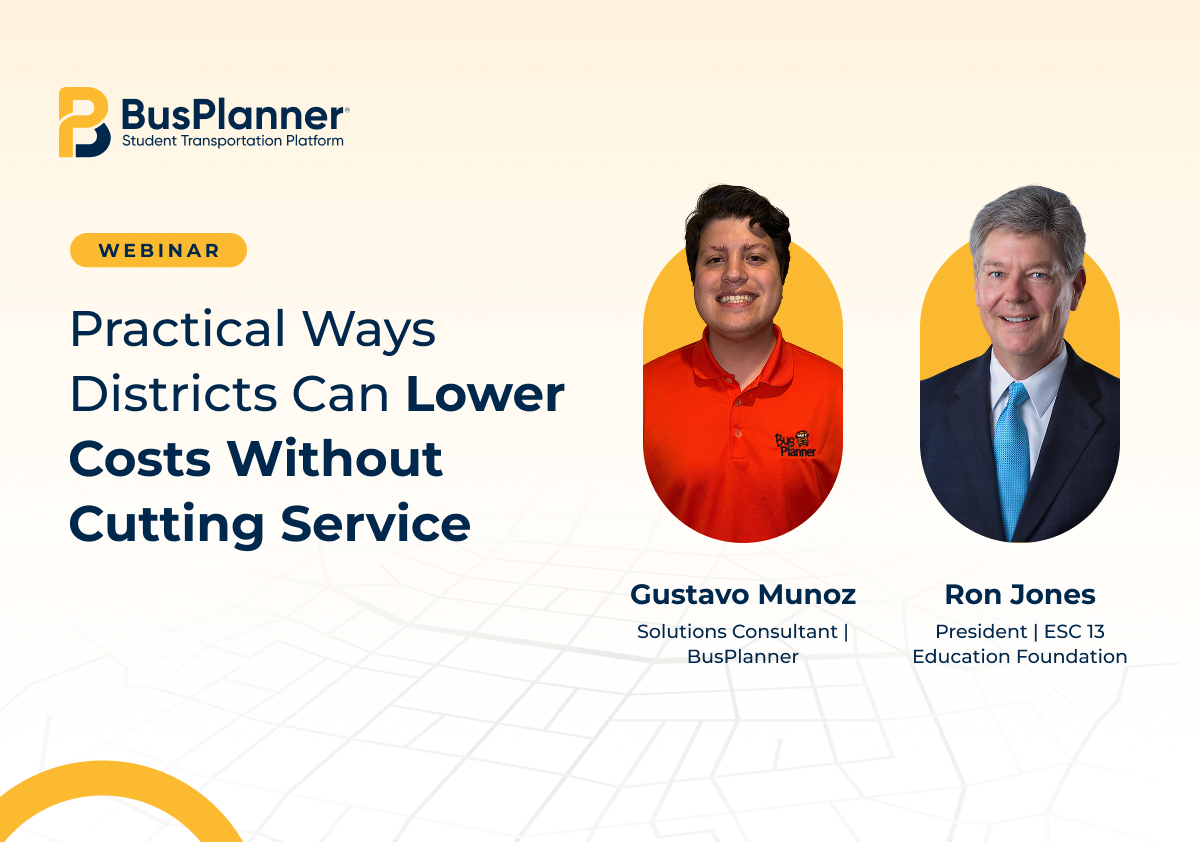
During a recent webinar, “Practical Ways Districts Can Lower Costs Without Cutting Service”, Gus Munoz, solutions consultant at BusPlanner, and Ron Jones, president of ESC 13 Education Foundation, discussed where transportation costs are quietly increasing, how operational decisions impact budgets, and how better data helps districts control spending without reducing service.
The Budget Pressure Is Real & Growing
Transportation budgets are being squeezed from multiple directions. Federal relief funding is expiring, state allocations are tightening, and inflation continues to drive up the cost of buses, fuel, maintenance, and labor.
As Gus Munoz explained during the session:
“Across the country, districts are being asked to do more with fewer resources while costs continue to rise. Transportation teams are feeling that pressure every single day.”
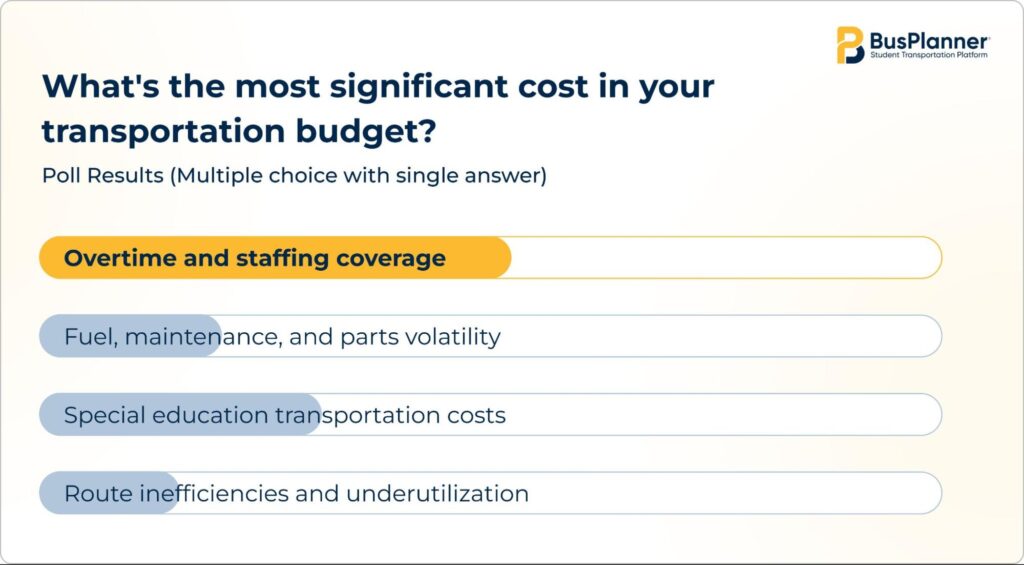
BusPlanner’s industry survey shows that driver shortages remain the top operational challenge for transportation departments, which directly impacts overtime costs, missed opportunities, and a growing strain on existing staff.
Where Transportation Budgets Quietly Overspend
Many cost issues are not caused by a single large decision, but by small inefficiencies that add up over time.
1. Routing for Eligibility Instead of Actual Ridership
In many districts, buses are still routed based on who can ride rather than who actually rides.
“You might plan for 150 students on a route, but only 50 show up every day,” Munoz noted. “Those empty stops still cost time, fuel, and driver hours.”
When districts don’t track real ridership, buses make unnecessary stops, routes run longer than needed, and overtime becomes unavoidable.
2. Overtime Driven by Gaps, Not Planning
Overtime is often approved as a necessity, but without route-level visibility, it’s hard to understand why it keeps recurring.

Without detailed tracking, districts end up treating overtime as a fixed expense instead of something that can be reduced.
3. Field Trips Without True Cost Visibility
Field trips are essential, but when their costs are approved without breakdowns or analysis, they quietly inflate transportation spending.
Tracking actual miles, driver time, and equipment usage allows districts to set clearer expectations and prevent budget creep.
Operational Decisions That Increase Costs Over Time
Some of the biggest cost drivers don’t come from transportation at all; they come from decisions made without transportation data at the table.
1. Bell Schedule Changes Without Transportation Input
Bell time adjustments often aim to improve instruction, but they can unintentionally increase transportation costs if not modeled carefully.
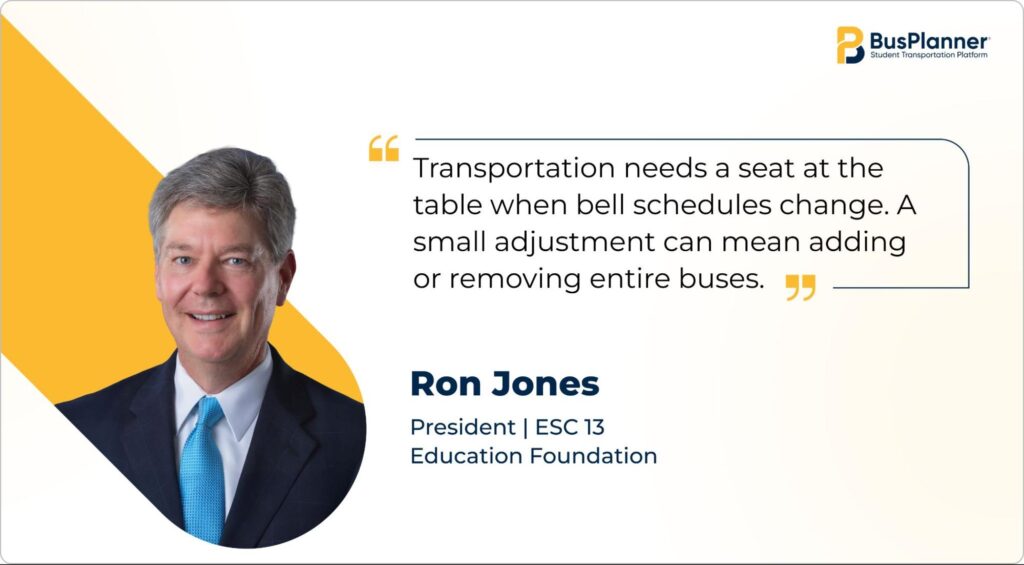
When transportation teams can model bell time scenarios in advance, districts can avoid unnecessary route expansion.
2. Legacy Stops That No Longer Serve Students
Many districts still operate “zero-load” stops, locations where no students regularly board. Removing unused stops is one of the fastest ways to reduce route time, fuel usage, and driver strain without impacting service.
Using Data Proactively, Not Reactively
Districts don’t lack data. They often lack the time and clarity to use it effectively.
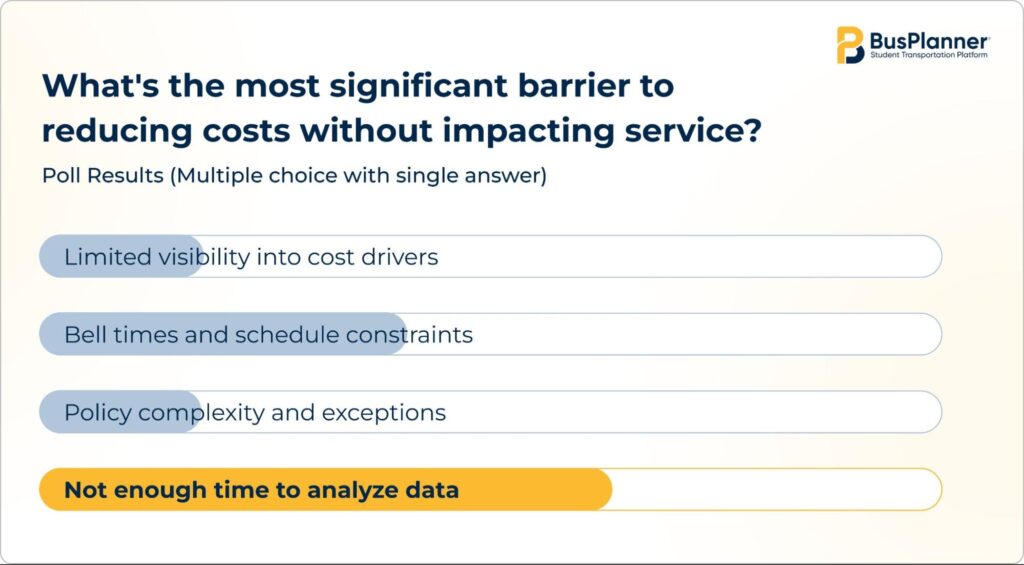
Transportation leaders in the webinar shared that their biggest barrier to cost reduction is not knowing where to start, or not having time to analyze trends while managing daily operations.
Transportation teams should consistently review:
- Scheduled routes vs. actual run times
- Overtime costs by route and run type
- Ridership trends throughout the year
- Miles driven with and without students on board
- Parent communication volume before and after service changes
“If it’s recorded, it can be reported,” Munoz emphasized. “And once you can report it, you can defend it.”
Defending Transportation Budgets With Confidence
Transportation departments that know their numbers are better positioned to protect funding and justify investments.
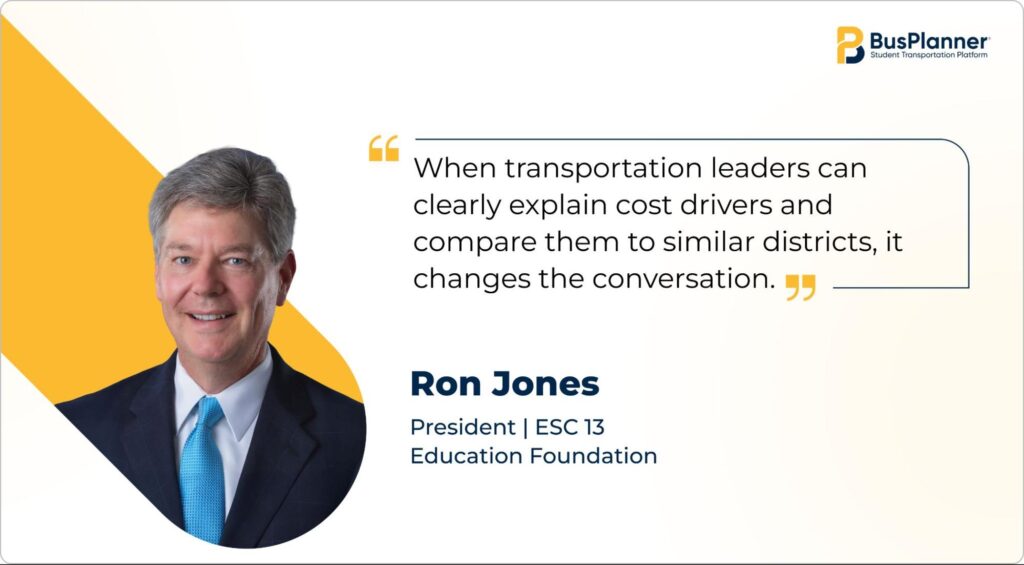
Board-ready transportation metrics include:
- Cost per mile and per student
- Average bus occupancy
- Year-over-year route changes
- Specific causes leading to overtime
- Savings tied to operational improvements
When leadership sees clear data, it becomes easier to support solutions.
Key Takeaways for District Transportation Teams
Districts don’t need to cut service to control costs, but they do need clarity. Based on webinar insights, transportation leaders can start by:
- Routing based on actual ridership, not assumptions
- Auditing overtime at the route level
- Removing unused stops and unnecessary deadhead miles
- Including transportation in the bell schedule and zoning decisions
- Reviewing costs mid-year, not just annually
- Standardizing parent communication to reduce call volume
- Presenting transportation data in leadership-ready formats
“There’s rarely a single fix,” Munoz concluded. “But small, consistent improvements add up, and they protect both your budget and your service.”