Every day, millions of students ride to school on buses without buckling a seat belt. Parents naturally want the highest level of safety for their children, which makes the lack of seat belts on school buses seem confusing, if not concerning. Yet historically, large school buses remain among the safest vehicles on the road, thanks to their unique design and strong safety record.
However, the conversation is changing. Today, growing research, new safety priorities, and federal guidance are prompting more states and districts to reconsider past practices and adopt seat belt requirements for newer buses.
Why School Buses Historically Didn’t Use Seat Belts
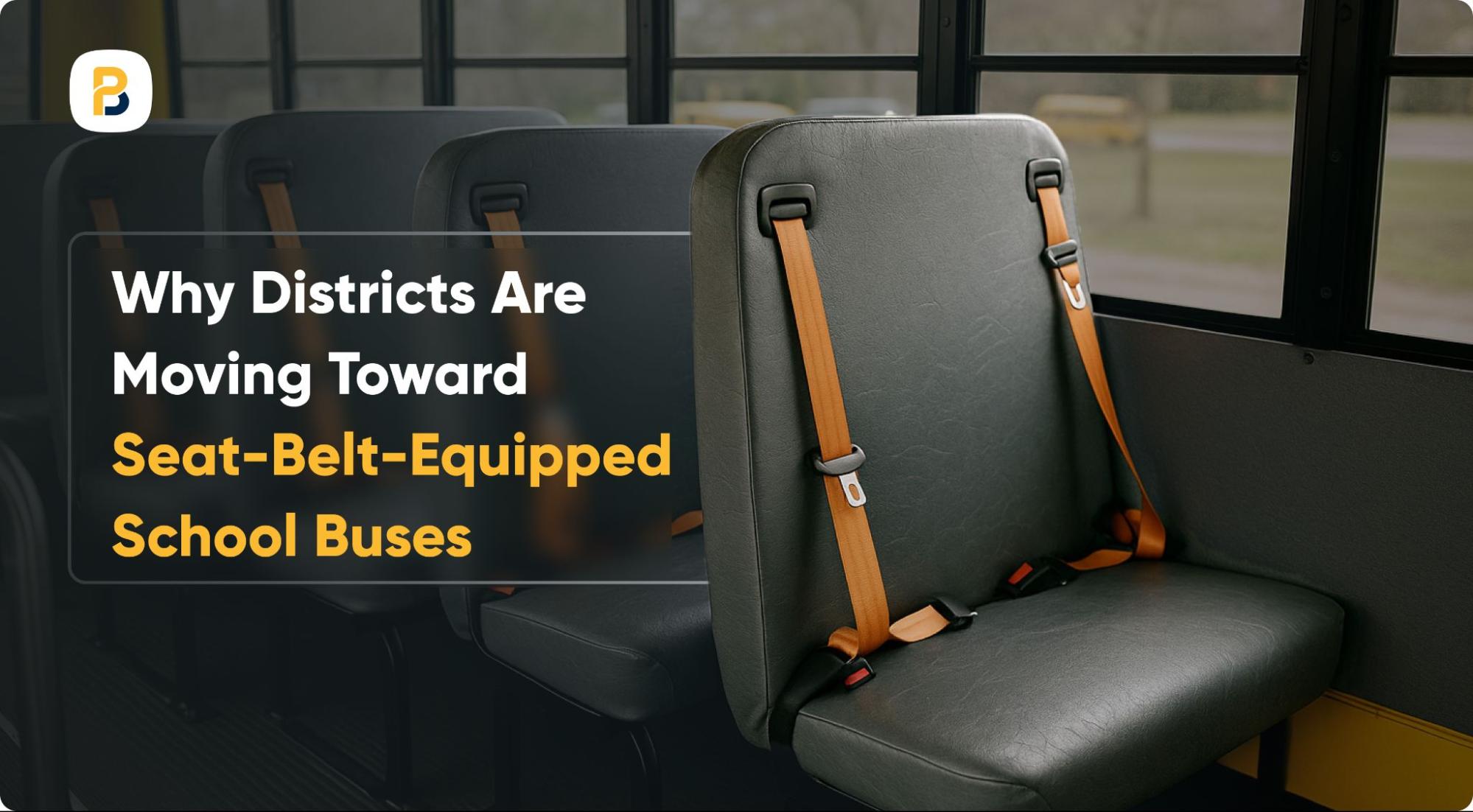
One of the main reasons large school buses historically did not use seat belts is that they rely on the concept of compartmentalization. The seating inside a school bus is intentionally designed like an egg carton: tall seats, thick padding, and very little space between rows. These closely spaced, high-back, energy-absorbing seats create a protective shell around children, rather than relying on a belt to keep them in place.
Federal law only required seat belts on small school buses (under 10,000 lbs) because they behave more like cars in a crash. Large buses are heavier and distribute crash forces differently, so they were not federally required to have belts. Compartmentalization has long been considered effective for common crash types, such as frontal collisions, so regulators did not push for seat belts on large buses for many years.

However, this approach is slowly changing. As of 2024, eight U.S. states, including California, New Jersey, Texas, Nevada, Arkansas, Louisiana, New York, and Florida, have laws or active programs requiring seat belts on newly manufactured large school buses.
Cost and Budget Considerations
Installing seat belts on large school buses isn’t as easy as it sounds. Adding lap-and-shoulder belts can cost $7,000 to $10,000 per bus, which quickly becomes a major expense for districts managing medium to large bus fleets. Some districts report even higher numbers, estimating up to $30,000 per bus for retrofits, and manufacturers note that seat belt production is tightly tied to new-bus manufacturing, limiting large-scale retrofitting capacity.
While districts acknowledge the significant upfront investment, many argue that the long-term safety benefits outweigh the cost. Modern seat belts provide added protection in rollovers and side-impact crashes, which compartmentalization alone cannot fully address.
Budget concerns also play a major role. Many districts argue that the funds required for seat belt installation would be better allocated to other critical needs, such as hiring more drivers, improving training, adding safety cameras, upgrading school bus routing software, or replacing aging buses with safer, modern models with pre-installed seat belts.
Benefits of Seat Belts in School Buses
Despite the costs and perceived safety risks, districts that have introduced seat belts report practical, day-to-day improvements that go well beyond crash protection. One of the clearest benefits is better student behavior. When students are buckled in, they are far less likely to stand, switch seats, lean into the aisle, or cause disruptions.
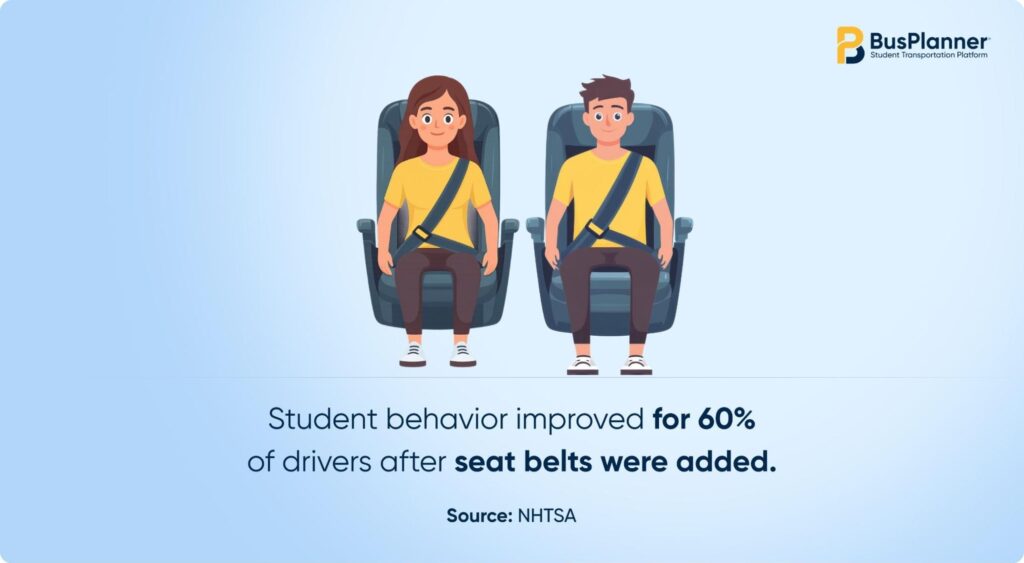
A quieter, more orderly bus also means fewer distractions for the driver. Instead of constantly reminding students to sit down or scanning the mirror for behavior issues, drivers can keep their attention on the road, surrounding traffic, and pedestrian activity. Adding lap-shoulder belts reinforces the safety norms kids already practice at home. Surveys from multiple districts show rising parent support for seat-belt-equipped buses, especially as communities continue to prioritize child safety.
New Bus Builds Prioritize Seat Belts
Bus manufacturers are now moving to equip new school buses with modern, easier-to-use seat belt systems. Many new buses come with lap-shoulder belts built directly into the seat frame, making them more comfortable and less bulky. Some manufacturers are even incorporating seat belt technology that can sense whether a belt is buckled and alert the driver if a student unbuckles during the ride. These upgrades make seat belts more effective and easier for drivers to monitor.
However, as new buses begin prioritizing seat belt integration, manufacturing constraints remain a major challenge. Seat belt production currently operates on a just-in-time model; manufacturers produce only enough belts to meet new bus orders, leaving little to no excess inventory for retrofitting older fleets. Without separate production capacity dedicated to retrofits, districts may face delays or limited availability when trying to upgrade existing buses.
This means that while the future of new school buses is clearly moving toward built-in seat belt systems, scaling that progress across entire fleets will require expanded manufacturing capacity and long-term planning.
Conclusion
School buses have long been engineered to keep students safe through strong structural design and compartmentalization. But safety expectations, research, and policies are evolving. Seat belts can offer meaningful added protection in certain crash scenarios, help improve student behavior, reduce driver distractions, and align with modern safety habits and parental expectations.
While cost, evacuation planning, and manufacturing limitations remain practical challenges, school districts are increasingly looking at seat belts not as a replacement for existing safety measures, but as an important part of the future of school bus safety.
Frequently Asked Questions
Why don’t school buses originally have seat belts?
Large school buses use a special safety design called compartmentalization. High-back, padded seats placed close together create a protective “shell” around students.
Are school buses safe without seat belts?
Yes. School buses remain one of the safest vehicles on the road due to their size, structure, and compartmentalized seating. However, seat belts can provide additional protection in certain types of crashes.
Do any school buses have seat belts?
Yes. Small school buses (under 10,000 lbs) are required by federal law to have seat belts. Many new large school buses also include lap-shoulder belts, especially in states that mandate them.
Would seat belts make school buses safer?
Seat belts offer added safety in rollovers, side-impact crashes, and high-speed collision scenarios where compartmentalization alone is less effective. They also help reduce student movement and driver distractions.
Why are more districts considering seat belts now?
Growing safety expectations, parent support, state legislation, and new technology are driving adoption. Modern buses come with integrated seat belt systems, making them easier to manage and monitor.